

If you want to buy a used golf cart in Connecticut, start with more than a price and a few photos. Battery or drivetrain condition, service history, passenger capacity, title questions, road-use plans, delivery, and support after the sale can all change whether a pre-owned cart is a smart fit.
The best place to buy a used golf cart in Connecticut is a dealer that can show you the vehicle, explain what was inspected, match the cart to your intended use, and support it after delivery. c2 Vehicles serves Connecticut from its Clinton location and supports shoppers with regional pre-owned inventory, delivery options, service, financing guidance, and warranty programs for eligible Certified Pre-Owned vehicles.
Use this guide to narrow the right vehicle before you visit. Then confirm the current listing, location, hours, coverage, and Connecticut road-use requirements for the specific cart you are considering.
Where can you buy a used golf cart in Connecticut?
Connecticut buyers can shop through a regional dealer with a physical location, current online inventory, and service support. That combination is useful when a pre-owned cart needs an in-person inspection, a test drive, delivery planning, or maintenance after the sale.
c2 Vehicles' Clinton location is at 103a W Main St, Clinton, CT 06413, and serves all of Connecticut. The current location listing shows retail hours of Monday through Friday from 7:00 a.m. to 3:30 p.m., with Saturdays by appointment. Hours can change, so check the live Find a Location page before traveling.
The pre-owned inventory includes used electric, gas, and lithium vehicles with different passenger capacities, features, and intended uses. Inventory changes as vehicles sell and new units arrive. Use the live filters for condition, passenger count, street-legal status, powertrain, model, and product type, then ask the team to confirm the unit's current location and availability.
A local Connecticut purchase does not require every vehicle to be physically stocked in Clinton. Ask about regional availability and delivery before assuming that a listing can be viewed or picked up at a particular branch.
What should you inspect before buying a used golf cart?
A used golf cart inspection should focus on the systems that affect safety, reliability, and ownership cost. A clean body is not enough. Ask for the vehicle's service history, inspect the frame and battery or engine system, and take a controlled test drive before you commit.
- Battery or drivetrain condition: For an electric cart, ask about battery age, chemistry, charging behavior, terminal corrosion, cables, and any test results. For a gas cart, ask about engine service, oil changes, starting behavior, leaks, belts, and unusual noise.
- Frame and underside: Look for cracks, deep corrosion, bent components, damaged mounts, and evidence of water or salt exposure. Connecticut buyers should pay particular attention to vehicles used near the coast or stored outdoors through winter.
- Steering and brakes: Check steering play, brake response, parking brake operation, tire condition, and uneven wear. A test drive should include smooth acceleration, stopping, turning, and reversing in a safe area.
- Electrical and safety equipment: Test lights, horn, reverse alarm if equipped, charger, display, switches, and accessories. Do not assume that aftermarket lights or a lift kit make a standard cart street legal.
- Serial number and records: Match the serial or vehicle identification number to the seller's records. Ask about prior service, parts replaced, modifications, accident damage, and whether the vehicle is sold as-is or with coverage.
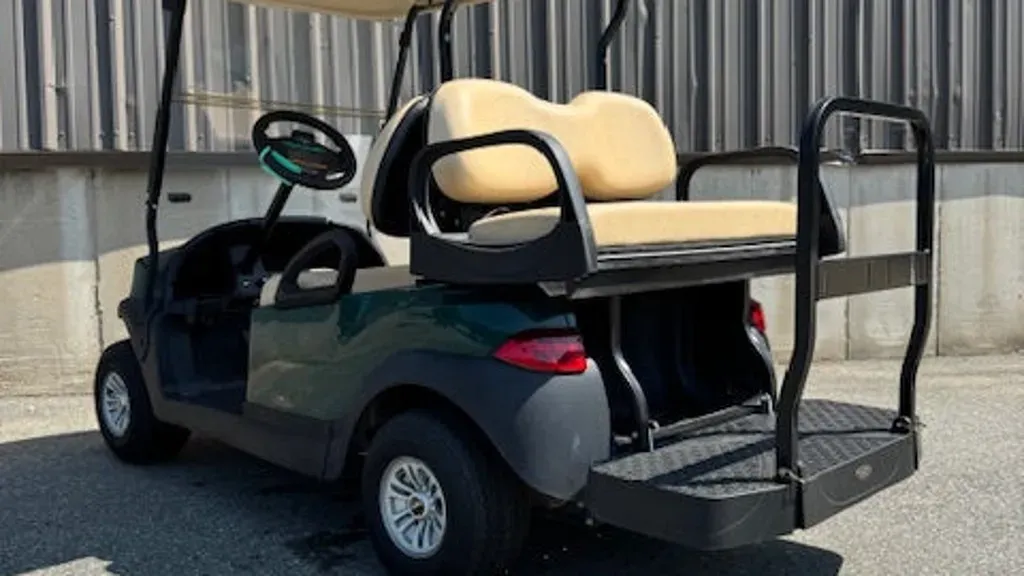
- Seats and capacity: Confirm whether the cart is configured for two, four, or six passengers and whether the seating arrangement matches your planned use. A rear-facing seat, rear seat kit, or cargo conversion can change how the vehicle should be used.
When a dealer has already inspected and serviced a vehicle, ask what that process included. It should still be reasonable to request a walk-around and test drive. The goal is not to find a perfect cart with no wear. The goal is to understand the cart's condition and choose a vehicle whose condition, use, and protection match your expectations.
Which title and registration questions should Connecticut buyers ask?
Before buying, ask what ownership documents accompany the specific vehicle and whether it is intended for private property, a golf course, a campground, a commercial site, or public-road use. The answer affects what documentation, insurance, equipment, and local approvals you may need.
- What proof of ownership or bill of sale will be provided?
- Is the vehicle a standard golf cart, a low-speed vehicle, or another vehicle class?
- Has the vehicle been modified from its original specifications?
- If it is described as an LSV, what documentation supports that classification?
- What insurance, title, registration, or local authorization should I confirm before operating it?
Connecticut DMV distinguishes a qualifying low-speed vehicle from a golf cart. The DMV describes an LSV as a four-wheeled motor vehicle capable of at least 20 mph but no more than 25 mph, with a gross vehicle weight rating of 3,000 pounds or less. Its current guidance says qualifying LSVs may be operated on public roads with an established speed limit of no more than 25 mph and outlines title, registration, and insurance documentation. Read the current Connecticut DMV registration guidance for the vehicle you are buying.
Do not treat a standard golf cart as an LSV simply because it has lights, a windshield, a lift kit, or a higher-speed setting. Ask the seller to explain the vehicle classification and verify requirements with the DMV and your town before purchase.
Can you drive a used golf cart on Connecticut roads?
Connecticut road use depends on the vehicle class, posted speed limit, equipment, registration, and local rules. A standard golf cart is not automatically street legal statewide, and a qualifying LSV still has operating limits. Confirm the rules for the exact town and road where you plan to drive.
Connecticut's Office of Legislative Research explains that local traffic authorities may authorize golf-cart use on roads under their jurisdiction with posted speed limits of 25 mph or less, during daylight hours, subject to requirements such as an operable horn, a visibility flag, and a valid driver's license. The current Connecticut General Assembly road-use report is a useful starting point, but buyers should verify current local requirements before relying on it.
For a Connecticut purchase, tell the dealer how you plan to use the vehicle. A cart for a private driveway, campground, golf course, farm, or commercial property may be a different fit from a vehicle intended for limited public-road travel. If public-road use is important, ask for documentation and confirm the route, town authorization, equipment, insurance, and registration requirements before paying a deposit.
What warranty and service support should you expect?
Warranty coverage is one of the main differences between a private sale and a dealer purchase. Ask whether the vehicle is Certified Pre-Owned, what coverage tier applies, what parts are excluded, where warranty work is performed, and who pays any service or delivery fee.
c2 Vehicles' current FAQ states that Certified Pre-Owned vehicles up to five years old can receive three-year bumper-to-bumper coverage, while used vehicles six to ten years old can receive two-year drivetrain coverage. The warranty page notes that coverage is limited to the six New England states, applies to the original purchaser, and excludes normal wear items and batteries. Coverage is determined at purchase, so confirm the terms for the exact vehicle in writing.
Support after delivery matters just as much as the warranty document. c2 Vehicles offers factory-trained service, diagnostics, battery testing and replacement, winterization, annual inspections, tire repair, and door-to-door service options. Review the service page and ask which service location or mobile option is best for your Connecticut address and vehicle.
When comparing a private listing with a dealer listing, include the full ownership picture: inspection work, records, warranty, parts access, delivery, service availability, and the time it would take to solve a problem. The lowest advertised price is not always the lowest ownership cost.
How do delivery and financing work for a Connecticut purchase?
Delivery can make a regional purchase practical, especially when the right pre-owned vehicle is located outside the nearest branch. Before agreeing to a purchase, confirm the delivery destination, timing, cost, vehicle preparation, and what happens if the cart arrives with an issue. c2 Vehicles states that New England delivery is available, but the details should be confirmed for the individual cart and address.
Financing may also help you compare vehicles by total budget rather than only by sticker price. c2 Vehicles' FAQ says the company works with lenders including Sheffield Financial and that offers are subject to credit approval and lender terms. Review the financing information and ask the sales team which current options apply to a personal Connecticut purchase. You can also ask whether a trade-in changes the amount you need to finance.
Before signing, request a written summary of the vehicle, price, taxes and fees, delivery, warranty tier, exclusions, and any accessories or work included. Clear documentation protects both sides and makes it easier to compare a dealer purchase with a private-sale alternative.
View current pre-owned inventory and compare used golf carts
Used golf cart inspection checklist for Connecticut buyers
Save this short checklist for your visit or video walk-around. It keeps the conversation focused on the details most likely to affect reliability and legal use.
- Confirm the make, model, year, serial number, and passenger capacity.
- Ask whether the vehicle is standard golf-cart equipment or a qualifying LSV.
- Review battery, engine, charger, drivetrain, brake, and steering condition.
- Inspect the frame and underside for corrosion, cracks, bends, or water damage.
- Review service records, prior modifications, accident history, and ownership documents.
- Test drive the cart and check acceleration, braking, steering, reverse, lights, and horn.
- Confirm warranty tier, exclusions, service location, and any mobile-service limitations.
- Get delivery, financing, trade-in, taxes, fees, and final purchase terms in writing.
- Verify Connecticut DMV and local traffic-authority requirements before public-road use.
Buying used does not have to mean taking on unknown risk. A clear inspection process, accurate vehicle classification, written terms, and a dependable service path can make a pre-owned golf cart a more confident purchase for Connecticut homes, coastal communities, golf facilities, and commercial properties.
Find the Connecticut location and confirm a visit or test drive
Frequently Asked Questions
Where is c2 Vehicles located in Connecticut?
c2 Vehicles lists its Connecticut location at 103a W Main St, Clinton, CT 06413, serving all of Connecticut. Check the live location page for current hours, appointment availability, and contact options before visiting.
Does c2 Vehicles sell used electric and gas golf carts?
Yes. The current pre-owned inventory includes used electric, gas, and lithium vehicles, with listings that vary by model, passenger capacity, equipment, location, and availability.
Are used golf carts street legal in Connecticut?
Not automatically. Connecticut distinguishes standard golf carts from qualifying low-speed vehicles, and local road-use authorization may apply. Confirm the vehicle class, DMV requirements, posted speed limit, equipment, insurance, and local rules before driving on public roads.
Does a used golf cart need a title or registration?
The answer depends on the vehicle class and intended use. Ask for the ownership documents for the exact cart, then verify title, registration, insurance, and local requirements with Connecticut DMV and the applicable town authority.
What warranty is available on a c2 Vehicles Certified Pre-Owned cart?
c2 Vehicles currently states that Certified Pre-Owned vehicles up to five years old may receive three-year bumper-to-bumper coverage, while used vehicles six to ten years old may receive two-year drivetrain coverage. Confirm the exact coverage and exclusions at purchase.
Can c2 Vehicles deliver a used golf cart to Connecticut?
c2 Vehicles states that New England delivery is available. Ask the sales team to confirm delivery timing, cost, preparation, and the final terms for the vehicle and Connecticut address you select.