
contact us

Choosing the best low-speed vehicles starts with the job, not the badge. A homeowner may want quiet neighborhood transportation, while a resort, campus, municipality, or worksite may need passenger capacity, cargo space, weather protection, and dependable service. This guide explains how to compare low-speed vehicles for personal and commercial use across New England.
Quick answer: The best low-speed vehicle is the one that matches your routes, passengers, cargo, power source, weather exposure, and service plan. Compare passenger LSVs, personal golf carts, and commercial utility vehicles separately. Before public-road use, confirm the exact vehicle's certification and the rules in the state and municipality where it will operate.
Explore current low-speed vehicle and golf cart inventory
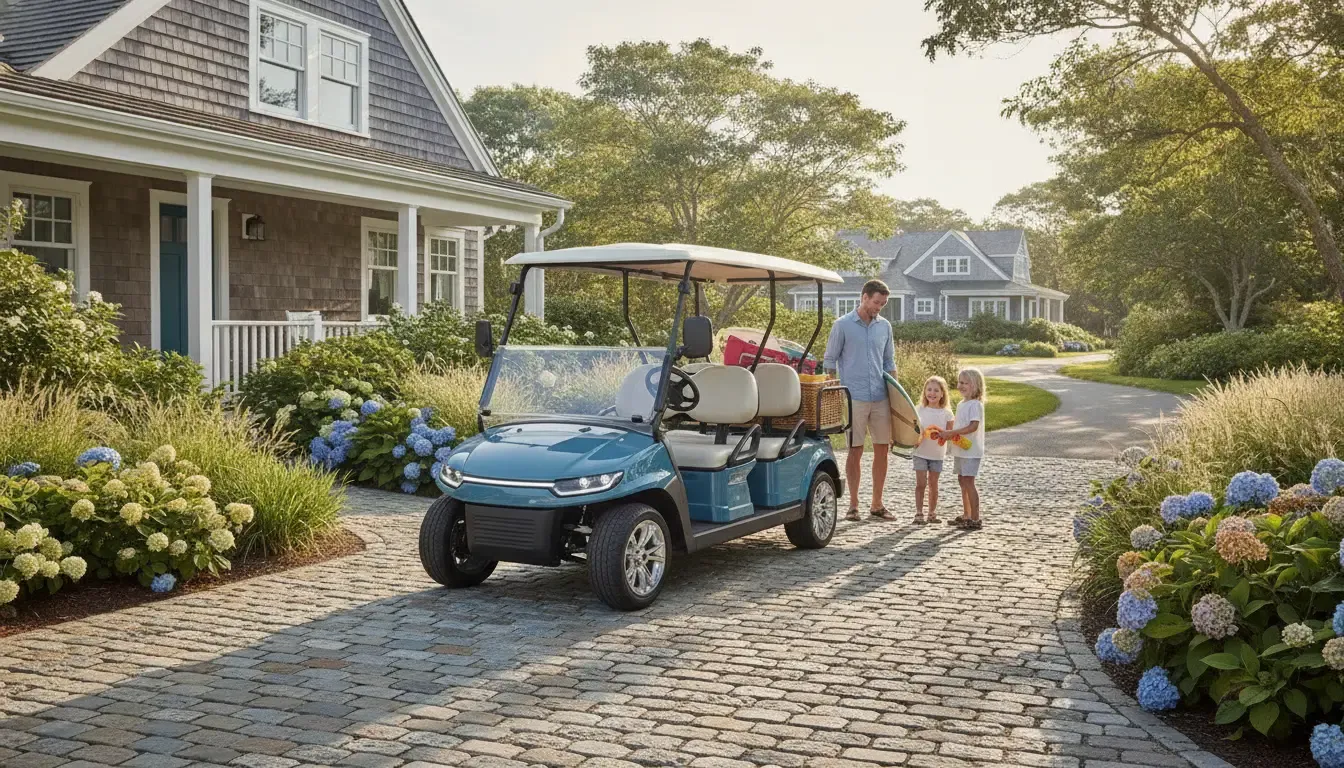
For personal use, the best low-speed vehicles balance passenger comfort, local travel needs, storage, weather exposure, and road-use requirements. A two- or four-passenger golf cart can suit private roads and communities, while a compliant LSV or NEV may fit public-road travel where state and local rules allow it.
Personal buyers often begin with a simple question: can this vehicle make everyday trips easier? The answer depends on where you will drive. A golf cart can be practical for a private neighborhood, vacation property, campground, golf community, or coastal home. A street-ready LSV may be a better fit when your route includes public roads that permit the exact certified vehicle.
Do not treat the words "golf cart," "neighborhood vehicle," and "LSV" as interchangeable. Federal LSV standards apply to a specific vehicle classification, and a conventional golf cart does not become an LSV simply because it has headlights, a windshield, or a higher speed setting. Read the vehicle documentation and confirm the intended use before buying.
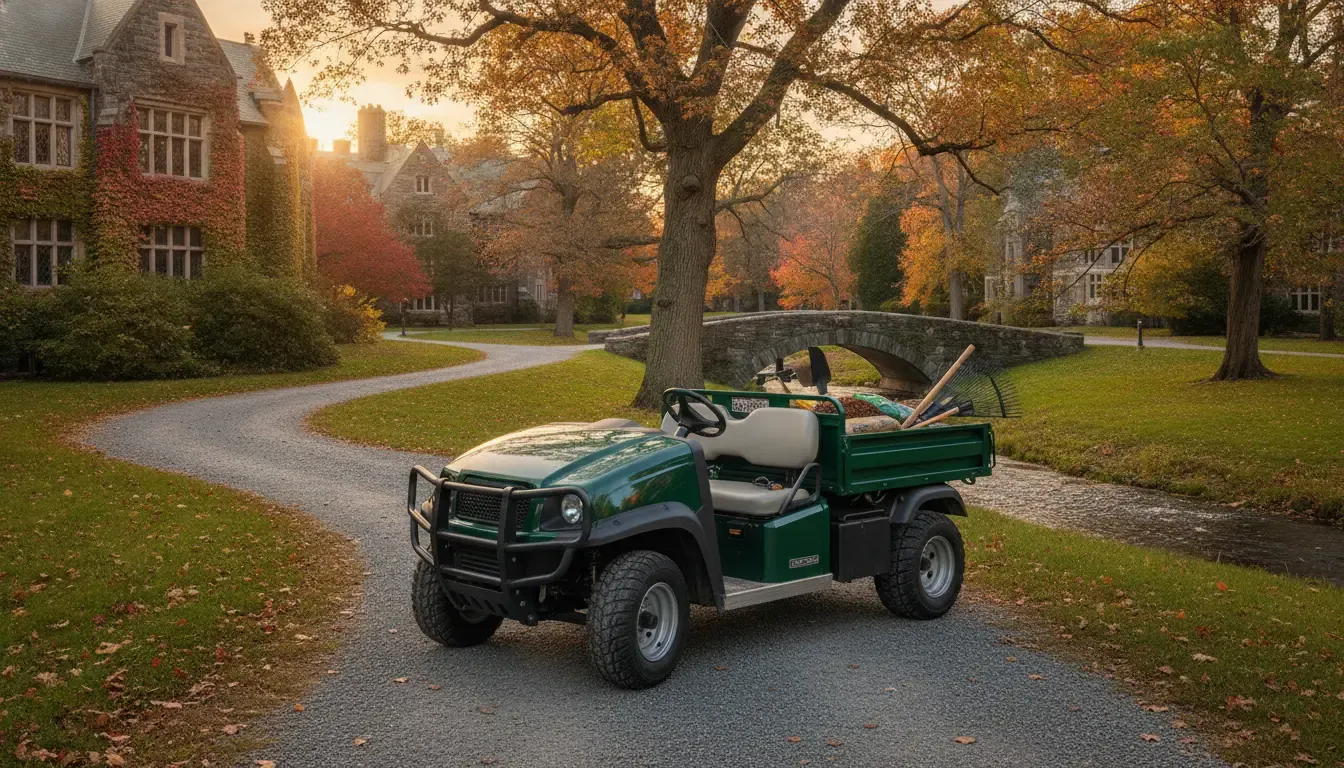
Commercial fleets usually need low-speed vehicles that move people, tools, supplies, or guests efficiently on defined routes. Passenger shuttles, cargo-bed utility vehicles, and enclosed work vehicles each solve a different problem. The best choice depends on payload, duty cycle, terrain, road access, weather, and the availability of local fleet service.
A commercial buyer should define the vehicle's daily work before comparing models. A resort may need guest transportation and luggage movement. A college or school may need facilities support, campus patrol, or grounds maintenance. A municipality may need a compact vehicle for parks, public works, or event operations. A property manager may prioritize a cargo bed, low operating noise, and easy access around a large site.
Commercial applications also make downtime more expensive. Ask who will diagnose the vehicle, where parts come from, whether service can come to the site, and how the dealer handles a multi-vehicle fleet. C2 Vehicles supports commercial customers with territory managers, custom solutions, regional delivery, factory-trained technicians, and fleet service through its New England network.
Discuss a commercial fleet or custom vehicle solution
Compare electric, lithium, electric FLA, and gas powertrains by the work they must perform. Electric vehicles can be quiet and efficient for repeated local trips, while gas can suit some heavy-duty or remote applications. Lithium and FLA batteries have different charging, maintenance, and replacement considerations, so match the system to the duty cycle.
| Comparison factor | Electric or lithium | Electric FLA | Gas |
|---|---|---|---|
| Best fit | Quiet neighborhood, campus, resort, and short-route use | Established electric operations with familiar battery service | Some heavy-duty, remote, or high-use applications |
| Daily planning | Plan around charging access, route length, temperature, and accessory use | Plan around charging, water checks, and battery maintenance | Plan around fuel, oil, filters, exhaust, and service intervals |
| Operating environment | Works well where low noise and no tailpipe emissions are priorities | Useful where a proven electric system and existing service routine matter | May fit sites where refueling is easier than charging or duty demands vary |
| Questions to ask | What charger and outlet does the vehicle require? What range is realistic in cold weather? | Who will maintain the batteries? Is the charging location ventilated and convenient? | How much fuel, engine service, and ventilation does the operation require? |
Range is not a single promise that applies to every buyer. Temperature, hills, passengers, cargo, tires, speed, accessories, and battery condition all affect real-world performance. Ask the dealer to discuss the expected daily route rather than choosing from a maximum range figure alone.
New England seasons deserve special attention. Cold temperatures can affect battery performance, while snow, salt, wet leaves, and uneven terrain can change traction and stopping conditions. Ask about winterization, battery care, tire choices, storage, and service before committing to a year-round operating plan.
For electric-drive background, the U.S. Department of Energy explains that electric drive systems lose less energy than gasoline engines and can recover energy through regenerative braking. That does not eliminate the need to plan for charging, cold-weather use, or maintenance, but it helps explain why electric vehicles can be attractive for repeated local routes. Read the Department of Energy efficiency overview.
Passenger count, payload, cargo layout, ground clearance, turning space, and weather protection should be evaluated together. A four-passenger vehicle may be ideal for family trips but inefficient for a grounds crew carrying tools. A utility vehicle may be the better choice when cargo, towing, or rough surfaces drive the purchase.
Many c2 Vehicles models and brands serve different jobs, including Club Car, GEM, Moke America, Garia, MadJax X-Series, Polaris Pro XD, and Tomberlin. The right model depends on the application rather than a universal ranking. C2 Vehicles can help compare personal carts, passenger LSVs, and commercial utility vehicles against the route and workload you describe.
Before using a low-speed vehicle on public roads, verify the exact vehicle classification, required safety equipment, registration, insurance, licensing, inspection, and allowed roads. Federal standards define LSV requirements, but states and municipalities can add restrictions. A vehicle advertised as street legal is not automatically legal on every road.
Federal Motor Vehicle Safety Standard No. 500 describes low-speed vehicles as four-wheeled vehicles with a maximum speed capability of more than 20 mph and no more than 25 mph, along with defined safety equipment and a gross vehicle weight rating under 3,000 pounds. Review the federal LSV standard for the technical requirements.
That federal classification is only the starting point. Before purchase, ask:
Rules vary across Massachusetts, Connecticut, Rhode Island, Vermont, New Hampshire, Maine, Eastern New York, and individual municipalities. Treat road legality as a verification step, not as a blanket feature of every golf cart or small vehicle. If your route is private property, say so during the buying conversation because the best fit may be different from a street-ready LSV.
Total ownership includes more than the purchase price. Compare charging or fuel, battery care, tires, inspections, winterization, repairs, accessories, delivery, storage, warranty coverage, and downtime. A nearby dealer with factory-trained technicians, OEM parts, mobile service, and fleet support can reduce the operational burden over the life of the vehicle.
For a personal buyer, service may mean seasonal battery care, tire replacement, accessory installation, or a repair before vacation season. For a commercial buyer, it may mean scheduled inspections, on-site diagnostics, fleet maintenance, and a plan for keeping a vehicle available during peak operations.
Ask whether the dealer can support the vehicle after delivery. C2 Vehicles operates seven locations across New England, provides service through trained technicians and mobile support, and carries a broad parts inventory. Its service offering includes tune-ups, battery testing and replacement, accessory installation, oil and filter changes for gas vehicles, winterization, steering alignment, annual inspections, and tire repair or replacement.
Schedule service or discuss maintenance support
Warranty terms also deserve a close read. Certified pre-owned programs, manufacturer warranties, commercial coverage, and service-at-location policies can differ by vehicle and age. Ask what parts and labor are covered, where repairs can be completed, and whether the warranty transfers or has use restrictions. Do not assume that two vehicles with similar features have the same ownership support.
Use a short application checklist before you compare inventory. Define the route, passengers, cargo, power source, weather exposure, road status, service expectations, and delivery needs. Then ask a dealer to recommend a vehicle that meets those requirements and to identify any assumptions that still need local or technical verification.
No. Street legality depends on the exact vehicle classification, required equipment, registration, and state or local rules. A standard golf cart may be suitable for private property but not public roads. Confirm the documentation and intended route before purchase.
No. Electric and lithium vehicles can be excellent for quiet, repeatable local routes with reliable charging. Gas may be a better fit for some duty cycles or locations where refueling is easier. Compare the full operating environment, not just the power source.
Start with the largest group that will routinely ride together, then consider cargo. A four- or six-passenger vehicle may help with guests or campus transportation, while a two-passenger utility vehicle can leave more room for tools or supplies.
Usually not. Personal buyers often prioritize comfort, appearance, passenger space, and ease of use. Commercial buyers typically need payload, uptime, service response, operator protection, and a configuration built around a work process.
c2 Vehicles offers new and pre-owned small-wheeled electric and gas vehicles, personal carts, LSVs, commercial utility vehicles, service, financing, delivery, and seven New England locations. Inventory changes, so confirm current availability and specifications with the sales team.