
contact us

Wondering what is the average price of a street legal golf cart in New England? A street-legal cart, or low-speed vehicle (LSV), costs more than a standard cart with a few accessories. In New England, a qualifying low-speed vehicle (LSV) must meet equipment and road-use requirements, while title, registration, insurance, and local rules can vary by state and municipality. That makes the purchase price only one part of the decision.
The average price of a street legal golf cart typically falls within a planning range of about $12,000 to $20,000 or more for a new road-ready LSV. A late-model or certified pre-owned vehicle may offer a lower entry point. Use these figures as a starting point rather than a quote, and account for battery condition, warranty coverage, service, delivery, and compliance equipment.
View our street-legal golf cart inventory to compare current LSV pricing and availability.
The right value depends on how the vehicle will be used, how much maintenance you want to handle, and whether lithium power or lead-acid batteries better fit your budget. Before comparing price tiers, it helps to define exactly what street legal means for a golf cart and where those requirements apply.
A street-legal golf cart is generally a Low-Speed Vehicle (LSV), not simply a standard golf cart with a license plate. An LSV is built or equipped to meet applicable safety requirements for limited-speed road use. In practical terms, it has the lighting, visibility, occupant-protection, tire, and speed-control equipment needed for roads where that vehicle class is permitted.
A standard golf cart is typically designed for private property, golf courses, campgrounds, and similar low-speed settings. It may have basic lights or other accessories, but those additions do not automatically make it street legal. An LSV must meet the relevant federal safety standards, then satisfy the registration, title, insurance, and operating rules that apply in the state and municipality where it will be driven.
Federal LSV guidance is one reason a road-ready model costs more than a recreational cart. The required or commonly specified safety package includes:
These features support LSV classification and safer operation, but equipment alone does not guarantee that a vehicle can be driven on every road. Street-legal status depends on state law, local ordinances, posted speed limits, registration requirements, and other municipal rules. New England is not governed by one uniform golf-cart standard, so a route that is permitted in one community may be restricted in another. Confirm the rules for your intended town, road, and use before buying.
For a closer look at the equipment and models that may qualify, see our guide to street legal Club Car golf carts. Our team can also help you distinguish an LSV from a standard cart and identify the documentation or local requirements that may apply.
Federal LSV safety requirements influence the vehicle's design and price, while state and local rules determine where it can legally operate. Treat both parts as essential when comparing models, rather than assuming that a cart advertised as road-ready is automatically legal for every New England street.
For planning purposes, a street legal golf cart in New England can cost anywhere from about $5,000 for a late-model certified pre-owned vehicle to more than $30,000 for a premium custom-built LSV. The right budget depends on the vehicle's age, battery technology, safety equipment, condition, warranty, and intended use. Use the ranges below as a starting point rather than a quote, because current inventory and options can change the final price.
| Vehicle type | Typical price range | What to expect |
|---|---|---|
| Basic used golf cart | $2,000-$5,000 | Older vehicle with fewer features. Budget for inspection and possible near-term maintenance. |
| Late-model or certified pre-owned cart | $5,000-$10,000 | Newer components, inspected condition, and potentially stronger warranty coverage. |
| Standard new golf cart | $8,000-$15,000 | Current model with a factory warranty and a choice of gas or electric powertrains. |
| Premium custom cart or LSV | $15,000-$30,000+ | May include lithium power, upgraded finishes, and added equipment for road use. |
| Commercial utility vehicle | $10,000-$25,000+ | Work-focused equipment such as a cargo body, built for commercial or fleet applications. |
In practice, many New England buyers should plan around the late-model, CPO, and new-vehicle ranges rather than the lowest used-cart prices. This is especially true when they want dependable local service and equipment suitable for neighborhood travel. A street-legal configuration can add roughly $2,000-$5,000 compared with a similar non-road-ready cart because of required safety and road-use equipment.
Think beyond the sticker price. Battery condition, lithium upgrades, delivery, accessories, registration, insurance, and service support can all affect ownership costs. A lower-priced used cart may need more immediate work, while a CPO vehicle can provide a clearer ownership baseline. For more background, review our golf cart cost guide, then compare current options in our street legal golf cart inventory.
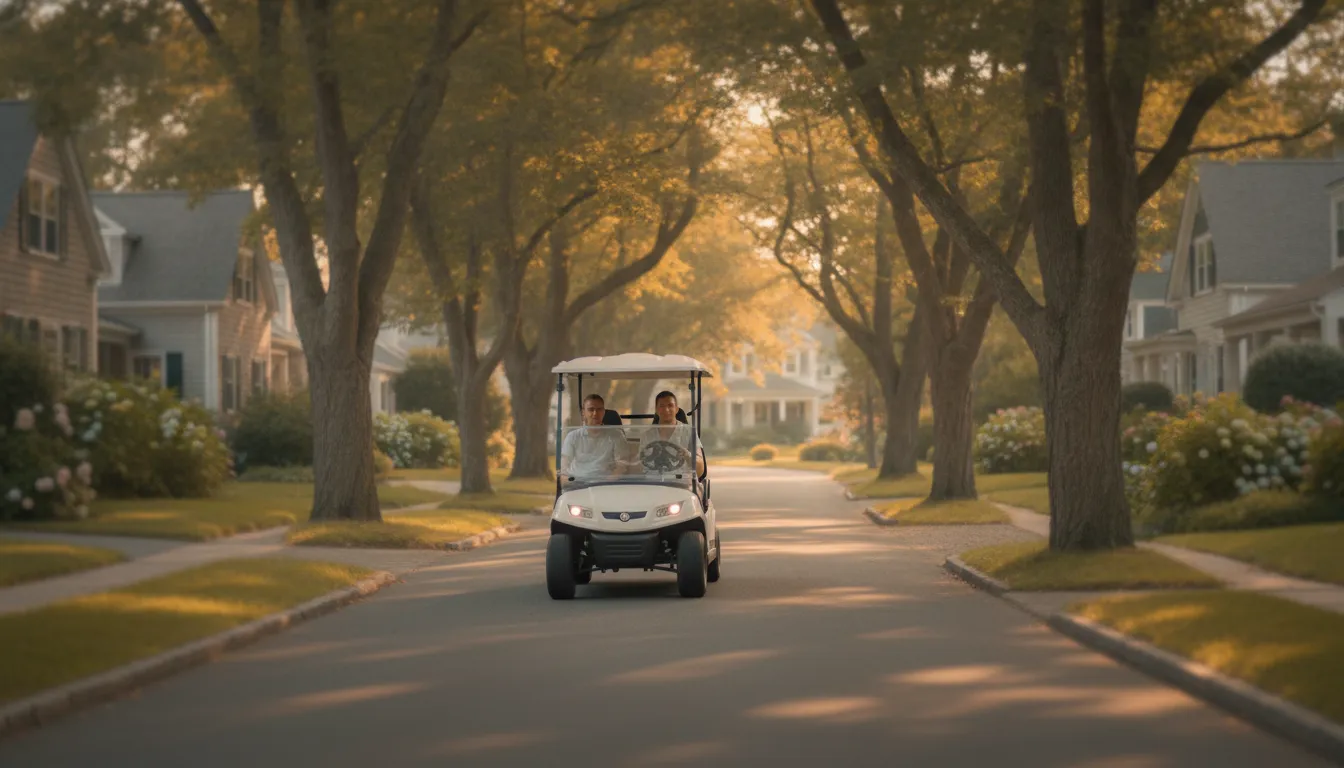
A standard golf cart is built primarily for private roads, courses, and property use. A street legal cart, generally classified as a Low-Speed Vehicle (LSV), must include a broader safety and compliance package before it can qualify for road use. Those components add manufacturing cost, installation time, and inspection requirements. Federal LSV safety standards are one reason these vehicles cost more than comparable non-legal carts, as outlined by the Florida Highway Safety and Motor Vehicles LSV guidance and related U.S. Department of Transportation safety materials.
Depending on the model and the applicable rules, a road-ready vehicle may include the following equipment:
These are not merely cosmetic upgrades. Lights and signals improve visibility, mirrors expand the driver's view, and seat belts and approved tires support safer operation around other vehicles. Adding the equipment to a standard cart after purchase can also require compatible wiring, mounting hardware, certification, and professional installation.
As a planning range, the compliance package typically adds about $2,000 to $5,000 to the price of a comparable non-legal cart. The final difference depends on the vehicle's drivetrain, battery system, trim, existing equipment, and whether the cart was engineered as an LSV from the factory. This is why a basic standard cart and a similarly sized street legal model can have noticeably different prices even when they look alike.
The sticker price is not the complete ownership cost, either. A buyer may also need to budget for title and registration, insurance, inspection, taxes, and any required local documentation. These requirements vary by state, municipality, road, and vehicle classification. A standard golf cart is not automatically legal on public roads, and an LSV designation does not guarantee unrestricted use everywhere. Before buying, confirm the rules for the specific streets and communities where you plan to drive, then verify the vehicle's equipment and paperwork with a qualified dealer.
Battery chemistry is one of the clearest reasons two otherwise similar street legal golf carts can have different prices. Lead-acid batteries generally keep the purchase price lower, while lithium batteries raise the initial investment but can reduce routine upkeep and replacement concerns over time. When comparing carts, look beyond the number on the window sticker and consider how often you expect to drive, charge, and maintain the vehicle.
Lead-acid power can be a practical choice for occasional neighborhood use or buyers focused on a lower upfront cost. These batteries require regular watering, cleaning, and proper charging. They are also heavier, which can affect efficiency and handling. Eventually, the full battery pack will need replacement, and that expense can be substantial even when the original cart seemed affordable.
For a street legal cart used every day, lithium can make ownership simpler. It does not require the same watering routine as lead-acid, and its lighter weight can support a more responsive driving experience. Lithium packs also typically last longer, so the higher purchase price may be easier to justify for an owner who plans to keep the vehicle for years and use it regularly.
That does not make lithium the right choice for every buyer. A seasonal driver may prefer to preserve cash at purchase, while a daily commuter, vacation-property owner, or commercial operator may place more value on reduced maintenance and dependable range. Ask whether the listed price includes the battery system, charger, and any warranty coverage, then compare the expected ownership period. The best value is the battery choice that matches your driving schedule, service expectations, and budget, not necessarily the lowest starting price.
Once you know the equipment and local requirements you need, condition becomes the next major value decision. A basic used cart may have the lowest purchase price, but an older battery pack, limited safety equipment, or deferred maintenance can raise the total cost after purchase. New LSVs commonly start at $15,000 or more, especially when they include lithium power, upgraded finishes, and road-ready equipment. Use that figure as a planning range, not a quote, because live inventory and specifications change.
Late-model used and Certified Pre-Owned vehicles typically sit closer to the $5,000-$10,000 range. That middle tier can offer a substantial saving compared with a new LSV while preserving more of the features buyers want, including modern components and a clearer service history. Browse c2 Vehicles' certified pre-owned inventory to compare current options.
This combination makes CPO a practical value path for buyers who want more assurance than an as-is purchase without paying the full price of a new vehicle. Review the available warranty coverage before comparing individual carts, and ask which components, exclusions, and service requirements apply to the vehicle you are considering.
Financing can also change the right choice for your budget. For qualified buyers, c2 Vehicles works with Sheffield, DLL, and Club Car financing partners. Compare the total purchase cost, monthly payment, warranty protection, battery condition, and expected service needs rather than focusing only on the sticker price. A lower-priced used cart is not automatically the best value if it needs immediate battery or safety-equipment work.
Explore certified pre-owned golf carts to see if a 3-year bumper-to-bumper warranty fits your budget.
In New England, planning ranges commonly run from about $5,000 to $10,000 for a late-model or certified pre-owned vehicle. A standard new cart typically costs $8,000 to $15,000. Premium custom LSVs often land at $15,000 to $30,000 or more. Use these figures as starting points, not quotes, because battery type, equipment, condition, and current inventory affect the final price. See our golf cart cost guide for additional context.
Usually, yes. An LSV must have road-use equipment such as headlights, tail lights, turn signals, mirrors, a windshield, seat belts, and appropriate speed control. Federal safety requirements influence the vehicle's configuration and price, while registration, insurance, and local compliance can add to your ownership budget. Confirm requirements for your state and municipality before purchasing. Federal LSV guidance provides a useful reference.
Lithium batteries generally increase the upfront price, but they can offer longer service life, less routine maintenance, and easier daily charging. Lead-acid batteries usually cost less initially, but they require watering, cleaning, and careful charging, and a replacement pack can become a substantial future expense. Compare the complete ownership cost, not only the vehicle's sticker price.
It can be, especially when you want inspected condition and warranty protection without paying new-vehicle pricing. c2 Vehicles Certified Pre-Owned vehicles are up to five years old. They are serviced in-house and covered by a 3-year bumper-to-bumper warranty. Review the vehicle's battery condition, included LSV equipment, service history, and any registration or insurance requirements before deciding.
Seeing current street-legal and certified pre-owned vehicles can make it easier to compare equipment, condition, and fit for your needs. Use the street-legal inventory to review available options, then contact the c2 Vehicles sales team for a personalized quote.
Call our Middletown, RI team at (401) 217-2261 to discuss pricing, financing, or availability, or browse the certified pre-owned inventory to find a ready-to-drive vehicle that fits your budget.