
contact us

How much does a golf cart cost? Most buyers should expect to spend about $3,500 to $7,500 for a dependable used cart and $8,000 to $15,000 for a new cart. Premium custom vehicles, large passenger models, and street-ready low-speed vehicles can cost $15,000 to $30,000 or more. The right budget depends on condition, power system, seating, features, and how you plan to use the vehicle.
View available golf carts and compare current options.
Sticker price is only part of the decision. Battery condition, warranty coverage, local service, delivery, accessories, and possible registration or insurance costs all affect value. A lower-priced vehicle can become expensive if it needs immediate repairs, while a better-equipped cart may reduce upgrades and maintenance later.
A golf cart typically costs $3,500 to $15,000, although basic older models may cost less and premium custom or road-ready vehicles can exceed $30,000.
Price ranges vary widely because the term "golf cart" covers everything from a simple two-passenger course cart to a luxury neighborhood vehicle or commercial utility model. New carts generally cost more because they include unused components, current technology, factory warranty coverage, and more customization choices. Used carts offer a lower entry price, but their age, maintenance history, and battery health require closer review.
The table below provides useful planning ranges. Actual prices vary by brand, model, condition, equipment, and availability.
| Vehicle type | Typical price range | What to expect |
|---|---|---|
| Basic used golf cart | $2,000-$5,000 | Older vehicle, limited features, possible near-term maintenance |
| Late-model or certified pre-owned cart | $5,000-$10,000 | Inspected condition, newer components, possible warranty |
| Standard new golf cart | $8,000-$15,000 | Current model, factory warranty, gas or electric options |
| Premium custom cart or LSV | $15,000-$30,000+ | Luxury finishes, lithium power, added safety or road equipment |
| Commercial utility vehicle | $10,000-$25,000+ | Cargo body, work-focused equipment, heavy-duty components |
Geography and season can affect the choices available, too. In New England, demand often rises before spring and summer, when owners want vehicles ready for neighborhoods, campgrounds, coastal properties, and events. Delivery distance can also affect the final invoice. Ask whether the quoted price includes preparation, a charger for an electric cart, delivery, and any dealer-installed equipment. Comparing complete, itemized quotes prevents a low advertised price from hiding costs that appear later.
Use these figures as a starting point rather than a quote. The best comparison is between vehicles that meet the same passenger, range, cargo, and usage requirements. Buyers who are still defining those needs can review the golf cart buying guide before shopping.
Age, condition, brand, battery type, passenger capacity, custom equipment, and road-ready features have the greatest effect on golf cart price.
Condition matters most on a used cart. Inspect the frame, tires, brakes, steering, suspension, upholstery, charger, and electrical system. Ask for maintenance records and confirm whether the cart needs repairs before regular use. A clean-looking body does not prove that the battery or mechanical components are healthy.
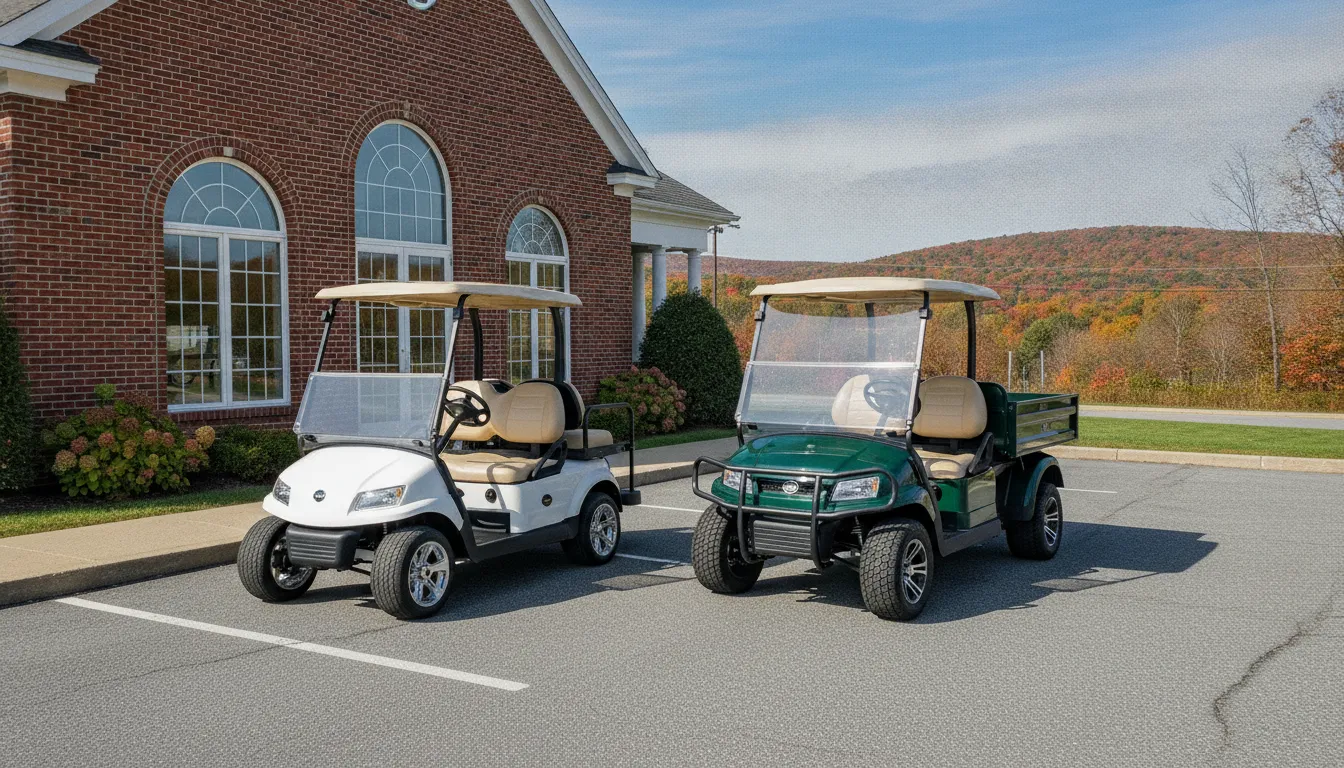
Gas and electric carts can have similar purchase prices, but their ownership needs differ. Gas vehicles require fuel and engine maintenance. Electric carts are quiet and convenient to charge, but battery age can significantly affect the value of a used model.
Lead-acid batteries usually cost less upfront and require regular watering, cleaning, and charging. A replacement pack can be a substantial expense. Lithium batteries cost more initially, but they are lighter, charge faster, need less routine care, and often last longer. When comparing electric vehicles, ask about battery chemistry, age, warranty, charger, and expected replacement cost.
A two-passenger cart is usually less expensive than a four- or six-passenger model. Cargo beds, utility bodies, enclosed cabs, upgraded seats, windshields, lighting, lift kits, wheels, audio systems, and custom paint can each add to the total. Choose must-have equipment before cosmetic upgrades. It is often more cost-effective to buy a vehicle already configured for your needs than to rebuild a basic cart later.
Established brands may command higher prices because replacement parts, trained service, and warranty support are easier to access. That support has real value when the vehicle is used daily. Compare what each warranty covers, how long it lasts, and where warranty work can be completed. You can also compare golf cart collections to see how body styles and equipment differ.
Resale value is another part of the price equation. A well-known model with documented maintenance and readily available parts may be easier to sell or trade later. Keep service receipts, protect the body and seats, charge batteries correctly, and repair minor problems promptly. These habits do not guarantee a specific resale price, but they help preserve the vehicle's condition and make its history easier for a future buyer to evaluate.
Buy new for the latest features, customization, and full warranty support; buy used for a lower upfront cost when condition and service history are verified.
A new cart is often the best fit for buyers who want a specific color, seating layout, power system, or factory option package. It also removes uncertainty about previous use. New vehicles can be especially appealing for businesses that need predictable uptime or owners who plan to keep the cart for many years. Review the new Club Car buying overview for more context on models and features.

A used cart can deliver excellent value, but the lowest listing price is not always the best deal. An older vehicle that immediately needs batteries, tires, brakes, and upholstery may cost more than a newer inspected option. A certified pre-owned cart may provide a useful middle ground by combining a lower purchase price with inspection and warranty benefits. Use the used golf cart guide to prepare for an inspection and test drive.
Compare new and pre-owned inventory in one place.
Calculate the purchase price plus immediate repairs and upgrades. That combined figure creates a fair comparison with a new or certified pre-owned alternative.
A test drive should reflect the way you intend to use the cart. Check acceleration, braking, steering, ride quality, visibility, and comfort with the expected number of passengers. If the vehicle will climb hills or carry cargo, explain that need before buying. For electric carts, confirm that the stated range is appropriate for your routes, conditions, load, and charging access. Range estimates can change with terrain, temperature, speed, vehicle weight, and battery condition.
After purchase, budget for charging or fuel, scheduled service, battery replacement, tires, repairs, storage, insurance, and any required registration.
Annual operating costs depend on how often the cart is used and how well it is maintained. A lightly used personal cart may need only routine checks and charging, while a commercial vehicle that works every day will require more frequent inspections and component replacement. Following the manufacturer's maintenance schedule helps protect safety, reliability, and resale value.
Routine care can include checking brakes, tires, steering, suspension, lights, fluids, and the charging system. Gas carts also need engine-related maintenance. Electric carts need battery and cable checks, with additional watering and cleaning for lead-acid systems. Qualified golf cart service can identify small issues before they become expensive failures.
Ask a dealer for a maintenance schedule and typical service costs for the exact model you are considering. Also confirm whether mobile service is available and whether warranty repairs must be performed by an authorized provider.
Battery replacement is one of the largest potential ownership expenses for an electric cart. The timing depends on battery type, use, charging habits, storage, and climate. If buying used, do not rely only on the cart's age; request a battery assessment.
New England owners should also plan for winter. Store the vehicle in a suitable location, follow battery charging guidance, and address salt, moisture, or corrosion. Proper seasonal care can prevent avoidable repairs and make the cart ready when warmer weather returns.
A standard golf cart is not automatically legal for public-road use. A low-speed vehicle, or LSV, must meet applicable equipment and performance requirements, and owners may need a title, registration, insurance, and inspection. Rules vary by state and municipality. Check with the appropriate local authorities before buying or modifying a vehicle for road use. If you need help identifying a suitable model, contact the c2 Vehicles team.
Insurance needs can also differ by location and use. Even when a cart stays on private property, an owner may want to ask an insurance professional how existing coverage applies to the vehicle, passengers, theft, and liability. Commercial operators should evaluate employee use, passenger policies, and the conditions where vehicles work. Confirming coverage before delivery is safer than assuming a homeowners, auto, or business policy automatically applies.
Set the right budget by defining how the cart will be used, pricing essential features, and comparing the complete cost of purchase and ownership.
Start with passenger count, typical trip distance, terrain, cargo needs, storage, and whether the vehicle will remain on private property. These requirements determine the appropriate body, motor, battery, safety equipment, and accessories. Avoid paying for features that will rarely be used, but do not underbuy on capacity or safety.
If paying the full amount upfront does not fit your plan, review available golf cart financing options. Compare the annual percentage rate, term, monthly payment, fees, and total amount paid rather than choosing a loan based only on the monthly figure. A trade-in may also reduce the amount financed, but its value depends on age, condition, batteries, and market demand.
Leave room in the budget for the first year of ownership. Depending on the vehicle, that may include delivery, a storage solution, charging equipment, scheduled maintenance, or practical accessories such as weather protection. Keep an emergency repair allowance for a used cart without comprehensive warranty coverage. If the total stretches beyond your comfortable limit, reduce cosmetic options, compare a different model, or wait rather than sacrificing essential capacity, safety, or service support.
These quick answers cover the five price questions buyers ask most often.
A basic used golf cart may cost about $2,000 to $5,000, while a standard new cart commonly costs about $8,000 to $15,000. Condition, battery health, and equipment can move the price outside those ranges.
Electric and gas golf carts can have similar purchase prices. Electric models require charging and eventual battery replacement, while gas models require fuel and engine maintenance. Compare long-term costs for the exact models.
Battery cost varies by voltage, capacity, chemistry, brand, and installation needs. Lead-acid packs generally cost less upfront, while lithium packs cost more but often last longer and need less routine maintenance.
Yes. Road-ready low-speed vehicles usually cost more because they need required safety equipment and may involve title, registration, insurance, and inspection costs. Requirements vary by state and municipality.
Yes. Financing may be available for qualified buyers. Compare interest rate, term, fees, monthly payment, and total repayment cost before selecting an offer.
Explore current c2 Vehicles inventory and request details on the right cart for your needs.
The best value is not simply the lowest price. It is a dependable vehicle that meets your passenger, range, cargo, and service requirements without unnecessary upgrades or surprise repairs. Compare like-for-like options, verify condition and warranty coverage, and request a complete quote before deciding.