
contact us

A rental cart can move from a resort path to a busy event site in a single day. Settle insurance questions before anyone takes the keys. The agreement, vehicle, drivers, and planned use all matter.
Explore golf cart rental options
Golf cart rental insurance is not one universal policy or a guarantee that a renter's personal coverage applies. The rental company, renter, venue, and insurer may each have different responsibilities. So confirm in writing what applies to this specific cart, rental activity, authorized drivers, and intended routes.
For operators arranging a fleet and customers booking a single cart. The useful starting point is to separate coverage for owning a vehicle from the terms that govern a rental. c2 Vehicles serves New England with a rental fleet of more than 500 vehicles. But coverage details must be confirmed for the particular rental. First, clarify what the term means in the rental transaction.
In a rental, "insurance" can refer to more than one arrangement. The cart owner or rental provider may have a policy for its vehicles or business. A renter may ask whether an existing policy applies to a particular rental, and the agreement may offer a separate damage waiver. These are not interchangeable labels, and the exact terms depend on the policy, vehicle, activity, location, and rental contract.
For the renter, the practical question is not simply whether someone has insurance. It is what protection, if any, applies to this cart, this driver. And the planned use, and who is responsible if there is an injury, collision, theft, or damage. Do not assume that a personal auto, homeowners, or renters policy covers a rented cart. Ask the insurer about this specific rental and request a clear answer in writing.
A rental company or venue may carry insurance. A facility policy alone does not establish that every renter, driver, route, or incident is covered. The Texas Department of Insurance warns that a facility policy may not cover use beyond the permitted area. That is a Texas regulator's perspective, not New England law or a statement about a particular provider. Read the Texas Department of Insurance guidance.
Likewise, a renter should ask their insurer to assess the actual vehicle and intended use rather than relying on assumptions about an existing policy. The Texas guidance recommends discussing risks with an insurance agent and checking policy terms. Its examples are useful prompts for questions, but do not determine coverage for a New England rental.
Some rental agreements may offer a damage waiver, but its name does not tell you what it covers or excludes. Read the specific wording and ask who is responsible for damage to the cart, damage to someone else's property, or medical costs after an incident. Confirm whether a waiver is optional and what conditions apply. Do not treat a waiver as proof of liability or personal-injury coverage unless the written terms and an appropriate insurance professional confirm that interpretation.
For organizations arranging multiple carts, the contract can also set documentation requirements. A published university rental exhibit, for example, specifies insurance evidence for that institution's arrangement. It illustrates why requirements must be checked in the actual agreement; its terms are not a standard for other venues or rentals. For general questions about coverage for an owned cart, see c2 Vehicles' New England golf cart insurance guide, which addresses a different situation.
Before pickup, identify the provider's policy contact, check what the contract says about drivers and permitted use, and get any coverage explanation in writing. If the answers are unclear, pause and ask the rental provider or insurer to clarify before the cart is used.
Coverage questions are easiest to resolve when each party checks the part of the arrangement it controls. A rental operator can explain the written agreement and identify what information the insurer needs; the renter should confirm that the planned driver and use fit the terms. The venue, event organizer, and any employer arranging carts should also verify their own responsibilities rather than assume another party's policy applies.
The Texas Department of Insurance offers an example of questions to raise with an insurer. Ask how the cart will be used and whether a facility policy applies. This is Texas guidance, not New England law. It does not determine coverage for a particular rental. Request written answers for the actual cart, drivers, location, and activity. (Texas Department of Insurance guidance.)
Written requirements can vary by agreement. One university's published rental exhibit sets documentation terms for its event. It illustrates contract-by-contract variation, not a standard for other rentals. (example university rental exhibit.) If unclear, ask the insurer and rental company to explain the terms before the rental starts. A clear record helps everyone understand the arrangement without treating this article as a coverage decision.
Could the agreement make clear who is responsible for confirming insurance, what the renter or organization must provide, and which uses are included in the arrangement? A university rental exhibit shows one institution's own documentation terms. It is an example, not a standard for other rentals. Review the university's example exhibit. Then ask the rental provider and insurer to confirm the terms for your cart, activity, location, and drivers.
| Agreement item | Questions to ask or confirm |
|---|---|
| Policy holder | Who holds each relevant policy: the rental provider, the renter, the event organizer, or another organization? Which party is responsible for confirming that coverage applies to this rental? |
| Cart and activity | Does the agreement identify the specific cart or vehicle type? Has the insurer confirmed in writing that the policy applies to a rented cart and the planned activity, such as venue transport, event use, or course use? |
| Injury and liability | What does the agreement say about claims involving injury to a driver, passenger, guest, employee, or other person? Which policy or party should be contacted with questions about liability coverage? |
| Damage and theft | How does the agreement address damage to, or theft of, the rented cart? Who should the renter contact to understand whether a policy applies and what information or documentation may be needed? |
| Waiver or deductible | If a damage waiver or similar option is actually offered, what does it include and exclude? Does the agreement identify any deductible, excess, or renter responsibility, and how should those terms be confirmed? |
| Authorized drivers | Who may drive the cart under the agreement? Must drivers be named or approved in advance, and does the insurer confirm coverage for every person expected to operate it? |
| Territory and use | Where may the cart be driven, and which activities or routes are excluded? Does the agreement distinguish private property from public roads, and has the provider confirmed what this specific vehicle is permitted to do? |
| Proof and endorsements | Must either party provide a certificate or other evidence of insurance? Does the venue or organization request an additional-insured endorsement, and has the insurer confirmed whether it can be provided and what it covers? |
| Notice and records | How and when should a renter notify the provider or insurer about an incident? What records should be kept, such as the agreement, contact details, incident notes, or photographs, and where should they be sent? |
Would any answer change for a different driver, route, rental period, or vehicle? Ask for unclear terms in writing before the rental begins, and verify coverage questions with the relevant insurer rather than assuming that a personal or facility policy applies.
A cart's permitted use is not always obvious from its appearance. Before pickup or delivery, compare the rental agreement with the plan for who will drive, where the cart will travel, and what it will carry. Ask the rental provider which details need approval, then confirm with the relevant insurer that the arrangement matches the policy. Do not assume permission for one driver or route automatically covers everyone or every trip.
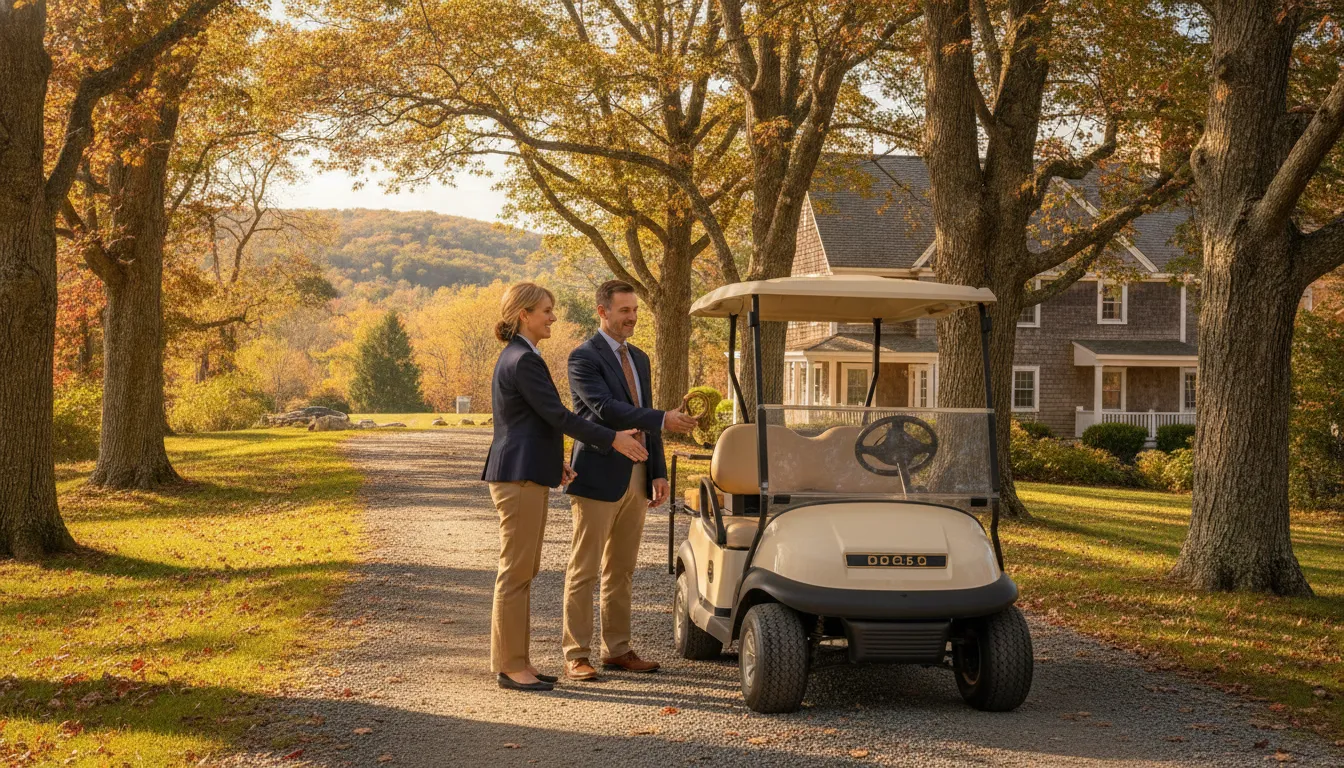
Explore golf cart rental options
Ask whether the agreement requires specific drivers to be named or approved, and whether that approval extends to employees, event staff, guests, or other renters. For a workplace or venue, decide who will control access and how drivers will be briefed. Tell the insurer who is expected to drive and describe the rental activity. A change in drivers can matter to the agreement or policy, so get confirmation before handing over the keys rather than relying on an informal assumption.
Describe the intended tasks, not just the number of carts. For example, explain whether carts will carry guests, employees, equipment, supplies, or materials between event areas. Ask the provider what the specific vehicle is designed and approved to carry, and whether the planned passenger or cargo use is allowed under the rental terms. If the plan includes towing, repeated shuttle trips, or another specialized activity, name it explicitly and request written confirmation. Do not infer capacity or permitted use from a vehicle's size.
Map the route in advance, including any roads that connect buildings, parking areas, venues, or neighboring properties. Ask whether the agreement restricts the cart to a golf course, campus, resort, event site, or other defined area. If any part of the route uses a public road. Confirm that this specific vehicle is eligible for that use and that the route is allowed under applicable state and local requirements. Golf carts and low-speed vehicles are not interchangeable classifications, and not every cart is street legal. See c2 Vehicles' New England street-legal requirements guide, then verify the rules for the actual location with the appropriate authority.
Give the rental company and insurer the real operating plan, including authorized drivers, passenger or cargo duties, and the full route. If the event schedule or route changes, pause and ask whether the new plan requires approval. Keep the response with the rental documents. Clear written terms help everyone understand what was authorized without treating a general policy summary as confirmation of coverage.
A clear, calm response helps protect people and preserves the information the rental company and insurer may need to review. The right reporting process can depend on the rental agreement and the circumstances, so operators should follow the applicable instructions rather than assume a particular coverage outcome.
Operators can make this process easier before a rental begins by identifying the right contact and reviewing the agreement's reporting instructions with staff. Keep the contact details and relevant paperwork accessible to the people responsible for responding, and apply the same careful, factual approach to every incident.
A well-planned rental fleet starts with the work it needs to do, not simply the number of carts available. Before delivery, map the venue, expected routes, passenger or cargo needs, operating hours, and who may drive. An event shuttle, a resort guest route, and a worksite transport plan can call for different vehicles and controls.
c2 Vehicles operates a rental fleet of 500+ vehicles and serves organizations across New England. Fleet size alone does not determine what will work at a particular site. Share the location, schedule, terrain, route length, and intended use with the rental provider, then confirm that the specific vehicle type fits the plan. Ask about access constraints and where carts may be driven. Do not assume a cart is approved for public roads; check the vehicle classification and applicable state and local requirements before including road travel.
Identify the people who will drive, including employees, event staff, contractors, or other authorized users. Establish how drivers will be briefed on routes, passenger limits, parking, and safe handoffs. Then document the answers that apply to the rental in writing:
These are questions to resolve with the rental company and insurer, not assumptions about standard terms. Keep the written agreement and confirmations accessible to the people managing the fleet. If the event involves a venue or client, clarify who is responsible for each operational decision before vehicles arrive.
Passenger carts may suit guest transport, while utility vehicles may better fit equipment or supply movement. Consider charging or refueling needs, loading areas, storage, delivery access, and pickup timing. Ask what support arrangements are available during the rental and who to contact about a mechanical issue or a change in fleet needs. For a complex site or recurring operation, discuss the vehicle mix and service considerations with a commercial fleet team before finalizing the plan.
Explore golf cart rental options
For venue, hospitality, campus, or worksite planning, compare your expected use with the provider and record the agreed details before delivery. Organizations evaluating a longer-term or specialized fleet can also review commercial fleet support.
Ask the rental provider what coverage, if any, applies to the specific cart and rental activity. Confirm in writing who is responsible for injuries, damage to the cart, and damage to other property, and whether any conditions or exclusions apply. If you are unsure about your own policy, ask your insurer about this vehicle, use, location, and rental period.
Do not assume it does. Coverage can depend on policy language, the vehicle, where it is used, and the rental arrangement. Contact your insurer and describe the exact cart, who will drive it, and the planned use. Ask for written confirmation rather than relying on a general explanation of your policy.
Responsibility depends on the rental agreement and any applicable insurance terms. Before accepting the cart, ask how damage, theft, and damage to another person's property are handled, and whether a waiver or deductible is offered. Have the provider explain any conditions in writing; do not treat a waiver as insurance unless the agreement says so.
Insurance confirmation alone does not establish that a particular cart may be driven on a public road. Ask the rental provider about the specific vehicle's permitted use, and check the applicable state and local requirements before planning a road route. Do not take the cart beyond the approved route or use without written confirmation.
First address immediate safety and contact emergency services if needed. Then notify the rental provider and your insurer promptly, follow their instructions, and record the time, location, people involved, and what happened. Preserve the rental agreement and relevant photos or other records. Do not promise that a particular policy will cover the loss.
Clear rental details can help you match a vehicle and fleet to your intended use. Contact c2 Vehicles to discuss your needs and operating plan.
Explore golf cart rental options
For more than 40 years, c2 Vehicles has supported personal and commercial mobility needs across New England. Share the event, venue, route, and fleet requirements when discussing a rental so the team can help identify options for the project. Insurance coverage and agreement terms should still be confirmed with the applicable provider and insurer.