
contact us

Searchers who type "buy low speed vehicle New England" want two answers. Can the vehicle legally use their roads? Which configuration will work for their property or business? Start with the route, vehicle certification, and paperwork. Compare colors and accessories after those essentials.
Explore current vehicle inventory
An LSV is not automatically legal on every public road. A golf cart with lights is not automatically an LSV, and state or municipal rules can be narrower than the federal vehicle classification.
Quick answer: To buy low speed vehicle New England shoppers can operate with confidence, confirm that the exact unit is a federally compliant LSV. Then verify registration, insurance, licensing, inspection, and road restrictions in the state and municipality where it will be used. Compare capacity, cargo, powertrain, weather protection, service, and delivery support before choosing a vehicle.
A low-speed vehicle, or LSV, is a four-wheeled vehicle with a gross vehicle weight rating below 3,000 pounds. Its attainable speed is above 20 mph but no more than 25 mph on a paved, level surface. Federal compliance does not guarantee access to every public road. State registration and local road rules still control where the vehicle may operate.
Under 49 CFR 571.500, an LSV must meet defined safety requirements. The classification applies to the exact certified vehicle, not to every vehicle sold under a broad model name.
A conventional golf cart may be appropriate for private property, a golf course, a campground, or a planned community. It does not become street legal simply because it has a windshield, headlights, or a higher speed setting. If public-road use matters, request the unit's certification information, VIN, and ownership documents before buying.
Inspect the specific unit and confirm that required equipment is present and functional. The checklist commonly includes:
The National Highway Traffic Safety Administration provides federal interpretations related to LSV equipment. Ask the seller to show the certification label, VIN, manufacturer's certificate of origin for a new vehicle, and title or prior ownership documents for a used vehicle. Keep copies with your purchase records.
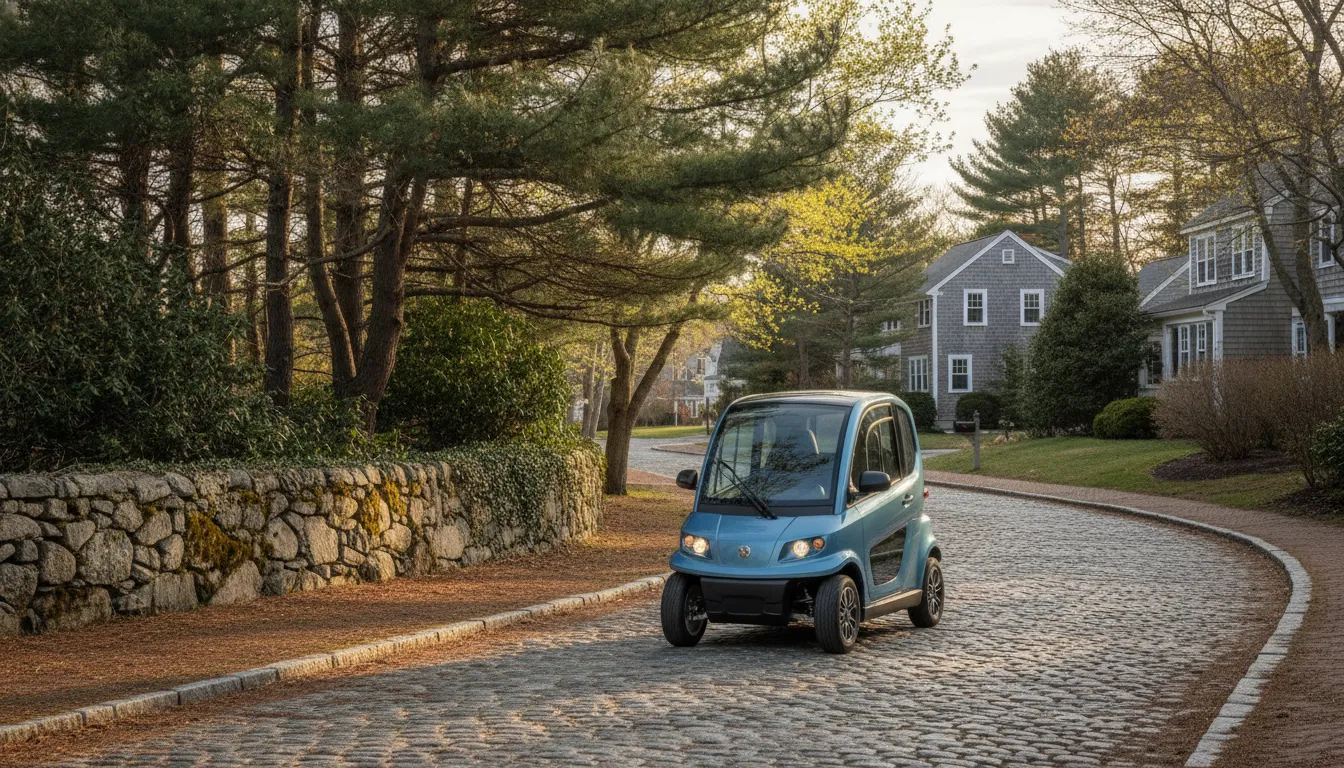
The safest buying process begins with the vehicle's job and route. List the roads, passengers, cargo, weather exposure, charging or fueling needs, and service expectations. Then confirm the exact LSV certification and state requirements before you choose a model or sign a purchase order.
A homeowner, resort, campground, municipality, golf course, and property manager may need different configurations. Use this checklist when comparing vehicles:
For more model-selection context, review c2 Vehicles' guide to street-legal low-speed vehicles. During a visit, test the seating position, turning radius, controls, mirrors, charging connection, and storage access.
Talk with a c2 Vehicles location about your routes and requirements
To buy low speed vehicle New England options responsibly, compare the exact certified unit, its intended route, and the support available after delivery. A regional dealer can help you evaluate capacity, powertrain, weather protection, paperwork, delivery, and service, but your state and municipality determine where the vehicle may legally operate.
Use the seller conversation to test whether a vehicle fits your actual use rather than relying on a general label such as golf cart or neighborhood vehicle. Ask for the VIN, certification label, ownership documents, equipment list, warranty terms, and a written explanation of the recommended registration process.
c2 Vehicles serves New England buyers through seven locations across all six New England states. The company offers new and pre-owned inventory, service, parts, delivery, financing, and commercial support. Availability changes, so use the current inventory and speak with the team about the exact unit under consideration.
Compare current vehicles for your New England routes
New England has no single LSV operating rule. Federal law describes the vehicle class, while each state and municipality can control registration, licensing, insurance, inspection, permitted roads, and local restrictions. Confirm the current rule set for the exact vehicle and route before purchase, especially when a trip crosses a town or state line.
Massachusetts provides dedicated official low-speed vehicle guidance. For public-way operation, confirm registration, title, insurance, inspection, and the appropriate driver's license or permit. The state's guidance addresses the Registration and Title Application, including a manufacturer's certificate of origin for a new vehicle and prior title documentation for a used vehicle. Massachusetts restricts LSV use on limited-access or express state highways and roads with speed limits over 30 mph. Local rules may impose additional limits.
Connecticut buyers should begin with the state's new vehicle registration process. The state says registration is completed by appointment at a DMV hub or branch. Or through a participating dealership, and requires the applicant to bring the required documents and payment. Ask the DMV or dealer how the exact LSV is classified, which title and insurance documents are needed, and whether inspection or compliance checks apply. Confirm local road access before buying for a shoreline neighborhood, campus, or commercial site.
Rhode Island law requires a low-speed vehicle operated on a public way to be registered, display its registration number, and display a slow-moving vehicle emblem. The vehicle is subject to inspection. Under Rhode Island General Laws section 31-19.6-1, a registered LSV may use public roads with posted speed limits of 35 mph or less, while roads over 35 mph are restricted. Start with the Rhode Island DMV new registration guidance for forms, ownership documents, insurance, and fees.
Vermont buyers should confirm the exact vehicle category and current registration and title requirements with the Vermont Department of Motor Vehicles before delivery. Do not confuse an off-road registration or a slow-moving vehicle emblem with authorization to use an LSV on public roads. Ask the DMV and the municipality where the vehicle will be garaged about the intended routes, posted speed limits, local restrictions, and any equipment requirements. The state's slow-moving vehicle safety guidance is a useful safety reference, but it does not replace an LSV registration determination.
New Hampshire uses a two-part registration process for most motor vehicles. The buyer generally starts with the town or city clerk where the vehicle owner resides, followed by the state transaction unless the clerk is also a municipal agent. The New Hampshire DMV registration guidance identifies a manufacturer's statement of origin for a new vehicle purchased out of state and title or title-application documents for other purchases. Confirm the LSV classification, insurance, equipment documents, and municipal road restrictions before operating.
Maine law provides unusually specific LSV guidance. Title 29-A, section 1925 lists equipment such as brakes, headlights, mirrors, a parking brake, reflectors, a windshield, stop lamps, rear lights, seat belts, turn signals, wipers, and a VIN. Under section 2089, a driver must hold a valid Class A, B, or C license. An LSV may operate only on roads with posted speed limits of 35 mph or less. It may cross a faster road at an intersection, and the state or municipality may prohibit use on a particular road for safety reasons.
| State | Before you buy | Road-use reminder |
|---|---|---|
| Massachusetts | Confirm registration, title, insurance, inspection, license, and LSV documents. | Avoid limited-access and express state highways and roads over 30 mph; local rules may add limits. |
| Connecticut | Confirm DMV registration, title, insurance, plate, and any inspection or compliance requirements. | Check town rules and the speed limits on intended routes. |
| Rhode Island | Confirm registration, ownership documents, insurance, inspection, and slow-moving vehicle emblem requirements. | Section 31-19.6-1 permits use on roads posted 35 mph or less; local rules may still matter. |
| Vermont | Confirm the exact LSV category and current DMV registration requirements. | Do not confuse off-road registration or slow-moving equipment rules with public-road authorization. |
| New Hampshire | Confirm the town-clerk process, title or MSO documents, insurance, and equipment records. | Verify municipal restrictions and destination-road access. |
| Maine | Review BMV requirements and the statutory equipment and operation rules. | Section 2089 limits use to roads posted 35 mph or less, subject to state and municipal restrictions. |
Across all six states, verify the exact model, paperwork, municipality, and roads. A dealer can help organize questions and documents, but the applicable state agency and local authority make the final determination.
Compare current LSV-ready inventory and configurations
Register an LSV through the state where it will be titled and operated. Before delivery, confirm the registration class and assemble ownership, VIN, certification, insurance, and inspection documents. After plates are issued, recheck the roads and municipalities where the vehicle may operate because registration does not override local restrictions.
Keep your registration, insurance proof, inspection records, VIN information, and service records together. This makes future maintenance, ownership transfers, and roadside questions easier to manage.
c2 Vehicles offers LSV-oriented options for personal buyers, active retirees, coastal communities, resorts, golf courses, municipalities, schools, property managers, and commercial fleets. Available models and configurations change, so compare the current unit's certification, equipment, powertrain, capacity, price, and service plan rather than relying on an older listing.
GEM vehicles are street-legal electric vehicles designed for specific low-speed transportation uses. c2 Vehicles is the only authorized GEM mobile service dealer in New England. Ask about the exact GEM model, passenger capacity, enclosure, charging plan, certification documents, and permitted routes.
Some Club Car Onward configurations are available as street-ready LSVs. The designation applies to the certified configuration, not automatically to every Onward or every golf cart. Confirm the exact unit's equipment, documentation, and road eligibility before purchase. For business use, also discuss utilization, cargo, service response, delivery, and financing or leasing options.
c2 Vehicles also offers brands such as Moke America and Garia for buyers with different lifestyle or resort requirements. Evaluate every model by its actual certification, equipment, powertrain, and intended environment. A vehicle suitable for private property may not suit a public-road route.
Support after the sale matters in New England. c2 Vehicles has seven locations across all six New England states. Factory-trained technicians, OEM parts, mobile service capabilities, and regional delivery support. Those resources can be valuable when a vehicle is used at a resort, campground, municipality, golf course, or multi-site business.
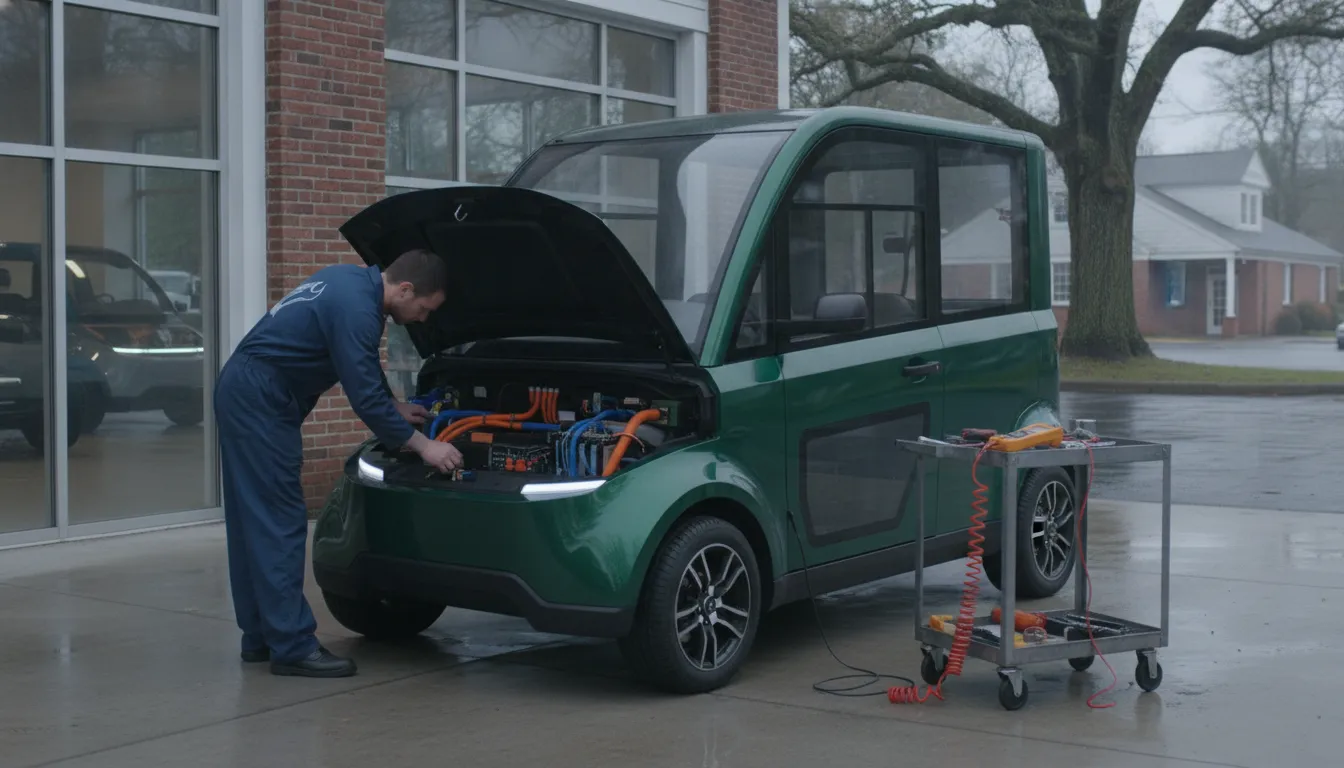
Before choosing a unit, ask about the service schedule, warranty, parts availability, mobile coverage, delivery setup, trade-in evaluation, and financing application. Review the c2 Vehicles service department and compare the current inventory.
Plan service and ownership support before you buy
No. An LSV is a defined federal vehicle class with specific speed, weight, equipment, and certification requirements. A golf cart used on private property is not automatically street legal because it has lights or a windshield. Confirm the exact unit's certification label, VIN documentation, and state and local road eligibility.
No. Road access varies by state, municipality, posted speed limit, highway classification, private-road rules, and local ordinance. Massachusetts, for example, restricts LSV use on limited-access or express state highways and roads with speed limits over 30 mph. Rhode Island and Maine use 35 mph road thresholds in their statutes. Check the intended routes before buying.
Requirements vary by state and vehicle use. Massachusetts guidance identifies a Class D learner's permit or driver's license for public-way operation. Maine requires a valid Class A, B, or C license under section 2089. Buyers in Connecticut, Rhode Island, Vermont, and New Hampshire should confirm the current requirement with the applicable motor-vehicle agency before operating on public roads.
Request the VIN, manufacturer's certification label, certificate of origin for a new vehicle. Prior title for a used vehicle, bill of sale, warranty information, and inspection or equipment records. Ask the dealer to identify which documents your state requires for title, registration, insurance, and plates.
Commercial buyers should assess passenger and cargo needs, route conditions, duty cycle, charging or fueling, operator training, service response, parts, warranty, delivery, financing, and replacement planning. Explain the site and workload to the dealer so the recommendation is based on use rather than appearance alone.
Find a c2 Vehicles location to compare LSV options and plan your next step