
contact us

Searching for a small utility vehicle for sale can mean looking for very different things: a compact vehicle to move tools around a property, a passenger cart for a campus or resort, or a road-approved low-speed vehicle for short neighborhood trips. The best fit depends on where you will drive, what you need to carry, and who will use it. Start with the job, then compare vehicle type, power, capacity, and support.
Talk with our team about your vehicle needs
The phrase covers several compact vehicle categories. Some are designed mainly for carrying people; others are built to haul equipment or supplies. They may look similar at a glance, but their intended tasks and operating rules can differ. Define your use before comparing listings, so you are not evaluating a passenger cart against a work vehicle as though they were interchangeable.
If your main need is passenger transport, compare personal transportation vehicles alongside work-oriented options. If you need a vehicle for grounds, facilities, or a commercial operation, review utility vehicles and commercial fleet solutions.
Write down a typical trip before you look at models. Note the people or materials involved, the surface, distance, slopes, weather exposure, and where the vehicle will be stored. A clear use case helps identify whether you need seats, a cargo bed, a particular drivetrain, or a road-capable model.
For a business, campus, municipality, or venue, include more than the driver in the selection. Ask maintenance staff about storage and upkeep, operators about visibility and access, and the person responsible for purchasing about service, parts, and delivery. A useful exercise is to walk the proposed route with each group: a facilities lead may notice a tight service entrance, while an operator may flag a busy crossing or a place where passengers need to board. C2 Vehicles works with commercial customers on fleet consultation, custom solutions, service infrastructure, and regional delivery; the right conversation begins with the work the fleet must perform.
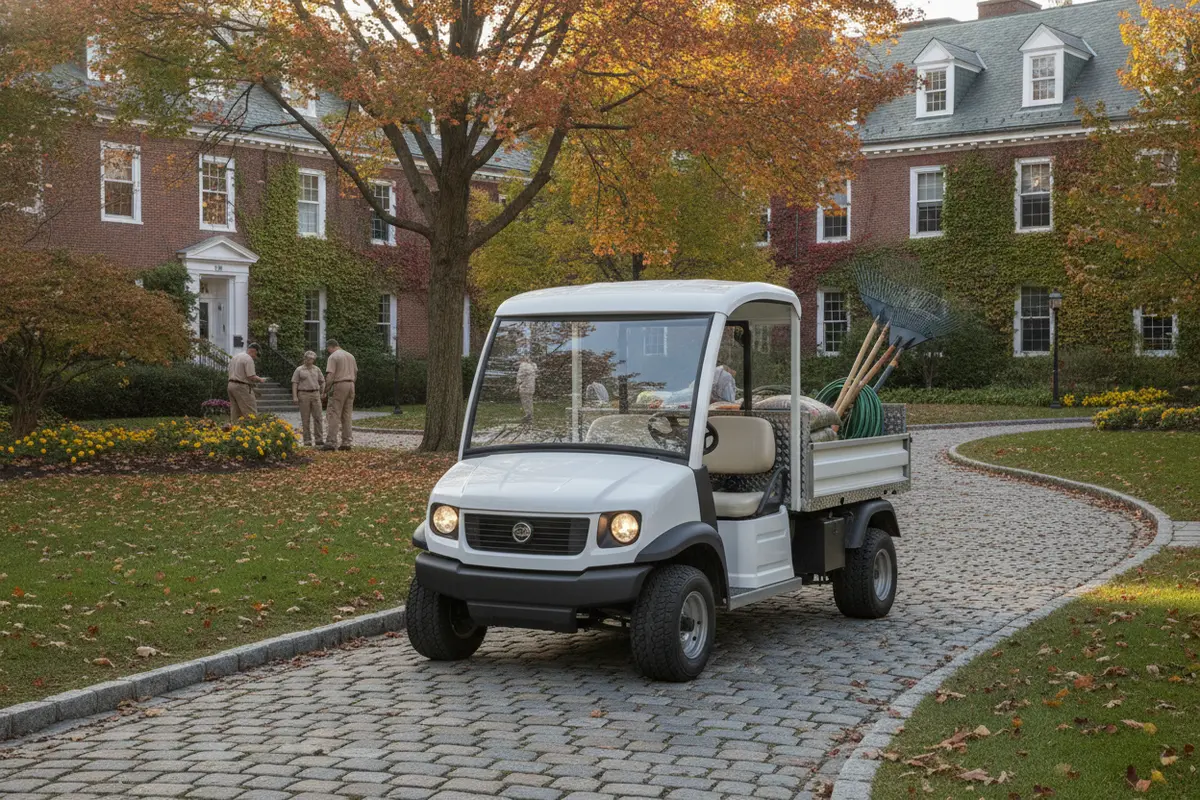
Once the job is clear, compare the details that affect daily use. Product names alone are not enough. Ask for model-specific specifications and make sure any quoted capacity, range, or road-use status applies to the particular vehicle you are considering.
| What to compare | Work-focused utility vehicle | Passenger cart or personal vehicle | LSV (eligible model) |
|---|---|---|---|
| Primary purpose | Moving tools, supplies, or equipment around a suitable property | Moving people on private property or designated routes | Short trips on roads where that exact vehicle and route are permitted |
| Useful details | Cargo bed, payload rating, drivetrain, turning space, and accessory needs | Seat count, passenger access, comfort, and route conditions | Model approval, required equipment, local rules, and road-speed limits |
| Power choice | Compare electric or gas based on use, charging/refueling, and site needs | Compare electric or gas for the trips and operating pattern | Check the specific model’s power system and approved configuration |
| Before deciding | Confirm load limits, terrain fit, storage, and service plan | Confirm passenger capacity, route, and storage | Confirm state and municipal requirements; do not infer legality from appearance |
Cargo and capacity: Look at the load rating, bed dimensions, and how you will secure the items you carry. For tools or supplies, consider whether the bed arrangement makes loading practical. A grounds crew that moves long-handled tools may need a different arrangement from a team delivering small packages. For passengers, compare the seating layout with who will regularly ride and how easily they can get in and out. A comfortable seat count on paper is less useful if access is awkward for the people using it.
Electric or gas: Electric vehicles can suit operations with a practical charging routine and an appropriate place to charge. Gas models may better match some work patterns or sites. Compare actual daily use, access to charging or fuel, and maintenance arrangements. Do not rely on a generic range claim; terrain, load, driving habits, and conditions can affect use. For example, a vehicle making repeated short trips with time parked between runs presents a different planning question from one expected to remain in use across a long shift. Ask how the specific model fits that schedule.
Terrain and weather: Think about inclines, wet ground, uneven surfaces, and seasonal conditions common at your site. Ask whether the tires, ground clearance, and configuration suit your route. A mostly paved campus loop may call for different priorities from a property with gravel paths and regular slope changes. If the vehicle will operate around pedestrians, plan where it travels and how operators will share paths safely.
Options and accessories: Start with the features you need for the task. A cargo solution, weather protection, lighting, or other equipment may affect configuration and cost. Separate must-have equipment from options that would simply be convenient. Ask what is available for the exact model and whether an option changes the vehicle’s permitted use.
Make a comparison on the complete ownership picture, not just the listing headline. Exact prices and available vehicles change, so request current details for the units you are considering. Use this checklist when visiting a showroom or speaking with a sales representative.
Take notes in the same order for each candidate. For example, record the model and its rated capacity first, then write down what is included, what you would add, and which questions remain unanswered. This makes it easier to compare two vehicles with different standard equipment. Ask for any relevant specifications in writing so you can review them with a second driver or the person approving the purchase.
New and pre-owned vehicles can both be worth comparing. A used vehicle’s age is only one detail; consider its condition, service history, equipment, and the terms offered. C2 Vehicles’ certified pre-owned program includes vehicles up to five years old that are serviced in-house and backed by a three-year bumper-to-bumper warranty, subject to the program’s terms. Ask which specific vehicles qualify and review their details. You can browse new vehicles and pre-owned vehicles as you narrow your list.
Road legality is not a feature to guess from a vehicle’s shape or name. Some models may qualify as LSVs, while others are intended for private property or specific settings. Requirements can differ across Massachusetts, Connecticut, Rhode Island, Vermont, New Hampshire, Maine, and individual municipalities. Before planning public-road use, confirm rules for the specific vehicle and location, including allowed roads, speed limits, equipment, registration, and operator requirements. Do this before purchase if public-road use is central to your plan; a vehicle’s appearance or a seller’s general category label does not settle where you can drive.
For off-road or worksite use, match the vehicle to its instructions and the site’s operating procedures. Purdue’s ATV and utility vehicle safety operation guidance discusses safety considerations for those vehicle types. Categories differ, so use the specific manufacturer’s manual and training for the model you choose rather than treating one guide as a substitute for model-specific instructions. Establish clear rules for authorized operators, passenger use, speed, parking, and charging or refueling.
Before introducing a vehicle to a workplace or shared property, make a short route and operator plan. Identify where it may travel, where it must yield to pedestrians, who may drive it, and where it will be parked. Explain how equipment should be secured, and decide what operators should do if they notice a warning, damage, or an unsafe route condition. Review the plan with the people who will actually use the vehicle, then update it when the route or task changes.
For local help comparing options, c2 Vehicles is the largest distributor of golf carts and small-wheeled electric and gas vehicles in New England, with seven locations across the six New England states. Use the location finder to identify a nearby showroom or service location. You can also learn more about Club Car golf carts and course vehicles and explore Club Car inventory as part of your comparison.

Use a simple three-column shortlist: must-have, useful, and not needed. For example, a property team may mark a cargo bed and service access as must-haves, weather protection as useful, and extra passenger seating as not needed. A resort may reverse those priorities, putting passenger access and comfort first. This keeps a polished feature from distracting you from the core job. It also helps several decision-makers discuss the same criteria rather than choosing based on different assumptions.
Then compare two or three suitable configurations in the same way:
Consider a simple example. A facilities team needs to move two staff members and supplies between buildings, mostly on paved paths, several times each day. The team can first eliminate models that do not match the required passenger and cargo capacity, then check turning clearance at doors and storage space, and finally compare the charging or refueling routine with its work schedule. A homeowner making occasional trips around a private property may place more weight on passenger seating, convenience, and storage than on a cargo bed. The comparison is useful because the task—not a broad label—sets the priorities.
A local dealer can help translate requirements into a vehicle configuration. c2 Vehicles offers new and used vehicles, service, rentals, and commercial fleet solutions, and is the exclusive Club Car dealer in its New England market. If you are choosing for a business or property, share the number of vehicles, expected routes, main tasks, typical load, and desired timing when you request a quote. For a personal purchase, explain where you plan to use the vehicle and whether the trip involves public roads. You can also ask whether a showroom visit would help you compare seating, access, and cargo arrangements in person.
Request help choosing the right vehicle
Not always. The phrase can refer to passenger carts, work-focused utility carts, or other compact vehicles. Compare the exact model’s intended use, equipment, and capacity rather than relying on a broad category label.
Only if the specific vehicle and intended route meet applicable rules. LSV requirements and where they may operate vary by state and municipality. Verify local requirements before using any vehicle on public roads.
Choose based on your route, daily use, charging or refueling access, load, and maintenance plan. Compare exact configurations and consider how the vehicle will be used across a typical day.
You can review available utility vehicles, then contact c2 Vehicles or visit a location to discuss your requirements and current availability.
Define your task, confirm the permitted operating area, and shortlist vehicles that meet your capacity and support needs. Compare exact configurations and ask for current availability and a quote before choosing.
Find a c2 Vehicles location to discuss the vehicle that fits your plans, and bring your route, passenger or cargo needs, and questions so the conversation can focus on a practical match.