
contact us

When you search for electric golf carts for sale, start by matching the vehicle to the trips it will make. Battery type, passenger capacity, terrain, charging access, and intended road use all affect which cart makes sense. A little planning helps you compare options without focusing on a single feature.
Talk with our team about your electric cart needs
Write down how and where you expect to use the cart. A homeowner making short trips around a property may need a different setup from a campground, resort, school, or municipality moving people and supplies across a larger site. Record the usual route, the longest expected day, typical passenger count, and any cargo before looking at models. This turns a vague preference into a set of needs you can verify.
For personal use, comfort and easy access may be priorities. For a business or property, think about daily duty cycle, cargo, operator turnover, storage, and how quickly a vehicle needs to return to work. C2 Vehicles serves personal buyers as well as commercial and fleet customers across New England. See personal transportation vehicles or explore commercial vehicle and fleet solutions to frame your search.
Battery capacity is only one part of practical range. Load, hills, speed, temperature, driving habits, and battery condition can influence how far a vehicle travels between charges. Ask about the specific model and configuration rather than relying on a broad range estimate from a different vehicle. If you can, describe your longest usual route and the number of riders so the seller can explain how that use compares with the maker’s guidance.
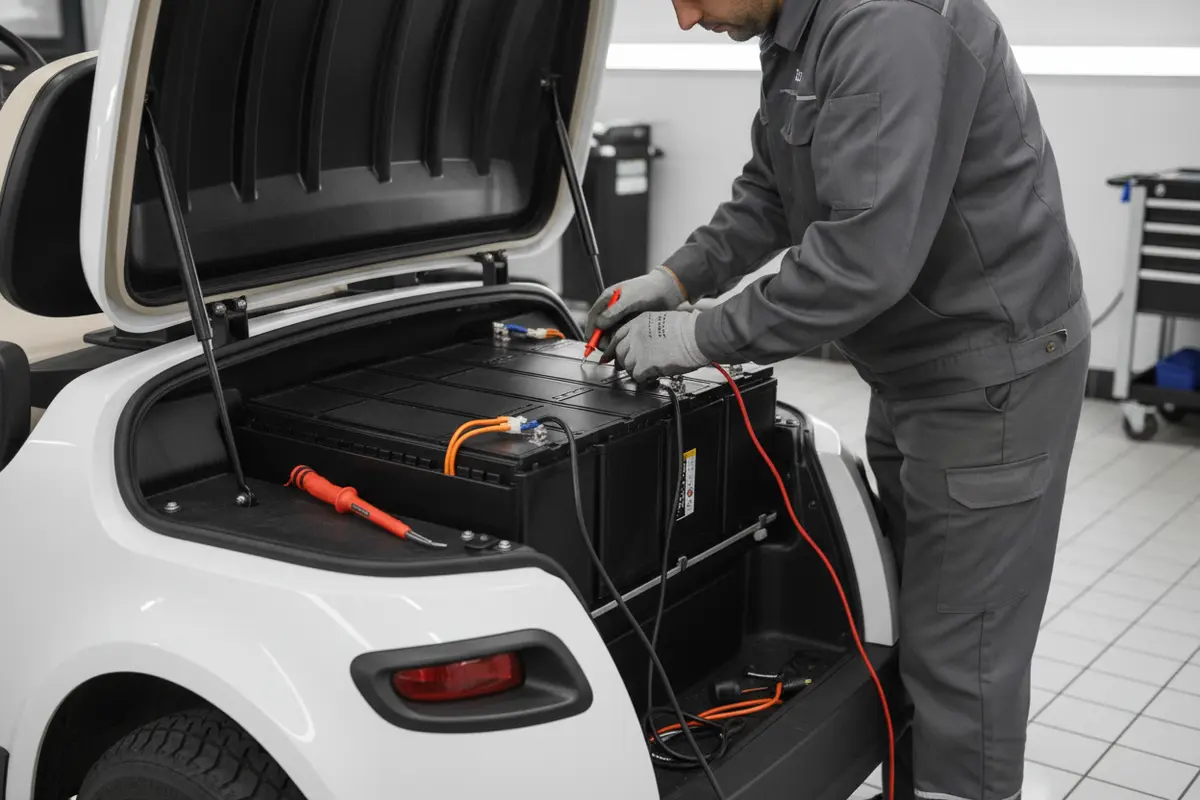
When comparing electric models, ask:
Plan with a margin rather than choosing a cart that only just covers an idealized trip. For example, a property manager may estimate several short loops during a shift, but additional errands, hills, or heavier loads can change the daily demand. Ask whether charging can happen during downtime and what happens if use exceeds the normal schedule. Owners should follow the specific manufacturer’s charging and storage instructions rather than assume all batteries have the same care routine.
Lithium-powered models can appeal to buyers looking for a smooth, quiet ride and batteries that do not require routine watering. The New 2027 Onward 4 Forward LSV is positioned as a neighborhood cruiser with lithium power and seating for four. Confirm current model details and road-use eligibility for the exact vehicle you are considering. See lithium vehicle options for a starting point, and ask which specifications apply to a particular listing.
Compare vehicles on the needs that matter for your route and workload. The table below is a starting point; specifications and equipment vary by model. Use it to structure a showroom visit or a call, then confirm details for the exact vehicle.
| What to compare | Why it matters | Question to ask |
|---|---|---|
| Battery and charging | Shapes charging routine and practical use between charges. | What charging setup and care does this model require? |
| Seating and access | Helps passengers ride comfortably and get in and out more easily. | How many people ride regularly, and is the layout suitable? |
| Ground clearance and tires | Can affect how the vehicle handles the surfaces you travel. | Does this configuration fit my property or route? |
| Cargo capacity | Important when carrying tools, supplies, or equipment. | Is there a suitable cargo bed or accessory option? |
| Road-use status | Public-road use has specific vehicle and local requirements. | Is this exact model an approved LSV where I plan to drive? |
| Service and parts | Support can matter throughout ownership and for fleet uptime. | Where can I get service and parts in my area? |
Seating labels alone do not tell you whether a layout is comfortable for your passengers. Consider how riders enter and exit, whether a rear-facing seat suits the trip, and whether storage is needed for bags or equipment. For cargo work, check the load limits and whether the bed or accessories fit the tools you carry. Avoid assuming an accessory shown on another vehicle is included with a listing.
Use electric golf cart inventory to see the available category, and check Club Car options if you are considering that brand. C2 Vehicles is the exclusive Club Car distributor in New England. Inventory changes, so confirm current availability and specifications with the team.
Local conditions can shape the decision. A coastal homeowner, a Vermont property with slopes, and a Massachusetts campus may have different needs even if each shopper starts with the same search. Think through the months and conditions in which the cart will be used, where it can be stored, and how service will be handled if it needs attention.
For location and regional support details, use the location finder. If you are comparing new and pre-owned vehicles, browse new vehicle options and pre-owned inventory; ask about condition, warranty, and included equipment for each specific listing. A used electric cart deserves particular attention to battery age, charging behavior, and what support applies to that unit.
Electric vehicles can suit buyers who value quiet operation and have a workable charging routine. The right choice depends on use, not a universal rule that one power type fits everyone. If you are still weighing options, compare expected daily duty, access to charging, service needs, and route before deciding. The most useful comparison is not an abstract list of advantages; it is whether the vehicle can reliably handle your own normal day.
For commercial work, a purpose-built utility vehicle may be more practical than a passenger cart. Club Car Carryall Utility Vehicles, for example, are designed for work and play with a cargo bed and gas or electric drivetrain options. Review utility vehicle options and explain the job to a commercial representative before selecting equipment.
Use a simple two-pass process. First, rule out vehicles that fail a firm requirement: enough seats, a suitable cargo setup, compatible charging, or confirmed LSV status for a planned public-road route. Then compare the remaining options on comfort, equipment, support, and ownership fit. This prevents attractive extras from distracting from a basic mismatch.
For example, a family using a cart to move between a home, a shared amenity, and a nearby path may prioritize easy entry, a four-person layout, and simple nightly charging. A grounds team may instead need a cargo bed, room for supplies, and a schedule for keeping the vehicle available through a workday. Both searches may begin with electric golf carts for sale, but the correct questions and configurations differ.
A fleet buyer can build a small comparison sheet with one row per vehicle and columns for assigned job, seats, expected route, cargo, charging point, downtime plan, warranty questions, and service contact. Ask operators who will use the cart to review the practical details. The person approving a purchase may not be the person loading tools or driving repeated trips, so their input can reveal access or storage needs early.
Arrive with a short list so the conversation focuses on details that affect ownership. Bring your typical route, number of passengers, cargo needs, charging location, and any planned public-road use.
Bring any requirements from a property manager, campus, municipality, or insurer. For a fleet, include the number of vehicles, intended schedule, and service expectations. That gives a sales or commercial team useful context for recommending a configuration or arranging a demonstration. You can also review current vehicle inventory before contacting a location, while confirming that availability has not changed.
Do not treat the words “golf cart” and “low-speed vehicle” as interchangeable. A cart designed for golf-course or private-property use is not automatically approved for public roads. LSV classification, required equipment, registration, and where the vehicle may operate depend on the particular vehicle and applicable law. Confirm the exact model’s documentation and check state and local rules for every route you intend to use.
If road use is important, make it a selection gate rather than a question to settle after purchase. Ask what documentation comes with the vehicle, whether its equipment and classification match your intended use, and which roads or speed limits apply locally. Rules can differ between neighboring towns, so a general statement about New England is not a substitute for checking the jurisdiction where you will drive. The National Highway Traffic Safety Administration explains federal vehicle classifications and safety requirements; consult its low-speed vehicle information as background, then verify local requirements with the relevant authorities.
For a private property, campus, or resort, ask about site rules too. A vehicle that is appropriate for internal paths may not be suitable for nearby public streets. Establish where it will operate, who can drive it, and how it will be stored before finalizing the configuration.
Use the conversation to check details rather than relying on assumptions from photos or category labels. Ask the seller to walk through the exact vehicle or configuration, and note the answers so you can compare options consistently.
If you are a first-time buyer, ask for plain explanations of unfamiliar terms and compare the answer against your written use case. If you already know the model family you want, still verify the actual battery, seats, tires, and included accessories on the unit. The details may vary between listings.
Find a nearby c2 Vehicles location
No. Street legality depends on the specific vehicle’s classification and equipment, as well as state and local rules. Confirm that the exact model is an approved LSV and check requirements where you plan to drive.
There is no single range that applies to every electric cart. Battery configuration, load, terrain, temperature, speed, and driving habits all affect use. Ask for model-specific guidance and clarify the conditions behind any range estimate.
Compare condition, age, battery details, included equipment, warranty coverage, and price for each vehicle. For a pre-owned cart, ask what inspection or service has been completed and what support applies to that specific unit.
Yes. Electric carts and utility vehicles can serve many property and fleet needs, depending on the work, route, and load. Describe the job and daily schedule to a commercial vehicle specialist to assess suitable configurations.
Once you know your passenger, cargo, charging, and road-use needs, compare the actual vehicles that meet them. c2 Vehicles is the largest distributor of golf carts and small-wheeled electric and gas vehicles in New England, with seven locations across the region. Share your requirements and ask the team to help identify options for your home, property, or fleet.
Use the contact page to start a conversation about electric golf carts for sale and the right next step for your needs.