
contact us

When a cart will not start, loses power, or feels different to steer, finding the right golf cart repair in Connecticut starts with a few safe observations. Note what changed, when the symptom occurs, and whether the cart is electric or gas-powered. That information helps a service technician narrow down the next checks.
Start by describing the symptom rather than guessing at the failed part. A cart that clicks but does not move can have a different cause from one that powers on but slows under load. Record the make and model if known, the power type, and any warning lights or unusual sounds. If you have a manual, consult it for model-specific guidance.
Do not bypass safety switches, improvise wiring repairs, or continue driving if braking or steering feels unreliable. Keep people clear of the cart and contact a qualified service provider for advice. For service options, visit c2 Vehicles service and parts.
Several systems can produce similar symptoms, so a symptom is a clue rather than a diagnosis. Use the details below to organize what you observe. Describe whether the problem is constant or intermittent, and whether it changes with speed, terrain, load, or temperature. A technician can inspect the vehicle and confirm the cause.
| Symptom | What to note | Next step |
|---|---|---|
| Slow acceleration or reduced range. | Note whether it occurs consistently, under load, or after storage. | Describe the pattern and ask about a battery and drive-system inspection. |
| Clicking or no start. | Note whether lights or other electrical features work. | Report the sound and request electrical-system diagnosis. |
| Pulling, wobble, or tire wear. | Note which direction it pulls and whether vibration changes with speed. | Ask to have tires, wheels, steering, and suspension inspected. |
| Weak braking or unusual brake noise. | Note when the sound occurs and whether stopping feels different. | Stop using the cart until a technician advises you. |
| Fluid leak or unusual exhaust. | Note where fluid appears and when it occurs. | For gas models, describe the leak or exhaust and arrange inspection. |
Share observations without trying to identify a specific failed part. A scrape may come from a wheel or brake area, while a change in handling may involve tires, steering, or suspension. Avoid reaching under a raised cart or testing it on a slope. If the cart behaves unpredictably, park it on level ground, secure it as directed by the manual, and ask the service team how to proceed.
Electric cart performance depends on the battery system and its connections, but symptoms alone cannot identify a failed component. Reduced run time, slow response, or failure to charge can have several possible causes. Share the cart's recent use and storage history, and let a technician test the system with suitable equipment.
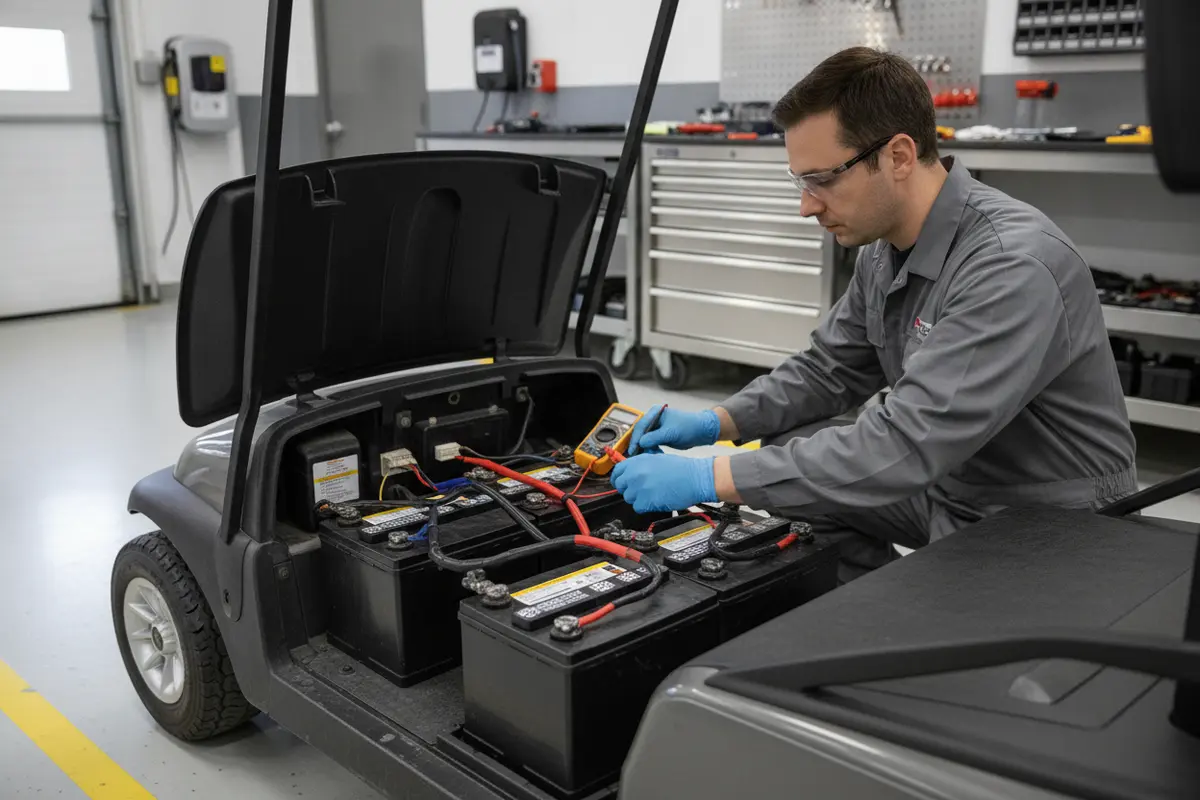
Before service, use the charging instructions for your specific model. Avoid opening battery components or changing wiring unless the manufacturer’s procedure says it is appropriate for the owner. If you see damage, unusual heat, or an unfamiliar odor, stop charging and seek qualified guidance. The U.S. Consumer Product Safety Commission provides general information about consumer product safety; battery handling and service steps should still follow the vehicle maker's directions and the advice of a qualified technician.
C2 Vehicles offers Club Car manuals and support resources; use documentation that matches your vehicle. Note whether charging stops early, takes longer than usual, or does not begin. If the charger displays a code, record it rather than repeatedly disconnecting or restarting the system. A technician can use the exact model and symptom history to decide which system checks are appropriate.
For a gas cart, report any starting difficulty, rough running, fluid leak, or new exhaust symptom. A technician can determine whether the issue involves routine maintenance or a repair. Do not assume an electric and gas model share the same inspection steps. If fuel or oil is visible, keep ignition sources away and do not operate the vehicle until you have received qualified advice.
Handling changes deserve prompt attention because they can affect control. Make a note of whether the cart pulls in one direction, vibrates at a certain speed, makes a sound over bumps, or takes longer to stop. Look at tires only from a safe position. Do not drive around to reproduce a symptom if the steering or braking already feels uncertain.
A visual check is not a full inspection. Tires can look acceptable while a handling concern has another cause, and a noise may come from a different component than it seems. Give the service team your observations and let trained personnel determine whether the vehicle can be driven or should be transported. If replacement tires or wheels are being considered, confirm the correct size and fitment for the cart before ordering from the tires and wheels selection.
Mobile support can be convenient when a vehicle cannot be driven safely or when the issue is easier to assess where the cart is kept. A service center may be the better fit when the work requires shop equipment, parts, or a more involved inspection. The right option depends on the symptom, location, vehicle, and current service availability.
c2 Vehicles serves New England through seven locations across six states, including Connecticut. Use the location finder to identify a nearby point of contact, and review regional service coverage for more context. The Clinton location serves Connecticut. Confirm service options and availability directly before arranging transport or an on-site visit.
When you call or send a request, be ready to explain where the cart is parked, whether there is room to access it, and whether it can roll freely. Mention any gates, narrow paths, low-clearance areas, or other access limits that could affect a visit. If the cart is part of a business or property fleet, explain how many vehicles are affected and whether one cart or several share the symptom. This helps the team understand the situation before discussing a suitable next step.
A short conversation before scheduling can clarify the next step and avoid an unnecessary trip. Explain the symptom in plain terms and ask what information the service team needs. If the cart is used at a residence, golf facility, resort, campground, or commercial property, mention that context and any access limits.
Warranty coverage depends on the vehicle and its terms. Keep purchase documents and maintenance records available, and ask the service team to help determine what applies rather than assuming a repair is covered. If the cart is still within a stated warranty period, ask whether diagnosis or authorization must happen before work begins. Keep copies of any written estimate, inspection findings, or repair order for your records.
Describe prior repairs and replacement parts, even if they seem unrelated. A new symptom may follow storage, a change in use, or recent service, and that context may help diagnosis. If you are unsure whether a component is original, say so rather than guessing. For maintenance items, c2 Vehicles also offers tune-up parts; confirm compatibility for the exact make, model, and year before purchasing parts or attempting maintenance.
Regular attention can help you notice changes early, though it does not replace the maintenance schedule for your model. Follow the manufacturer’s instructions and ask a technician if you are unsure which checks are owner-appropriate. Before seasonal storage, review the manual’s recommendations for batteries, tires, cleanliness, and safe parking.
Before winter storage, plan for the cart to be clean, dry, and parked according to the maker’s guidance. The correct battery procedure varies by battery type and model, so do not assume one charging or disconnect routine applies to every cart. Keep the manual with your service records, and note the date the vehicle goes into storage. When bringing it back into use, inspect tires and visible components, charge as instructed, and pay attention to how the cart behaves during its first outings. Stop and ask for help if steering, braking, charging, or drive behavior seems abnormal.
Simple records can make a later appointment more efficient. An electric-cart note might read: reduced range began after two weeks unused, the charger indicator stays on, and there is no warning light.
A gas-cart note might record the starting pattern, whether the engine runs smoothly after starting, and any leak or exhaust change. Avoid making a diagnosis in the note. The goal is to make the symptom repeatable and clear.
For a cart that no longer fits its intended use, explore personal golf carts and utility vehicles or review new and pre-owned inventory. If you are evaluating replacement options, consider passenger needs, terrain, storage, expected use, and whether electric or gas power better suits the setting. A service conversation can help clarify whether the current vehicle needs repair or whether it is time to discuss a different option; inventory and availability change, so confirm current details.
For business operators, the decision can involve more than one cart. If several vehicles show a similar symptom, record each unit’s make, model, age if known, and the way it is used. Note whether the issue appears across the fleet or on just one cart. A shared charging schedule, heavy daily loads, outdoor storage, or rough operating surfaces may be useful context to report, but they do not by themselves establish the cause. Ask whether the vehicles should be assessed together or one at a time, and what access or downtime plan will make an inspection practical. Property managers, golf facilities, campgrounds, and municipalities may also want to identify a backup vehicle or temporary route plan while a cart is unavailable. Do not keep using a unit with unreliable brakes or steering just to maintain a schedule.
Before you approve work, ask three things:
Request a written explanation of parts and labor where available. Ask whether the recommendation addresses the immediate symptom or a separate maintenance concern.
If more than one repair is proposed, clarify the order and what changes if you postpone a lower-priority item. That lets you compare the plan with how you use the cart, without guessing at technical details.
Ask whether the technician needs your approval before additional work. Keep the final service record with the vehicle documents.
Contact c2 Vehicles to discuss service
If steering or braking feels unsafe, or the cart has a major electrical or mechanical symptom, do not drive it until you have received qualified guidance. Explain the problem when you contact the service team and ask whether it should be transported or assessed through mobile support.
c2 Vehicles provides broad regional service coverage and mobile service, but availability depends on location and the work needed. Contact the team with your town and cart details to discuss the current options.
Share the make and model if known, whether it is electric or gas-powered, the symptoms, when they started, and your location. Service records, purchase documents, and a description of any warning lights or sounds may also help.
Coverage depends on the specific vehicle and warranty terms. Provide the vehicle information and relevant documents to the service team so they can help confirm what may apply.
Describe what the cart is doing, where it is located, and whether it is electric or gas-powered. C2 Vehicles can help you discuss an appropriate next step. Service availability depends on the location and the work needed, so confirm current options when you request help.
Schedule Service through the C2 Vehicles service page. The Clinton, CT location at 103a W Main Street serves Connecticut, and the service page lists current location details. You can also call C2 Vehicles at (508) 273-9939.