
contact us

If you need to buy golf cart batteries in New England, the best source is not always the one with the lowest advertised price. A dependable battery partner should confirm your cart's voltage, battery chemistry, charger, fitment, and installation needs before you purchase. That matters even more in New England, where seasonal storage and long periods of cold weather can expose a weak battery system.
Answer capsule: Buy golf cart batteries from a specialist that can match the battery to your cart, verify the charger and cables, provide professional installation when needed, and support you after the sale. For New England owners, a regional parts and service network can be more useful than a battery-only seller because it can diagnose the full vehicle, not just sell a component.
Schedule Service for battery guidanceA good battery source does more than identify a battery by its voltage. It asks about the cart model, existing battery system, charger, typical route, storage conditions, and who will install the replacement. That process helps prevent an expensive mismatch and gives you a clear path for testing, installation, recycling, and future maintenance.
Online marketplaces can be useful for research, but a listing alone may not tell you whether the battery fits your cart or whether the charger is compatible. A local specialist that can inspect the complete vehicle gives you a stronger buying decision and a clearer remedy if the symptoms continue.
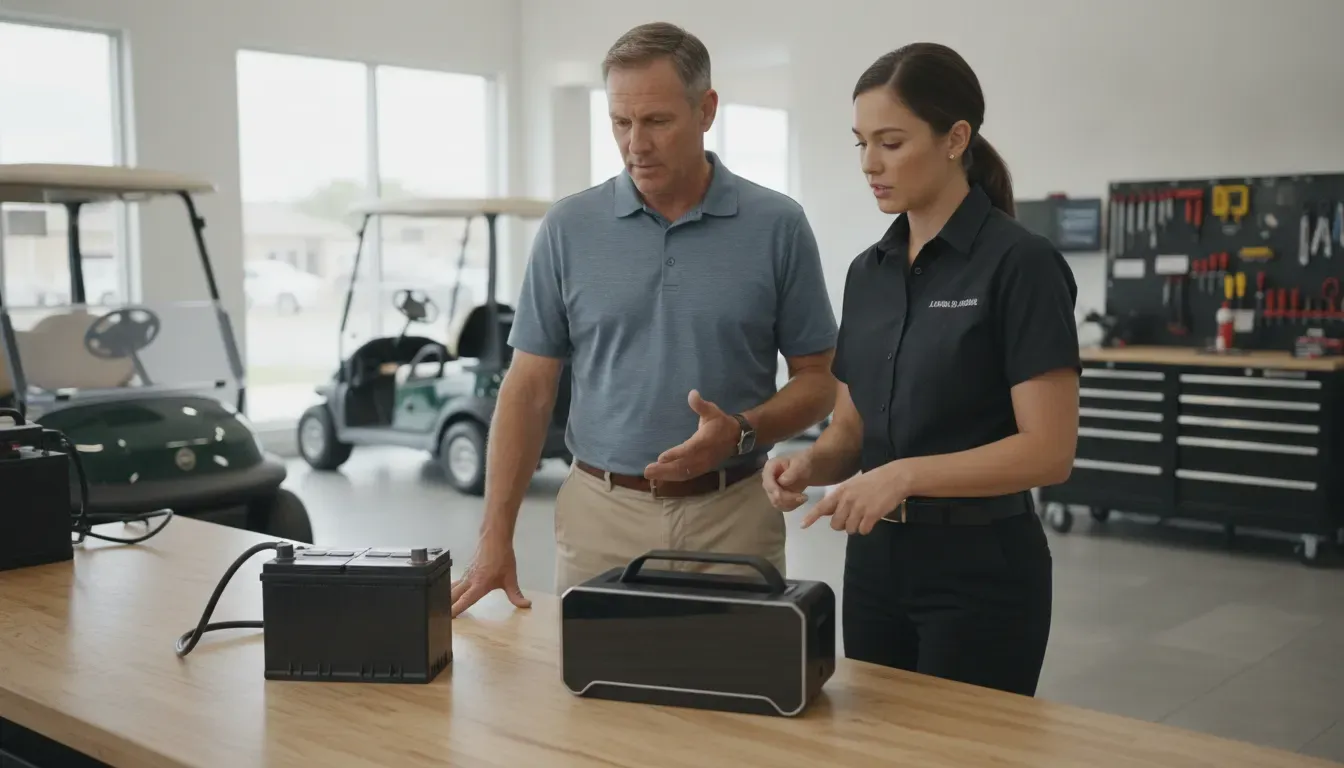
Confirm the complete system voltage before ordering. A golf cart may use a series of individual batteries that work together as a 36-volt or 48-volt system, while the individual batteries may be rated at 6, 8, or 12 volts. The correct replacement must match the vehicle's design and the way those batteries are connected, not just a number found in a general search.
Do not mix old and new batteries in a multi-battery lead-acid pack. The weakest unit can limit the performance of the entire set. If the cart's labels are missing, the wiring has been modified, or the symptoms do not match the battery's age, professional testing is a better starting point than guessing.
Flooded lead-acid, AGM, and lithium batteries can all be appropriate in the right vehicle. The practical choice depends on maintenance preferences, driving frequency, storage conditions, available space, charger compatibility, and the support available for the system. A specialist should explain the tradeoffs in the context of your cart instead of recommending a chemistry in isolation.
| Battery option | What to consider | Often fits this use |
|---|---|---|
| Flooded lead-acid | Proven technology that requires charging discipline, terminal care, and regular electrolyte checks with distilled water. | Owners who prefer a familiar system and can follow a maintenance routine. |
| AGM lead-acid | Sealed construction reduces routine watering, but the system still needs correct charging and cart-specific fitment. | Owners who want less routine maintenance while staying with lead-acid technology. |
| Lithium | Lower routine maintenance and lighter weight, with careful attention to the battery management system, charger, cables, and installation. | Frequent users, owners seeking a lower-maintenance system, and carts that support a properly matched conversion. |
Club Car explains that its lithium-ion systems are designed for maintenance-free operation, while traditional lead-acid systems require regular maintenance and watering. That is useful manufacturer guidance, but it does not replace a fitment check for your specific cart. Read the Club Car lithium-ion overview for the system context, then confirm the exact battery and charger combination with a qualified specialist.
Flooded batteries also need safe care. Trojan Battery recommends adding distilled water after a full charge, keeping electrolyte above the plates, and avoiding overfilling. Its flooded lead-acid watering guide is a useful reference for owners who choose that chemistry.
Explore OEM parts and battery supportNew England's seasonal pattern makes storage planning part of the battery purchase decision. A cart used heavily during summer may sit for weeks or months in winter. Before you buy, ask the seller for storage instructions specific to the battery chemistry and charger. Also confirm whether the source can provide spring wake-up checks, winterization, and service if the cart will be stored away from the dealership.
New England buyers should also consider support distance. A battery problem on Cape Cod, in Vermont, or at a seasonal property in Maine is easier to resolve when the seller has regional service coverage or mobile support. That is a practical reason to compare the complete support model, not just the battery specification.
Reduced range is one common warning sign, but it is not proof that the battery pack is the only problem. Slower acceleration, longer charging times, a charger that stops early, swelling, corrosion, unusual heat, or a sharp drop in performance under load can all justify an inspection. A professional should distinguish battery wear from a charger, cable, connection, or controller issue.
Stop using a damaged or leaking battery and arrange professional service. Do not open a lithium battery pack, bypass a battery management system, or improvise a high-current connection. The safest next step is a diagnostic evaluation that includes the batteries, charger, cables, and vehicle settings.
Professional help is especially appropriate when the cart has been modified, the battery chemistry is changing, the charger is older, the wiring is unclear, or a battery problem affects a commercial operation. Correct installation includes more than placing batteries in the compartment. It can involve cable routing, terminal torque, charger settings, battery monitoring, corrosion inspection, and a post-installation performance check.
c2 Vehicles provides battery testing and replacement support for lithium and FLA systems, along with factory-trained technicians, OEM parts, service centers, and mobile service across its New England network. The company is the exclusive Club Car distributor for New England, and its service team supports personal vehicles, golf operations, and commercial fleets. Availability and service routing can change, so confirm the current destination before traveling.
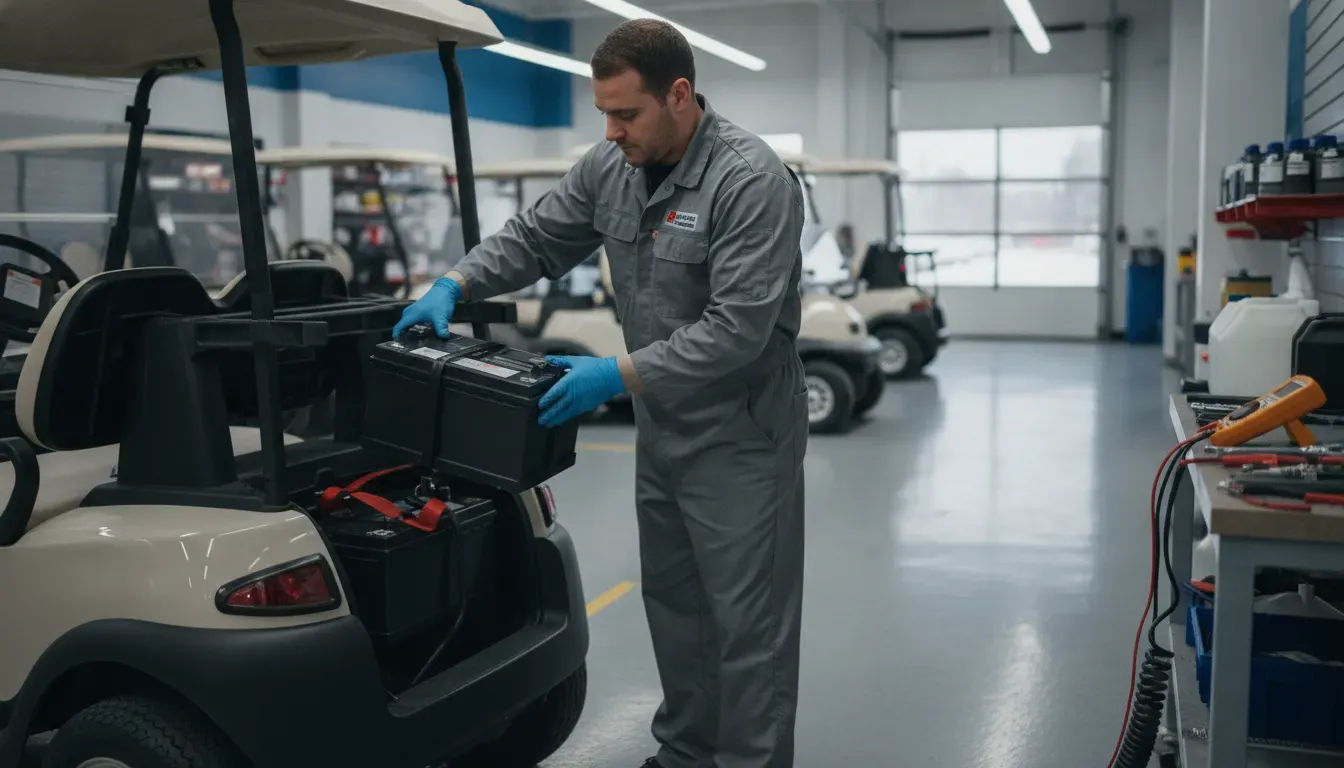
For owners who are unsure whether they need a replacement, c2 Vehicles can begin with diagnosis rather than a guess. That approach helps identify whether the right answer is a new battery set, charger service, cable repair, seasonal maintenance, or a different vehicle-level repair.
Find a c2 Vehicles location near youUse this short checklist when comparing a local dealer, battery retailer, or online source. The goal is to leave with a compatible system and a support plan, not just a box delivered to your driveway.
c2 Vehicles serves New England through seven locations across all six states and maintains a large OEM parts operation. That regional footprint can be useful for buyers who want one team to help with parts, diagnosis, installation, and ongoing service. Browse the parts and accessories collection, or use the service page to confirm the current support path.
Can I buy any golf cart battery as long as the voltage matches?
No. Voltage is only one requirement. Confirm the cart model, battery chemistry, compartment dimensions, cable layout, charger, and intended use before ordering.
Are lithium golf cart batteries better than lead-acid batteries?
Neither chemistry is best for every owner. Lithium can reduce routine maintenance and weight when properly matched, while flooded lead-acid remains a practical choice for owners who can follow its charging and watering routine.
Do golf cart batteries need special care during a New England winter?
Yes. Storage instructions depend on chemistry and manufacturer. Clean the battery area, follow the correct charge and temperature guidance, and arrange a spring inspection if the cart has been stored for an extended period.
Should a dealer test my charger before installing new batteries?
Yes. A charger or cable problem can damage a new battery system or make it seem defective. Testing the charger, connections, and vehicle system helps ensure the replacement is set up correctly.
Where can I get golf cart battery installation in New England?
Start with a specialist that can support your cart and location. c2 Vehicles offers battery testing and replacement, OEM parts, factory-trained technicians, and regional service support. Confirm the current service route before scheduling.