
contact us

Organizations searching for commercial vehicles for sale in Connecticut usually need more than a vehicle. They need a dependable way to move people, tools, materials, guests, or staff across a property without sending a full-size truck everywhere. C2 Vehicles helps Connecticut businesses, campuses, municipalities, resorts, campgrounds, and property managers compare practical utility and passenger options, then plan financing, delivery, and ongoing service.
Quick answer: The best commercial vehicle for a Connecticut operation depends on payload, passenger capacity, terrain, daily range, powertrain, road access, and service needs. Start with the job rather than a brand name, then review C2 Vehicles' current commercial inventory and request a fleet consultation for the right configuration.
Explore commercial vehicle solutions for Connecticut
Compact commercial vehicles can be a strong fit when a team makes frequent short trips around a campus. Resort, municipal property, golf facility, campground, industrial site, or managed community. They can reduce unnecessary trips in full-size trucks, keep staff closer to the work, and make routine movement easier on narrow paths and private roads.
Connecticut buyers often need one fleet to handle several jobs. A maintenance team may carry tools and supplies in the morning, while a facilities or guest-services team needs passenger seating later in the day. A useful buying process starts by listing the recurring jobs and separating must-have capabilities from nice-to-have accessories.
Commercial vehicle shopping is easier when the choice is organized around the work. A cargo-bed utility vehicle may be the right answer for a grounds crew, while a passenger vehicle may be better for a resort shuttle or campus team. Some organizations need both, and a mixed fleet can be more efficient than asking one vehicle to do every job.
| Vehicle type | Good fit for | Questions to answer |
|---|---|---|
| Cargo-bed utility vehicle | Maintenance, landscaping, facilities, parks, and worksites | What payload, bed size, attachments, and ground clearance are required? |
| Passenger vehicle | Campuses, resorts, events, communities, and guest transportation | How many people travel together, and what access or weather protection is needed? |
| Street-capable low-speed vehicle | Approved local-road routes between nearby buildings or properties | Is the specific model approved for the intended roads, and what local rules apply? |
| Heavy-duty utility vehicle | Industrial, construction, municipal, and demanding commercial work | What terrain, towing, payload, braking, and operator-safety requirements apply? |
The commercial lineup at C2 Vehicles includes Club Car Carryall utility vehicles, GEM electric vehicles, Polaris Pro XD options, and other small-wheeled vehicles. Product specifications, powertrains, prices, and availability change, so use the live collection for current listings instead of relying on a static list in a buying guide.
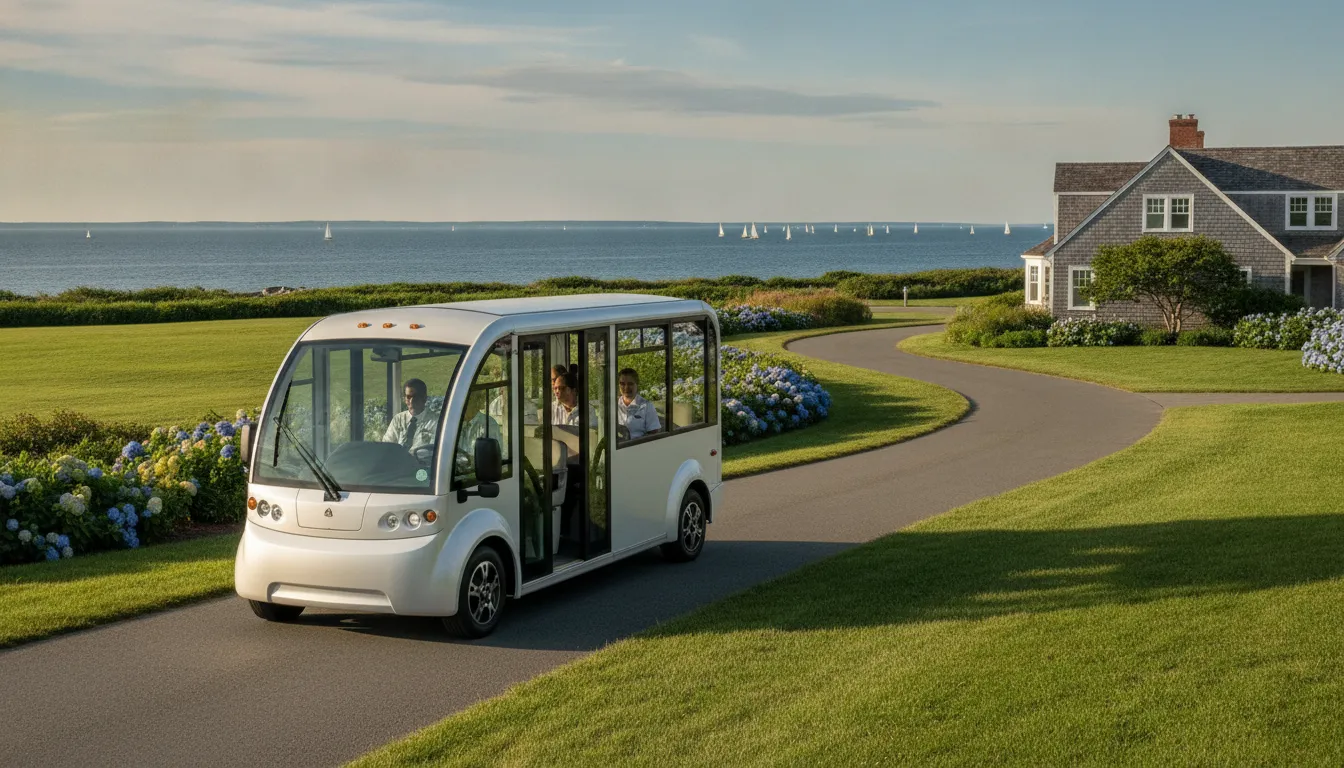
Use a short needs assessment before comparing individual models. The goal is to specify the work clearly enough that a territory manager can recommend a vehicle, accessories, and support plan without guessing.
This process also shows whether an organization needs a single vehicle or a fleet mix. A utility vehicle with a cargo bed can serve facilities work, while a passenger configuration can cover guest or campus movement. Keeping those jobs separate may improve utilization and reduce compromises.
Request a commercial fleet consultation
There is no universal best powertrain for every Connecticut operation. The correct comparison depends on where the vehicle runs, how long it operates, what charging or fueling infrastructure is available, and how the organization handles service.
Connecticut winters make the operating environment especially important. Ask how cold-weather storage, charging, battery care, traction, enclosure options, and service scheduling affect the specific vehicle. Avoid choosing based on a brochure range alone. A route audit with the commercial team will produce a more useful answer.
A commercial vehicle should be configured around the work, not forced into a standard personal-use setup. C2 Vehicles' commercial team can help organizations define custom solutions when the available stock configuration does not match the job.
Customization should still begin with the actual operating rules for the site. Ask what the vehicle must carry, where it will travel, who will operate it, and how it will be stored. The answer determines which modifications are useful and which add cost or complexity without improving the job.
The vehicle itself is only one part of a commercial purchase. A fleet manager should evaluate how the supplier will support the vehicles after the order, especially when downtime affects guest experience, maintenance schedules, or public operations.
Commercial buyers can ask C2 Vehicles' team about available financing or leasing structures for the planned fleet. The right structure depends on the organization, vehicle configuration, term, and lender requirements. Review the full offer with the commercial representative rather than assuming a consumer purchase path will fit a business or municipality.
Learn about C2 Vehicles financing options
C2 Vehicles serves Connecticut through its regional network and can discuss delivery for organizations that cannot collect vehicles from a showroom. Confirm delivery timing, site access, assembly or setup requirements, and any documentation needed before the order is finalized.
Service access matters when a vehicle supports daily operations. C2 Vehicles emphasizes factory-trained technicians, OEM parts, mobile or door-to-door service, and service coverage across its New England locations. Ask how preventive maintenance, diagnostics, battery support, seasonal preparation, and service scheduling will work for the planned fleet.
Review commercial vehicle service support
C2 Vehicles' Clinton location serves all of Connecticut. The current location page lists the showroom at 103a W Main St, Clinton, CT 06413, with retail hours listed as Monday through Friday from 7:00 AM to 3:30 PM and Saturdays by appointment. Hours and local availability can change, so confirm details with C2 Vehicles before traveling.
A local visit can help a team evaluate entry height, seating, cargo access, visibility, controls, and overall fit. Bring the route map and workload notes from the needs assessment. If the right vehicle is located elsewhere in the network, ask about delivery and service support for the Connecticut operation.
Find C2 Vehicles locations and contact information
Commercial does not automatically mean street-legal. Some low-speed vehicles are designed and approved for specific road use, while many utility vehicles are intended for private property, worksites, campuses, or controlled routes. Confirm the exact model's equipment and approval before planning a public-road route.
Road rules can vary by state, municipality, road classification, speed limit, registration requirements, and local enforcement. A vehicle that is suitable for a private resort road may not be approved for every public road in Connecticut. Ask C2 Vehicles which models fit the intended route, then confirm the applicable Connecticut and local requirements before operating on public streets.
The best commercial vehicle depends on the job. Cargo-bed utility vehicles fit maintenance and material movement, passenger vehicles fit campus and resort transportation, and heavy-duty or street-capable models may fit specialized routes. Compare payload, seats, terrain, powertrain, service, and road-use requirements with a commercial representative.
C2 Vehicles can discuss regional delivery for Connecticut organizations as part of the commercial buying process. Delivery details depend on the vehicle, destination, timing, and site requirements. Confirm the delivery plan, setup expectations, and service coverage before finalizing an order.
A commercial utility vehicle can replace some short-distance trips in a full-size truck, especially on private property, campuses, resorts, and worksites. The decision depends on payload, towing, terrain, route access, weather, equipment, and legal requirements. It should be made from the actual duty cycle rather than the vehicle's appearance.
Some specific low-speed vehicles may be approved for limited road use, but not every commercial golf cart or utility vehicle is street-legal. Confirm the model's equipment and approval, then check Connecticut and municipal rules for the exact route. Do not assume a vehicle can use public roads because it has lights, belts, or a windshield.
Prepare the number of vehicles, use cases, payload and passenger needs, route conditions, powertrain preferences, delivery location, and service expectations. Then contact C2 Vehicles through its commercial team to request a quote and discuss financing or leasing, customization, delivery, and ongoing support.
Request a quote for commercial vehicles in Connecticut
For a Connecticut fleet, the right purchase starts with the work. Define the routes, loads, passengers, operating season, road access, and support plan, then compare current commercial inventory with a team that understands regional service and delivery. C2 Vehicles' Clinton location and broader New England network give organizations a practical starting point for that conversation.