
contact us

Before summer, inspect the battery, charger, tires, steering, brakes, lights, and fluid levels. Clean corrosion, correct tire pressure, and test-drive the cart. Schedule service for leaks, charging trouble, unusual noise, or weak braking.
Winter storage can leave a golf cart with a weak battery, low tire pressure, or hidden wear. Complete essential golf cart maintenance now to prevent breakdowns and keep every summer ride safe.
Schedule golf cart service with c2 Vehicles before the summer rush.
Before summer, inspect the battery, charger, tires, steering, brakes, lights, and fluid levels. Clean corrosion, correct tire pressure, and test-drive the cart. Schedule service for leaks, charging trouble, unusual noise, or weak braking.
Getting your cart ready for summer is easier with a set plan. The checklist below covers both electric and gas carts, including the warning signs that require a factory-trained technician.
New England winters can be tough on any vehicle. Heavy snow and freezing salt air near the coast often wear down metal parts. When your golf cart sits in storage for months, the battery can drain. Tires may lose air too. Taking time now for golf cart maintenance makes sure you won't get stuck once the warm sun hits the shore. A quick spring tune-up keeps your ride safe and ready for the busy season ahead.
Cold weather often leads to low tire pressure and battery drain. If you leave a cart in a garage or shed, dust and pests might cause hidden issues. Rodents often nest in warm spots. They chew through wires over the winter. A quick review of your cart's main systems is the best way to start the year. You can find more details in our golf cart maintenance manuals for your own model.
Waiting too long to check your cart can lead to costly repairs later. Small problems like a loose belt or a dry battery plate are easy to fix now. You can clean battery crust with baking soda and water. If you ignore these issues, they can ruin a perfect weekend on the Cape. It is much better to find a fault in your driveway than out on the path.
Most owners can handle basic checks at home with a few simple tools. Follow these steps to get your cart ready for the summer season. If you find big leaks or broken parts, schedule expert golf cart maintenance to stay safe on the road. Our trained staff can handle complex repairs that need special tools or parts.
For gas carts, you should also check the oil and fuel lines. Look under the cart for any leaking fluids before your first trip. Fresh fuel is also important if the cart sat with a half-tank all winter. Keeping your cart clean and well-fed will help it last for many years. A bit of work today leads to a fun and smooth summer on the road.
Check each battery for a damaged case, corrosion, loose cables, and correct charge. For flooded lead-acid batteries, inspect water levels after charging and add only distilled water when needed.
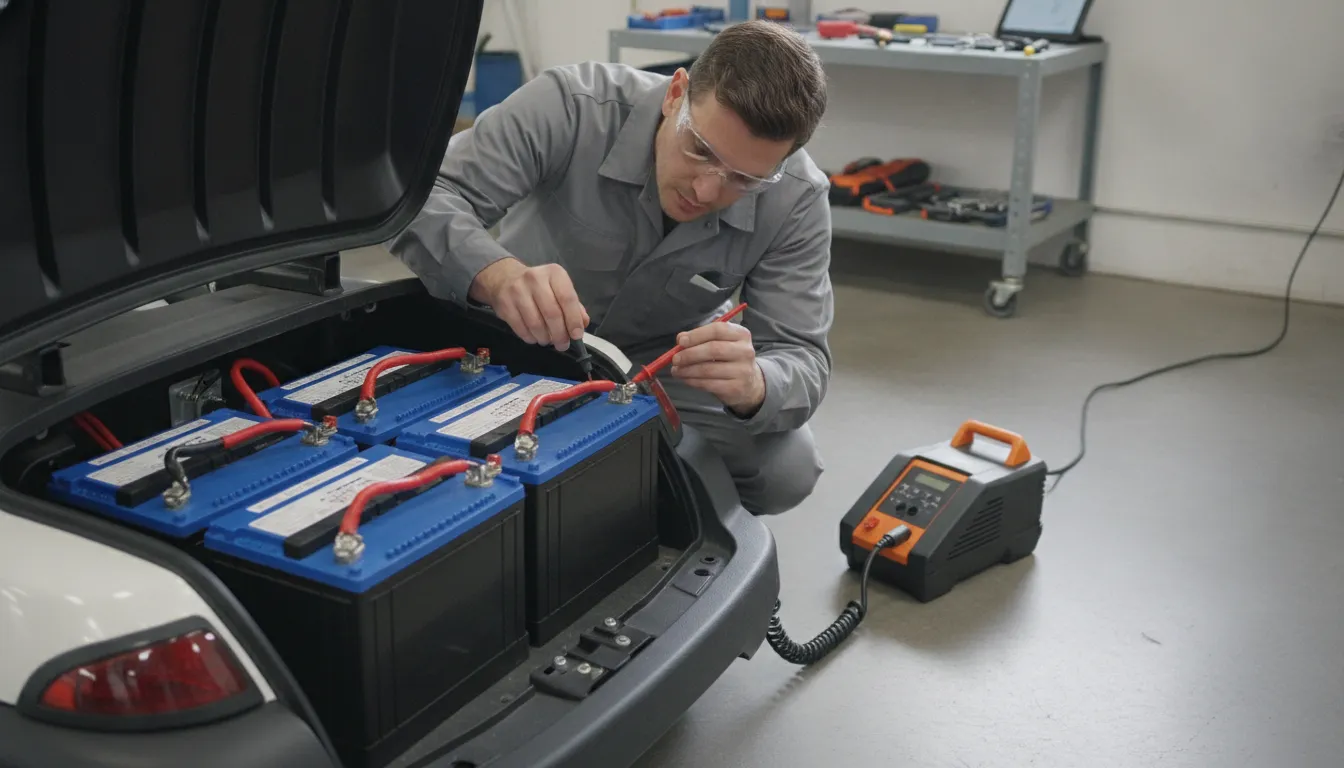
Batteries are the heart of an electric cart, so you must check them often to keep your cart running well. Start your check by looking at the top of each battery for leaks, cracks, or loose wires. Keeping a clean battery is a key part of golf cart battery maintenance. If you see any damage to the case, call the c2 Vehicles team for help right away. A cracked case can leak acid and cause harm to your cart.
Look for a white or green crust on the battery posts. This gunk is called corrosion and it can slow your cart down. You can clean this crust with a mix of baking soda and water. Be sure to disconnect the battery before you start cleaning to stay safe. Use a soft brush to scrub the posts until they are bright and clean. Make sure the wire clamps are tight and do not wiggle.
Wipe the top of the battery with a damp cloth to remove dust. A clean case helps prevent power leaks that drain your charge. If the wires look frayed or thin, they may need to be replaced. Good professional golf cart maintenance helps find small issues before they leave you stranded. Check the wires for heat signs like melted plastic or dark spots.
Most golf carts use flooded lead-acid batteries that need water to keep the power flowing. You should check the water level in each cell at least once a month. If the metal plates inside the cells are dry, the battery can fail fast. Always use distilled water for this task to avoid plate harm from tap water salts. Tap water has minerals that can build up and ruin the battery cells over time.
Fill the cells until the water covers the plates but stop before the top. Filling them too much can cause acid to spill during the charge. This spill can eat away at your cart frame. Most pros say to add water only after you have fully charged the cart. If the plates are dry, add just enough water to cover them before you start the charger.
Charge your electric cart after every use instead of waiting until the battery is nearly dead. Keeping the charge high helps the battery stay healthy and live for a long time. But you must be careful not to overcharge the cells because too much heat can warp the plates. Always charge your cart in an airy spot to prevent gas build-up and fire risks. This habit is the best way to keep your cart ready for your next trip.
If you have a cart with lithium batteries, your care tasks are not the same. Lithium cells do not need water and do not grow crust on the posts. They are lighter and charge faster, but you still need to check the wires. Make sure you use the right charger made for your exact battery type. If you have questions about how to care for your cart, the c2 Vehicles team can help you find a plan.
The charger is the heart of your electric cart. Good golf cart maintenance keeps the power flowing and keeps you safe. Most owners look at the motor, but the wires and charger need care too. You should check the whole system often to find small issues. If you find a worn wire early, you can avoid a break or a fire. A clean and dry system will work best and last for many years.
Start your check by looking at the charging cord from end to end. Look for any cuts or cracks in the outer skin. A cut cord can cause a spark and start a fire. You should never use a cord that shows bare metal wires. Also, look at the plug at each end of the cord. The metal pins should be straight and clean. If the plug fits loose in the wall or the cart port, it can get too hot. This heat can melt the plastic and ruin your charger. You can find more tips in golf cart maintenance manuals to keep your gear in top shape.
Where you charge your cart is a big part of safety. You should always park and charge in a well-aired spot. This helps the heat and gas from the charging task blow away. According to Clemson University, you should never charge your cart overnight. This rule helps you spot a problem before it leads to a fire. Also, avoid too much charging. If you leave the cart on the charger too long, it can hurt the battery cells. Do not park under a porch or next to a wall when you plug the cart in. Keeping a clear space around the cart is a smart way to stay safe.
Your habits after a ride can save you money. You should get in the habit of plugging in your cart after every single use. This keeps the cells ready for your next trip. If you plan to store the cart for a long time, make sure it is full of power first. Experts at Keiser University say that storing a dead battery can ruin it for good. If you notice a strange smell or the charger gets very loud, stop using it. You may need a pro to run a few tests. Taking time for golf cart battery maintenance now will help you avoid big bills later on.
Tires are your only contact with the road. Keeping them in good shape is a key part of professional golf cart maintenance. You should check your tire pressure before every trip to find small leaks before they cause a flat (Keiser University). Correct pressure helps your cart ride smooth and keeps the motor from working too hard.
Look at the tread on each tire for signs of age. If you see cracks in the rubber, it is time for a change. Dry rot can lead to a blowout while you drive. You should also look for uneven wear patterns. If one side of the tire is bald while the other looks new, you may have a bad wheel alignment (Keiser University).
Keep an eye out for bulges or cuts in the side wall. These flaws make the tire weak. If you use your cart on paths with rocks or thorns, check the tread for stuck items that could poke through. Clean out any debris to stop slow leaks from starting.
Check the lug nuts on each wheel to make sure they are tight. Loose nuts can cause the wheel to wobble and damage the hub. You should also look at the steering rack and joints for loose parts. If the steering feels shaky or pulls to one side, it could be a sign of worn parts.
Safe driving depends on parts that work right. You can schedule regular golf cart maintenance to have a pro check these systems. Staying on top of these checks keeps you safe and prevents big repair bills later. Follow all manufacturer instructions for your specific model to get the best results (Clemson University).
You should check the brakes on your cart at least once every week to keep it safe. Go for a short drive in an open spot to feel how the cart stops. The pedal should feel firm and catch fast when you push down. If the pedal feels soft or sinks to the floor, you need professional golf cart maintenance to fix the unit before your next trip.
A safe cart must stop in a straight line without pulling to one side. If the cart pulls left or right, the brake shoes might be worn out. You should also check the brake lights while testing the pedal. Safe golf cart maintenance includes making sure your lights turn on so other drivers can see you stop. If the lights do not work, check the bulbs and wires for loose parts or dirt.
The parking brake keeps your cart still on hills or slopes. Test this by setting the brake on a small hill to see if the cart moves. It should hold the weight of the cart with no slips or rolls. If the lock does not catch or the cart drifts, the cable might be loose. You can look at golf cart maintenance manuals to see how to adjust the cable for your specific model.
Safety is not just about stopping. You must also check your headlights, turn signals, and horn to stay safe on the road. Standard golf cart operation should mirror the rules for cars, so all safety tools must work. Turn on every light and walk around the cart to look for dim or broken glass. Press the horn to make sure it is loud enough to warn others if you need to pass or stop.
Some safety tasks are too big to do at home. If you hear loud squeaks, grinding, or metal sounds when you stop, the brake pads are likely gone. A trained tech should look at the cart if you find leaks or broken parts in the brake lines. You can schedule regular golf cart maintenance to have a pro check these key systems once a year.
Caring for a gas golf cart is like caring for a small car. You must track engine health to keep it running well. Gas carts have more moving parts than electric ones. They need exact checks to stay in good shape. Routine care helps you avoid big fix bills later.
Start each season by checking your engine oil. Low oil can cause the motor to get too hot. This can lead to engine failure if you are not careful. You should also look for fluid leaks under the cart before you drive. If you see spots on the floor, you may have a leak. Fresh fuel and a clean plug keep the motor strong.
When you add gas, do it only when the engine is cool to stay safe. Always clean up any fuel spills right away to stop a fire. You should also check the spark plug once a year. A dirty plug makes it hard to start the cart. Proper fuel care is a key part of golf cart maintenance.
Your cart needs fresh air and clean fuel to run. Check the air filter and fuel filter often. A clogged filter makes the engine work too hard. It also burns more gas than it should. You also need to look at the drive belts for cracks or wear. If a belt looks frayed, replace it before it breaks during a ride.
Keep the engine bay clean to see problems early. Dust and dirt can hide leaks or loose wires. You can find exact steps for your model in golf cart maintenance manuals. Using these books makes the job easy for owners.
Checking tire pressure is a key daily step for all carts. Low tires make the engine work harder and use more fuel. Look for odd wear patterns on the tread. This can mean your wheels are not lined up. You should also test the brakes once a week. Make sure they stop the cart fast and the brake lights work.
Some tasks are best left to experts. If your cart makes new noises or loses power, it may need a pro. Routine golf cart maintenance using the owner's manual keeps your ride safe. It also helps your cart last for many years.
If you find a leak or a bad belt, you can schedule regular golf cart maintenance. Local teams can fix many issues right at your home or course. This saves you the time of hauling the cart to a shop. Fast help keeps you on the path all summer long.
While both types of carts need care, their needs differ. This table shows the main focus for each type of cart.
| Feature | Gas Cart Focus | Electric Cart Focus |
|---|---|---|
| Engine/Motor | Oil and spark plugs | Motor brushes and wires |
| Fuel/Power | Fresh gas and filters | Battery water and charge |
| Belts | Drive and starter belts | No drive belts to check |
| Noise | Exhaust and muffler | Quiet running |
| Service | Yearly oil changes | Battery cell testing |
Request a professional inspection if your cart has leaks, worn belts, weak braking, or charging problems.
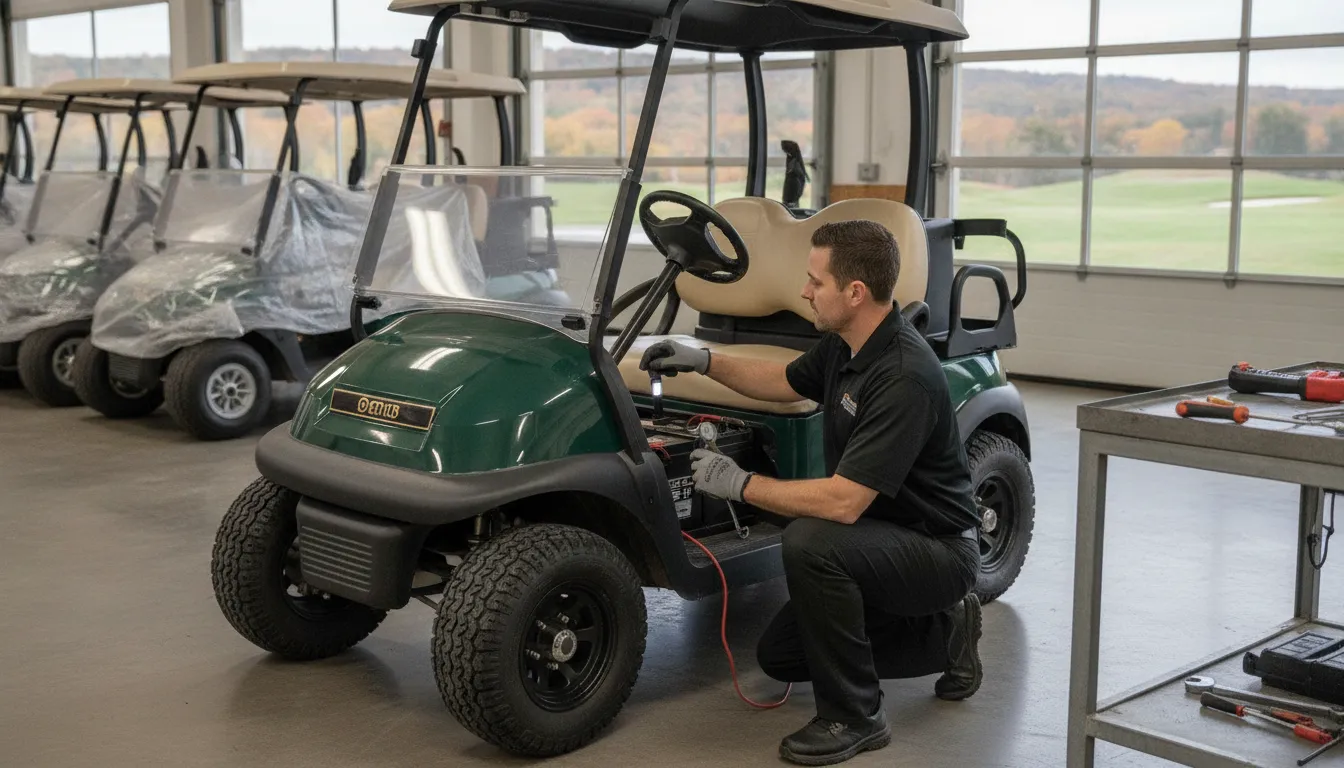
Keeping your vehicle clean is a key part of golf cart maintenance. Dust, mud, and grass can hide small cracks or loose parts. A clean cart is easier to check and more fun to drive. You should also take a short test drive to find issues that you cannot see when the cart is parked. This simple routine helps you catch small problems before they turn into big repair bills.
Start with a gentle wash using soap and water. Clean the seats and the body to keep them looking new. Be sure to look under the cart for stuck debris like twigs or leaves. Removing trash from the cart is also smart to avoid attracting pests that might chew on wires. If you are coming out of storage, look for nests or cobwebs in the motor area. A quick clean-up ensures your cart stays in top shape for your next trip.
Before you start the engine, do a quick check of the ground. Look for signs of leaking fluids like oil or gas under the chassis. Leaks can signal a broken seal or a loose hose. You should also look at the tires for odd wear patterns. If one side of a tire is flatter than the other, you may need an alignment. For peace of mind, you can schedule regular golf cart maintenance with a pro to handle these checks for you.
Once the cart is clean and dry, take it for a slow test drive. Pay close attention to how the cart feels and sounds. It is vital to test your brakes weekly to make sure they stop the cart quickly. Listen for squeaks, rattles, or grinding noises while you move. If you have lights, check that they all work as they should. A smooth, quiet ride means your cart is ready for the road. If you hear something strange, it is best to stop and find the cause right away.
Basic golf cart care like cleaning batteries and checking tire air helps your cart last. However, even the best owner needs help from a pro at times. You should follow the maker's guides for regular care to avoid safety risks. A factory expert has the right tools to find small issues before they become big, costly repairs. You should schedule a pro check at least once a year to keep things safe.
You should give your vehicle a quick look-over before every trip. Look for leaking fluids under the cart or signs of loose parts. If you feel the cart pull to one side while you drive, your alignment might be off. Strange sounds when you hit the brakes or turn the wheel are also clear red flags. These parts keep you safe, so do not ignore new noises.
Power issues can be hard for owners to fix on their own. If your cart takes a long time to charge or loses power on hills, the motor or wires may need a check. You may need professional golf cart maintenance to test the battery cells and flow. Experts can check the water levels and clean terminals safely to keep the power moving.
Our team knows these vehicles inside and out. We use a deep 25-point check to test every part of your cart. This check covers the frame, suspension, and all power paths. By finding rust or worn belts early, we help you stay on the road for years to come. Our pros stay up to date on all new tech for brands like Club Car and GEM.
We only use OEM parts for every fix. These parts are made to fit your specific cart model. Cheap parts might save money now, but they often wear out fast or do not fit well. Using the right parts protects your warranty and keeps your cart running like new. A pro shop has these parts in stock so you can get back to the course fast.
Finding a shop you can trust is easy with c2 Vehicles. We have seven sites across New England to serve all six states. Whether you are on Cape Cod or in the mountains of Vermont, our team is nearby. We carry a large stock of parts worth over one million dollars. This helps us make sure we have what you need for a quick fix.
If you cannot bring your cart to us, we can come to you. Our mobile service trucks act like a shop on wheels. We can do many repairs right in your driveway or at your golf club. This saves you the time and stress of moving a cart that will not start. You can schedule regular golf cart maintenance through our mobile team to stay ahead of any issues.
You should check your golf cart every week to make sure it is safe to drive. Weekly tasks include testing the brakes and checking the brake lights for proper work. You should also do a deeper check before each season to see battery health and tire wear. Based on the College of Golf, steady care is the best way to stop sudden breakdowns and help your cart last longer.
You should not leave your golf cart on the charger for a long time. Charging a battery too much can damage its inner parts and shorten its life. It is best to unplug the charger once the battery is full. Also, you must never charge your cart overnight due to fire risks. Based on Clemson, you should only charge your cart in an airy spot to stay safe.
You should give your cart a quick check before every ride. Look for signs of trouble like leaking fluids or low tire pressure. If you have a gas cart, make sure all fluid levels are full. Testing the brakes once per week is also a good way to keep your riders safe. Based on the College of Golf, catching these small issues early can stop large repairs later on.
Correct tire pressure keeps your ride smooth and helps your tires last longer. You should check the air in your tires every week to look for leaks or low spots. Low air can lead to uneven wear and might cause your cart to slip on wet grass. It is also wise to check for cracks in the rubber that show aging. Based on the College of Golf, keeping your tires fit is a key safety step.
A careful inspection now can prevent an inconvenient breakdown when you want to use your cart most. If you notice weak performance, unusual sounds, charging trouble, uneven braking, or fluid leaks, let a trained technician diagnose the issue before your next trip.
c2 Vehicles supports golf cart owners across New England with factory-trained technicians, OEM parts, and convenient service options. Schedule golf cart service to get your cart ready for summer.