
contact us

Planning golf cart rental batteries for more than one day means planning the full operating cycle: expected use, charging access, turnaround time, and a backup for carts that need attention. The right questions depend on the venue and schedule, so confirm the battery type and operating plan with the rental provider before delivery.
Explore golf cart rental options
Start with the work each cart must do. A cart making short trips between a parking area and a clubhouse has a different duty cycle from one carrying guests across a large property throughout the day. Count expected trips, passenger loads, terrain, and hours in service. Ask whether the quoted fleet is electric, gas, or a mix; do not assume every rental cart uses the same battery chemistry or charging setup.
Then map the operating day. Identify when carts can be taken out of use to charge, where charging can happen safely, and who is responsible for connecting and checking them. For a multi-day booking, repeat this exercise for every day, including setup and teardown days. A schedule with no charging window may require a different fleet plan than one with overnight downtime.
These details help the provider match vehicles and explain their operating recommendations. c2 Vehicles offers rentals as well as service and parts support across its New England network; ask which arrangements apply to your specific booking. Start by reviewing the rental options and share your schedule early.
Battery type influences charging routines, but the label alone cannot tell you how a cart will perform for your event. Battery capacity, age and condition, vehicle setup, terrain, load, driving style, and temperature all matter. Follow the vehicle and charger instructions supplied by the rental provider. Do not estimate a guaranteed range or charge time without the model-specific information.
| Planning factor | What to confirm | Why it matters |
|---|---|---|
| Battery and cart configuration | Battery type, vehicle model, and provider's stated operating guidance | Equipment and instructions differ across carts |
| Daily duty cycle | Expected hours, route, terrain, load, and busiest periods | Heavy or continuous use can change the operating plan |
| Charging access | Approved chargers, suitable power access, location, and charging window | Limited access can constrain overnight or between-shift charging |
| Turnaround and backup | Inspection process, cart rotation, and contact for a problem | Clear responsibilities reduce confusion during a busy booking |
Lead-acid and lithium systems have different operating and maintenance characteristics. Avoid treating one as universally better for rentals. Ask the provider which battery system is in the proposed vehicles, what daily charging routine it recommends, and whether your site must supply any equipment or staff support. The U.S. Fire Administration advises that lithium-ion batteries be used and charged according to manufacturer instructions; its safety information supports a simple rule for rental operations: do not substitute an unfamiliar charger or charging procedure. Read the U.S. Fire Administration's lithium-ion battery safety guidance, then confirm the vehicle-specific process with the rental provider. For additional model-specific questions, consult c2 Vehicles' lithium battery safety resource.
Build the schedule around the rental's actual use and provider guidance. One simple method is to group carts by shift or duty, track which vehicles were used most, and take them out of service for checks or charging when the schedule allows. Do not rely on a single cart as the only option for a critical trip. For a larger booking, designate a person to coordinate keys, charging, and issue reporting.
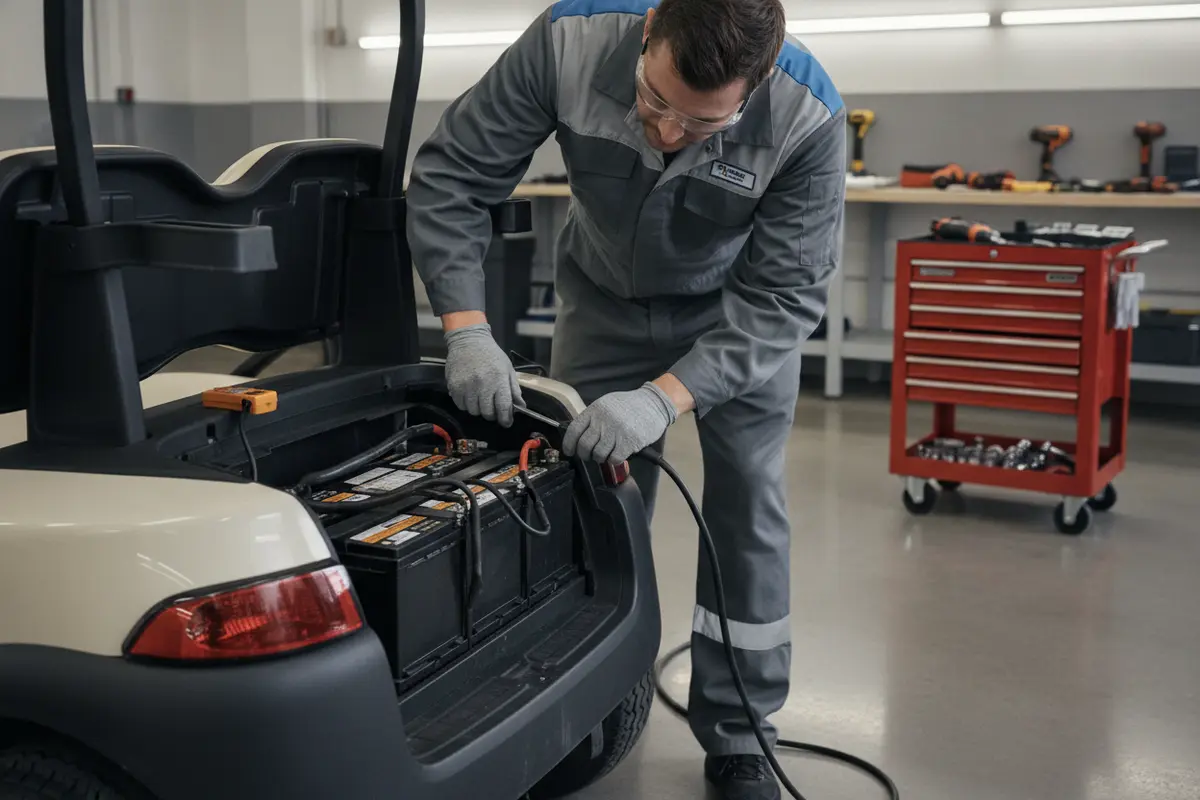
Keep a simple log with cart identifier, time returned, reported issue, and action taken. It does not need to predict battery performance; it helps the organizer and provider spot a cart that should be checked before it returns to service. If a cart behaves unexpectedly, stop using it and follow the provider's safety and support instructions rather than attempting an unfamiliar repair.
A useful log can be very short. Use one line per cart and shift. Record whether the vehicle completed its planned route, whether a warning indicator appeared, and whether it was connected to charging. Avoid recording guesses such as “battery is bad” when no diagnosis has been made. Instead, write observable facts: “returned earlier than scheduled,” “charger indicator remained off,” or “staff noticed reduced pace on the hill.” Clear observations help the provider decide what to inspect and preserve a consistent handoff between staff.
Choose a charging area before the carts arrive. It should be accessible to the people responsible for charging, away from vehicle and pedestrian pinch points, and consistent with the provider's instructions and site requirements. Confirm the power source and equipment with the rental company; never assume a household outlet or extension arrangement is suitable for every charger.
For lithium-powered carts, use the safety guidance provided for the actual model. Battery safety procedures are not interchangeable across all systems, and a rental organizer should not improvise charging instructions. Ask where the carts can be parked when not charging, how access should be controlled, and what steps the provider expects if equipment becomes wet, damaged, unusually hot, or otherwise concerning. Do not handle or continue charging equipment that appears damaged; isolate the issue according to site procedure and contact the provider or emergency services as appropriate. c2 Vehicles publishes a lithium battery safety page that can help frame questions for the rental provider.
Think through the area from the perspective of each user. Staff need a clear route to reach plugs and controls. Guests should not be able to drive through a charging zone or trip on a cord while walking between destinations. If the venue has several charging points, label the parking locations for staff using its normal site procedures, not improvised instructions on the equipment itself. Keep emergency access and exits unobstructed. The rental provider can clarify equipment needs, while the venue remains responsible for applying its own facility and fire-safety requirements.
A clear booking conversation can prevent avoidable surprises. Share the number of carts, booking dates, expected daily schedule, venue layout, charging access, and any accessibility or cargo requirements. Ask the provider to explain what is included and which responsibilities remain with the renter or venue.
Also ask how the handoff will work. Confirm who will receive the vehicles, whether staff instruction is available, what condition the carts should be in at return, and how a reported problem affects the rest of the booking. Put agreed responsibilities in writing so the person coordinating each shift can find them. If you need a particular cart configuration or charging arrangement, explain why before the booking is finalized rather than assuming it will be available on arrival.
For recurring needs, a conversation about fleet use may be more useful than booking each event in isolation. c2 Vehicles supports rental and commercial vehicle inquiries in New England, and its commercial vehicle team can discuss business and fleet requirements. For repair or maintenance questions, review the service options and clarify what applies to a rental vehicle. You can also use the contact page to share the details of a proposed booking.
New England schedules can involve cool mornings, changing weather, hilly properties, and seasonal operating patterns. These conditions make it especially important to rely on the rental provider's model-specific guidance rather than a generic range estimate. Share the venue, route, expected temperatures if known, and whether the carts will be kept under cover. Ask how weather exposure affects storage and charging procedures for the supplied equipment.
For outdoor venues, plan protected areas for carts and charging equipment where the provider and site allow. Build extra time into the schedule for handoffs and checks instead of assuming every cart can return to service immediately after use. If your requirements may be met by different vehicle types, compare available vehicles with the intended use and confirm details with the team; availability and specifications can change.
Terrain and route design are practical parts of the battery conversation, not just site details. A steep approach, frequent stops, long distances between buildings, or repeated passenger loading can produce a different work pattern from a flat, short shuttle loop. Map the route and identify busy peaks: for example, a morning arrival period followed by a quieter midday interval. Share that pattern with the provider so the proposed fleet and downtime plan address the demanding part of the day rather than only the average.
Plan for weather changes without making assumptions about battery behavior. Ask whether carts should be stored in a covered area, what the approved charging location is, and whether the site must pause charging under any specific conditions. Keep the provider's instructions accessible to staff, especially when shifts change or a different person takes over in the evening. A written checklist reduces reliance on memory when a multi-day booking is busy.
Battery planning is also a people-and-process problem. A cart can be ready mechanically but unavailable if nobody knows where it belongs, who has the key, or how to report a warning. Before the first operating day, name the person coordinating the fleet and at least one alternate. Give them the provider's handoff instructions, a simple cart roster, and contact details for support.
Set a standard shift-change handoff. The outgoing coordinator can report which carts were used heavily, which are charging, and whether any issue was observed. The incoming coordinator can confirm that the next shift's expected vehicles are available and that charging areas remain clear. Do not ask staff to diagnose a battery or decide that a warning is harmless. Their role is to note what happened, take the vehicle out of use when appropriate, and follow the agreed support procedure.
A contingency plan should answer practical questions before a busy period: Which trips can be delayed if a cart needs review? Is there another vehicle type that can cover the task? Who can approve a change in assignment? How will guests or staff be informed if a route changes? The answers depend on the venue, so agree them with the rental provider and site manager. For operations that depend on mobility service, avoid promising that every cart will remain available continuously; instead, set a reporting path and clarify how the provider handles a problem under the rental agreement.
Keep the plan proportionate. A small booking may need one coordinator and a paper roster. A large property or multi-shift operation may need a shared schedule, cart identifiers, and a designated charging lead. The point is not to add paperwork; it is to make responsibilities visible, reduce duplicate effort, and ensure that a person can act promptly when an issue appears.
That depends on the specific cart, battery condition, route, load, temperature, and use pattern. Ask the provider for model-specific operating guidance based on your expected schedule; do not rely on a generic range claim.
Follow the instructions for the supplied cart and charger. Confirm the expected charging window and who is responsible before the booking starts, especially when carts are in daily use for several days.
Do not assume a personal charger is compatible. Ask the rental provider what equipment is approved and supplied, and use only the charger and procedure specified for the vehicle.
Stop using questionable equipment and contact the rental provider using the agreed support process. Do not attempt repairs or bypasses unless the provider explicitly instructs an authorized person to do so.
Discuss your rental battery plan with c2 Vehicles
A good multi-day battery plan is specific to the carts, the site, and the schedule. Confirm those details with your rental provider so your team knows how to operate, charge, and report concerns throughout the booking.