
contact us

Choosing a utility vehicle is less about finding the most powerful option and more about matching the vehicle to your property, workload, and local operating rules. A grounds crew, resort, municipality, and industrial site may each need a different balance of cargo capacity, maneuverability, range, and road access.
The best electric utility vehicle for sale in New England depends on the job. c2 Vehicles helps buyers compare Club Car Carryall utility vehicles. GEM, Polaris Pro XD, and Tomberlin across commercial, property, and light-duty applications. Regional sales and service support spans seven locations, all six New England states, and Eastern New York.
Each model family serves a distinct purpose. Carryall is built around configurable commercial work, GEM offers fully electric low-speed transportation where local rules permit. Polaris Pro XD is designed for demanding job sites, and Tomberlin suits neighborhood and lighter-duty use. The right choice starts with understanding how those roles differ.
New England buyers face an extra layer of decisions. A vehicle that spends its week on a Cape Cod property sees salt air and seasonal storms. One working a Vermont campus or Maine resort contends with cold weather, snow, and hilly terrain. Electric utility vehicles can help quiet daily operations, cut fuel and engine-maintenance costs, and support sustainability goals at campuses, resorts, municipalities, and industrial sites. The regional support behind that purchase matters as much as the vehicle itself, and c2 Vehicles backs every model with factory-trained technicians, OEM parts, and service coverage across all six New England states.
In the sections that follow, you will compare the four platforms, weigh cold-weather and coastal considerations, and map out payload, towing, budgeting, financing, and fleet options for your New England operation.
View Electric Utility Vehicle Inventory in New England
There is no single best electric utility vehicle for every New England buyer. The right choice depends on what you carry, how often you tow, where the vehicle will operate, and how winter weather affects your property or route. A resort moving supplies between buildings has different needs from a municipality maintaining public grounds, a school transporting equipment, or a homeowner looking for quiet neighborhood transportation.
For buyers searching for an electric utility vehicle for sale in New England, c2 Vehicles offers a practical lineup for those different applications. The company is the exclusive Club Car distributor for New England, and its range includes work-focused Carryall models, GEM neighborhood vehicles, Polaris Pro XD machines, and Tomberlin options. The goal is not to push one model. It is to match the vehicle's capabilities to the job.
The Carryall range is built around commercial work. Its cargo bed and available drivetrain configurations can support material handling, grounds crews, facilities teams, and other routine tasks. Club Car Carryall models can be configured around the work rather than forcing every department into the same setup.
For heavier demands, Polaris Pro XD models are engineered for high-performance and heavy-duty work environments, with durability and payload capacity at the forefront. Buyers should still confirm the manufacturer's payload and towing limits for the exact model and avoid treating a compact electric vehicle like a full-size truck.
GEM is a different category. Its fully electric, street-legal LSV design can suit neighborhood routes, campuses, resorts, and planned communities, but street-use requirements vary by state and municipality. Confirm the rules for the intended route before purchase. Tomberlin may be a better fit when the priority is light-duty personal or neighborhood transportation rather than commercial hauling.
Electric performance also deserves a clear comparison with gas. A 4kW electric motor is commonly described as roughly equivalent to a 5-horsepower gasoline engine, while electric motors deliver torque across a broad operating range. That comparison is a starting point, not a substitute for reviewing the vehicle's payload, grade, range, battery, and terrain requirements.
When the vehicle will serve a fleet, a c2 Vehicles commercial consultant can help evaluate the application. Including seasonal conditions, charging plan, accessories, and service needs, before recommending a model. Talk with the commercial team about fleet solutions to build a more dependable match for your New England operation.
c2 Vehicles brings together four distinct vehicle types for buyers comparing an electric utility vehicle for sale in New England. The right choice depends on where the vehicle will work, how much it must carry, whether passengers need road access, and how much customization the job requires. This lineup covers commercial maintenance, campus transportation, neighborhood travel, and lighter personal-duty use without treating every model as interchangeable.
Club Car Carryall vehicles are built around practical job-site versatility. Their cargo-bed layouts help crews move tools, supplies, and materials around properties, and available gas and electric drivetrains let an operation choose the power system that fits its routes and charging capabilities. Carryall models can also be adapted for specialized work, including grounds maintenance, material handling, and event transportation.
As the exclusive Club Car distributor for New England, c2 Vehicles can pair the Carryall platform with regional sales and service support. Explore Club Car Carryall utility vehicles.
GEM is the lineup's fully electric Low Speed Vehicle option for neighborhood and campus transportation. It can suit planned communities, resorts, campuses, and facilities where quiet, low-emission travel matters. However, street access is not automatic everywhere. GEM is a street-legal LSV, but owners must confirm local and state requirements, permitted roads, registration rules, and municipal restrictions before using it on public streets.
c2 Vehicles is also the only authorized GEM mobile service dealer in New England, giving regional buyers a nearby support option.
Polaris Pro XD is aimed at high-performance, heavy-duty work environments where durability and payload capacity are central considerations. It may be a better fit for industrial sites, construction operations, large properties, and maintenance teams that put more demanding loads and routes ahead of neighborhood comfort. Buyers should always match the vehicle to the manufacturer's payload and towing limits.
Tomberlin offers a more refined approach to neighborhood and personal transportation. Its styling and safety-focused features can appeal to homeowners, active retirees, vacation communities, and buyers who need light-duty utility without a heavy commercial footprint. As with any neighborhood vehicle, confirm the rules that apply to your specific community and municipality.
These brands are available through c2 Vehicles' seven New England locations, with regional delivery and service support available for qualifying purchases. Find a c2 Vehicles location to discuss the model that best fits your property, route, and workload.
Yes, an electric utility vehicle can perform well in New England weather and coastal environments when it is specified for the conditions. Protected between uses, and serviced on schedule. The right setup accounts for cold temperatures, snow, salt air, hills, and uneven ground rather than treating an electric vehicle like a fair-weather golf cart.
Cold weather affects every battery-powered vehicle, but modern lithium-ion systems generally retain charge and usable performance better in low temperatures than older lead-acid systems. Buyers should still plan for reduced range during the coldest days, keep the vehicle charged according to the manufacturer's guidance and avoid leaving a battery exposed to prolonged extreme temperatures whenever possible. A covered storage area or charging location protects both the vehicle and the people who depend on it.
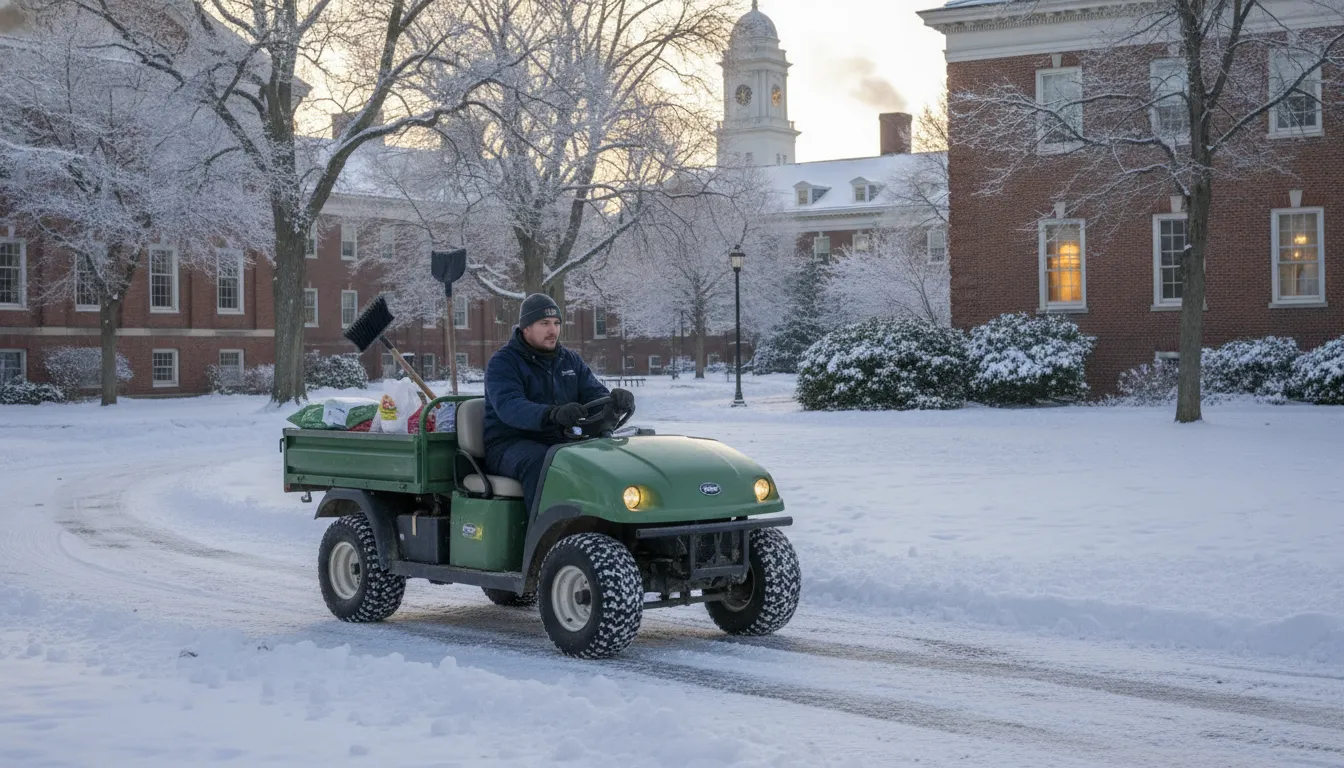
For campuses, resorts, farms, private roads, and large properties, an enclosure or cab cover can make a major difference. It helps shield occupants from wind and snow while keeping tools, materials, and controls more usable during winter assignments. Depending on the vehicle and application, useful additions may include a windshield, doors or side curtains, a roof, weather-resistant seating, and tires selected for the site's surface conditions.
Terrain matters just as much as temperature. A vehicle moving across hilly property or unpaved lanes needs the right combination of ground clearance, traction, braking, drivetrain, payload capacity, and tires. Confirm the manufacturer's limits before carrying materials or towing, especially on slopes or wet ground. A commercial-grade model such as a Club Car Carryall may be well suited to cargo and property-maintenance work, while a heavier-duty application may call for a different configuration.
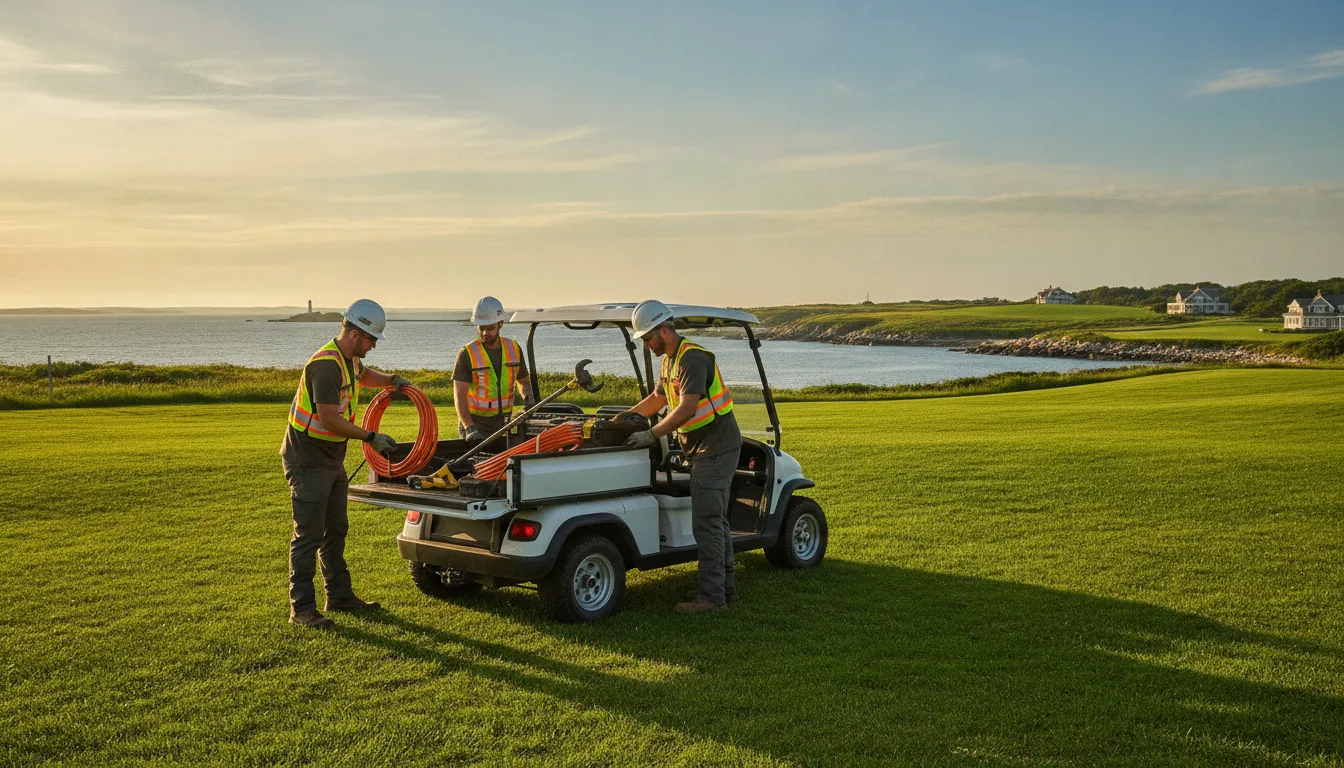
Salt air and spray can accelerate corrosion on exposed metal, fasteners, electrical connections, and underbody components. Choose a build with corrosion-resistant materials and finishes where available, then rinse away salt and sand regularly with fresh water. Do not neglect the underside, cargo area, wheel wells, or connection points. After washing, allow the vehicle to dry and inspect for damaged coatings, loose hardware, or early corrosion before a small issue becomes an expensive repair.
Local support is valuable when conditions vary from a Cape Cod property to a Vermont campus or a Maine resort. c2 Vehicles provides service coverage across all six New England states through factory-trained technicians, and mobile service options are available for added convenience. Schedule service to review winter protection, battery performance, corrosion, and safety before demanding seasonal work begins. Regular professional maintenance also helps preserve warranty coverage and maximize long-term vehicle life.
Choosing among utility vehicles starts with the work, not the badge. A vehicle moving tools around a property has different requirements from one carrying passengers through a neighborhood or hauling equipment across a demanding jobsite. Payload and towing limits should always be checked against the manufacturer's specifications, because respecting those limits is essential for safe maintenance and transport. Ground clearance, cargo access, charging routines, and local service support matter just as much when the vehicle will be used every day.
The four models below cover distinct jobs. Club Car Carryall Utility Vehicles are built around commercial-grade work and play, with cargo-bed configurations and gas or electric drivetrain options. Review Carryall utility vehicle configurations alongside your daily workload before deciding how much capacity you need.
| Model | Best For | Drive | Payload/Cargo | Towing Severity | Notable Strength |
|---|---|---|---|---|---|
| Club Car Carryall | Commercial cargo, grounds work, and work plus play | Gas or electric | Dedicated cargo bed with configurable utility layouts | Light to moderate commercial duty, matched to configuration | Versatile commercial platform with adaptable cargo solutions |
| GEM | Neighborhood, campus, and low-speed community transportation | Electric | Passenger and cargo configurations for light utility needs | Light-duty transport, subject to model specifications | Street-legal Low Speed Vehicle design for approved local use |
| Polaris Pro XD | Heavy-duty jobsites, resorts, and demanding commercial work | Electric | Highest payload and cargo demands in this comparison | Most demanding payload and towing applications | Heavy-duty durability and high-capacity work performance |
| Tomberlin | Neighborhood transportation and personal use | Electric | Light-duty passenger and personal cargo use | Light-duty use, matched to model specifications | Refined styling and safety-focused neighborhood transportation |
The Polaris Pro XD is the strongest starting point when the job consistently involves the most demanding payload or towing needs. Its design prioritizes durability and significant payload capacity for heavy-duty work environments. Carryall is often the more flexible choice when a property needs a practical cargo bed and a choice of gas or electric drive. GEM fits low-speed neighborhood or campus routes, but buyers must confirm that the intended roads and municipality allow its street-legal LSV use. Tomberlin is better suited to light-duty personal transportation than to sustained material handling.
There is no universal winner. A facilities team should compare the actual load, route surface, duty cycle, and service plan before selecting an electric utility vehicle for sale. Local rules also vary, particularly for LSVs. So confirm permitted use with the relevant municipality. c2 Vehicles can help match the application to the right platform and support it with regional service and factory-trained technicians.
For a school, resort, municipality, property management company, industrial site, or campground, an electric utility vehicle is more than a convenient way to move people and materials. It is part of the daily operating system. The right fleet can help crews work quietly around guests, students, residents, and visitors while reducing the routine maintenance associated with combustion engines.
Electric vehicles do not require oil changes, fuel purchases, or the complex engine upkeep associated with traditional combustion fleets. The U.S. Environmental Protection Agency identifies these differences as important considerations when evaluating maintenance and operating costs for sustainable fleets. Review the EPA fleet guidance when building your replacement or expansion plan.
Total cost of ownership still deserves a complete review. In addition to vehicle and maintenance costs, fleet managers should consider charging infrastructure, duty cycles, operator needs, storage, and the service plan. The EPA recommends evaluating these factors together rather than judging an electric vehicle only by its purchase price. EPA guidance on electric vehicle total cost of ownership can help frame that analysis.
A grounds crew may need a cargo bed for tools, mulch, and equipment. A resort may prioritize quiet guest transportation and dependable circulation between buildings. A municipality or industrial operator may need a more task-focused build for maintenance routes, material handling, or daily site support. Club Car Carryall utility vehicles offer commercial-grade cargo and drivetrain configurations, while custom builds can support specialized uses such as maintenance units, food service, or mobile workstations.
That application-first approach matters in New England, where one organization may operate across campuses, seasonal properties, waterfront locations. Or large outdoor grounds. c2 Vehicles can help commercial buyers assess vehicle use, terrain, payload, charging routines, and delivery requirements before recommending a fleet. The goal is not to sell the same vehicle to every operation. It is to create a practical mix that supports the work.
Commercial buyers also need a partner who can remain involved after delivery. c2 Vehicles provides dedicated territory managers who guide fleet solutions, financing, and custom configurations. Financing and leasing programs can help organizations scale without committing all available capital at once, subject to approval and program terms.
Service coverage spans all six New England states, with mobile support available for qualifying needs. That regional infrastructure can reduce downtime when a vehicle is essential to daily operations. To discuss a fleet plan, visit c2 Vehicles for commercial electric utility fleet solutions and outline the jobs your vehicles need to perform.
Prices vary by brand, drivetrain, equipment, and custom build, so buyers should request a quote instead of relying on a published list price. An electric utility vehicle for sale in New England may be configured for neighborhood transportation. Grounds maintenance, material handling, or demanding commercial work, and those applications carry very different equipment requirements.
At the more accessible end of the market, a Tomberlin may suit personal transportation or lighter-duty neighborhood use. A Club Car Carryall or Polaris Pro XD commercial build can cost more because it is selected for worksite durability, cargo capacity, towing, specialized accessories, or fleet requirements. The right comparison is not simply the purchase price. It is the vehicle's expected workload, useful life, service needs, charging requirements, and ability to replace other operating costs.
Electric fleets can reduce maintenance and operating expenses by eliminating oil changes, fuel purchases, and complex engine upkeep, but a responsible budget should still account for charging infrastructure and ongoing service. The EPA recommends evaluating total cost of ownership when integrating electric vehicles into a fleet, including both simplified maintenance and charging investments: review the EPA's fleet cost guidance.
Commercial buyers do not always need to fund an entire fleet from operating cash. Financing and leasing programs can help spread acquisition costs, preserve capital for other projects, and scale vehicles as property. Campus, resort, or municipal needs grow. c2 Vehicles works with commercial clients on financing, leasing, custom configurations, and fleet planning. Explore utility vehicle financing and leasing to review available pathways and request guidance for your application.
A trade-in can also reduce the amount financed when replacing an existing golf cart or utility vehicle. Gather the vehicle's make, model, age, condition, battery or drivetrain details, and service history before requesting a valuation. For larger purchases, ask for a quote that separates the base vehicle, accessories, delivery, charging equipment, trade-in credit, and service considerations. That makes it easier to compare options fairly and select a work-ready solution without paying for capability your operation does not need.
Talk to the c2 Vehicles Commercial Team
Match the vehicle to the workload. Club Car Carryall is a practical fit for routine grounds work and cargo-bed use, GEM suits low-speed neighborhood or campus transportation where local rules allow. Polaris Pro XD is designed for demanding work and payload needs, and Tomberlin is better suited to personal or light-duty transportation. Review payload and towing limits before choosing a model.
Yes, with the right equipment and operating plan. Ask about cold-weather battery performance, enclosures or cab covers, charging requirements, and corrosion protection for coastal properties. Service planning also matters, and c2 Vehicles supports customers across all six New England states through factory-trained technicians and mobile service (c2 Vehicles service).
Street legality depends on the vehicle and the location. GEM offers street-legal Low Speed Vehicle solutions, while Carryall and Polaris Pro XD models are generally intended for off-road utility work. Confirm registration, road-speed, equipment, and municipal requirements before using any vehicle on public roads (local usage guidance).
Compare total cost of ownership, including purchase or lease payments, charging, maintenance, accessories, and expected utilization. Commercial buyers can also ask about financing, leasing, trade-ins, and custom fleet configurations. c2 Vehicles territory managers help match the vehicle and payment structure to the operation without relying on a one-size-fits-all estimate (financing options).
c2 Vehicles has seven locations spanning all six New England states and provides regional service support, including factory-trained technicians, OEM parts, and mobile options. A service plan should cover routine inspections, battery or charging concerns, tires, brakes, and any job-specific accessories before they affect uptime.
From a single workhorse on a coastal property to a full fleet across a resort, campus, municipality. Or industrial site, c2 Vehicles pairs every electric utility vehicle with regional sales, service, and financing support. Dedicated territory managers help you compare payload, towing, drive, and cold-weather options so you invest in the platform that matches your daily workload, not a badge that sounds newest.
Browse live inventory across seven New England locations, then reach out to the commercial team to talk through leasing, trade-ins, custom builds, and regional delivery.