
contact us

Used golf carts can suit neighborhood trips, seasonal properties, golf facilities, and work sites, but the right choice depends on condition and intended use—not appearance alone. This used golf carts checklist gives New England shoppers a practical way to compare a vehicle, ask focused questions, and decide what to verify before purchase.
Explore used golf cart options
Start with the job the cart must do. A two-person cart for a private property has different needs from a utility vehicle carrying tools, or a passenger vehicle used by a golf course. Write down the usual route, passenger count, cargo, terrain, storage, and how often it will be used. That brief will help you compare like with like.
For a broader look at available personal vehicles, compare the personal-use vehicle options and the used golf cart inventory. Listings and availability can change, so confirm the specific vehicle details before making a trip.
Walk around the cart in good light and look for signs of damage, neglect, or repairs that need explanation. A clean exterior is helpful, but it does not establish the condition of the frame, brakes, steering, batteries, or drivetrain. Ask to see the cart operate, and arrange a qualified inspection if anything is unclear.
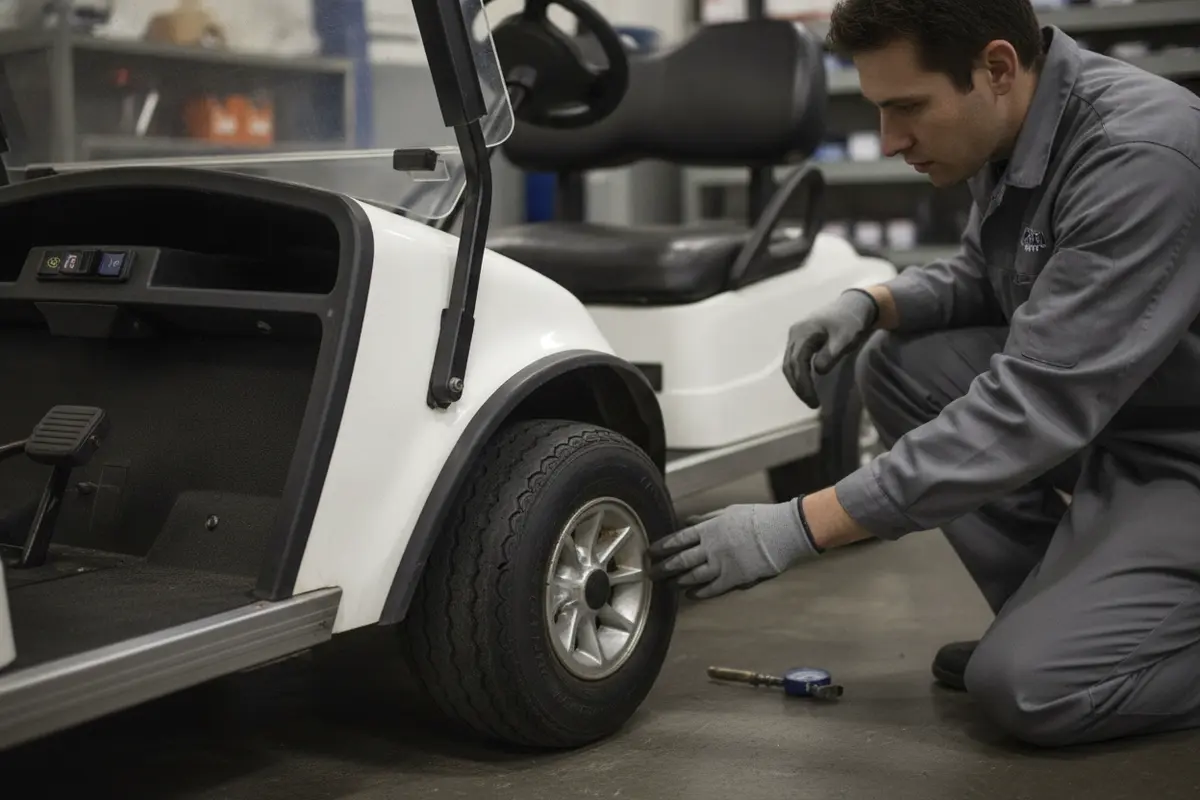
During a test drive, listen for unfamiliar noises and check how the vehicle accelerates, turns, and stops. Use a safe, suitable area and follow the seller's instructions. A brief drive cannot replace a mechanical inspection, but it can reveal questions to resolve before purchase. Note observations immediately afterward: which controls worked, whether the cart tracked straight, and what sounds appeared under acceleration or braking. This makes follow-up questions specific instead of relying on memory.
Keep a simple inspection record for each cart you consider. Record the date, odometer or hour-meter reading if present, serial number, visible wear, and any issue that needs a seller response. Take photographs of specific concerns with permission. If several carts look similar, identify each one separately so notes about a battery, tire, or accessory do not get attached to the wrong vehicle. A written record also helps a technician focus on the symptoms you observed rather than starting with a vague report.
For an electric cart, ask what battery chemistry and pack voltage it uses, when the batteries were installed, and whether service records are available. Ask which charger is intended for that configuration and whether it is included. A battery that appears clean may still have limited capacity, so request a suitable battery test or inspection rather than relying on appearance alone.
Battery condition and charging safety deserve particular attention. Review the manufacturer's guidance and the vehicle's documentation; c2 Vehicles also provides information on lithium battery safety. The right maintenance questions depend on the battery type and the specific vehicle. For an electric model, ask the seller to explain the normal charging sequence and any indicators you should understand. For gas models, request clear information about the service schedule and any recent work, rather than treating a successful start as proof that maintenance is current.
Compare battery answers in a consistent way. One seller may provide an installation date but no capacity test; another may have recent service records but no clear use history. Neither detail alone settles the question. Ask what the record actually measures, whether the test was performed on the complete pack, and whether the results correspond to the cart's current configuration. If the battery system has been changed, verify that the charger and any related components match the installed pack. Avoid calculating future operating cost from a seller's best-case range estimate; your route, loads, terrain, temperature, and charging habits all affect real-world use.
Choose by duty cycle and operating environment rather than assuming one power type is right for everyone. The table is a screening tool, not a substitute for checking the exact cart's specifications and condition.
| Option | May fit when | Questions to verify |
|---|---|---|
| Electric golf cart | You want quiet operation for local trips or a facility route and have a suitable charging plan. | Battery type, age and test results; charger compatibility; expected use between charges; service records. |
| Gas golf cart | Your use pattern or operating location makes a fuel-powered vehicle worth considering. | Starting and running condition; maintenance history; leaks or unusual noises; service needs. |
| Utility vehicle | You need a cargo bed or a work-oriented configuration for property or commercial tasks. | Payload and configuration for the exact model; terrain suitability; condition under load; parts and service support. |
There is no universal winner. A personal buyer might prioritize seating, quiet operation, and easy storage. A golf course or property manager may care more about repeated daily use, cargo capacity, service access, and keeping several vehicles working. c2 Vehicles serves consumers and commercial customers, and its commercial vehicle team can discuss fleet needs.
Use the table to make a shortlist, then compare individual vehicles on the same criteria. For example, if two electric carts have the seating and dimensions you need, request the same battery details and test conditions for each. If a gas option remains under consideration, look at its service records and cold start rather than comparing it only with an electric cart's quietness. For utility work, confirm the bed and configuration on the actual vehicle and ask how its condition was assessed under the kind of load you expect. A feature label is not a substitute for evidence about that specific unit.
Before you commit, make sure the seller can identify the vehicle and explain the transaction clearly. Requirements for title, registration, permits, and road use depend on vehicle classification and the state. For example, South Carolina's motor vehicle department describes permit and operating rules for golf carts there; that is not a guide to New England law. Check the current rules with the relevant New England state agency and municipality for the exact vehicle and intended roads.
Ask these questions and keep the answers with your purchase records:
Use a written agreement that accurately identifies the cart, included equipment, sale terms, and any promises made. For general used-vehicle buying guidance, the Federal Trade Commission's used-car advice recommends considering a vehicle history report for a used car. That guidance is not specific to golf carts, but it reinforces the value of reviewing available records and asking questions before buying. Also compare the seller's verbal answers with the documents provided. If a serial number, service record, modification, or warranty statement is unclear, pause and resolve it in writing before proceeding.
Before you place a deposit or make a final commitment, confirm what the seller considers a completed sale and what happens if an inspection identifies a concern. Ask whether the vehicle can be held while documentation is checked, which payment methods are accepted, and whether delivery or pickup arrangements are part of the written terms. Do not assume a verbal statement about a repair, included charger, or warranty will appear in the paperwork. Put relevant commitments in writing, retain copies, and make sure the identifying number on the vehicle matches the documents. Clear records protect both sides from avoidable misunderstandings.
A used vehicle is easier to live with when you know where routine work and repairs can be handled. Ask about inspection findings, recommended maintenance, OEM parts availability, and how service is arranged in your area. New England use can involve seasonal storage and changing weather, so ask for the manual's storage and care instructions for the exact model rather than applying generic advice.
c2 Vehicles has seven locations across all six New England states and provides vehicle sales and service. Review the service and parts information and find a location to consider what support is convenient for you. Buyers comparing new and used choices can also browse current vehicle inventory or learn about certified pre-owned vehicles; confirm the terms and eligibility for any specific listing. A dealer visit can also help you compare seating, access, and storage dimensions in person. Bring a list of the questions that matter to your routine, and ask which items are documented for the exact cart rather than relying on general model information.
Seasonal planning is especially useful when a cart will sit unused for part of the year. Ask which care steps the manufacturer specifies for the battery, fuel system, tires, and storage environment on that model. Record what needs attention before storage and what should be checked before returning the vehicle to regular use. Keep the manual and service records together, and note who will handle routine checks if the cart belongs to a shared property or business. These details make the next season's startup more predictable without relying on generic advice that may not fit the cart's power system.
For a commercial buyer, start with the total work requirement rather than shopping one vehicle at a time. Map routes, shifts, passenger and cargo needs, charging or fueling access, and backup coverage. Then compare whether a used cart meets the job reliably and whether you can maintain it across the expected operating schedule.
Organizations that need temporary capacity can review golf cart and utility vehicle rentals alongside purchase options. A rental may be worth considering for a defined event or short-term need; purchase decisions are better grounded in sustained usage and support requirements. For a fleet, it can help to assign one person to maintain a record for each unit: identification, condition notes, battery or engine questions, included accessories, and next service needs. This gives a manager a consistent basis to decide whether units can be used interchangeably or should be assigned to specific routes.
For example, a property that needs passenger transport on busy summer weekends but little use in colder months should compare the cost and effort of maintaining stored vehicles with short-term capacity options. A golf facility operating every day may value predictable service access and a consistent configuration across its units. A municipality or school should identify who will inspect each vehicle, where it can be charged or fueled, and which routes are permitted. In each case, write down the expected hours and tasks before comparing vehicles. That makes it easier to identify a mismatch, such as a passenger cart being considered for a cargo job or a unit whose charging needs do not fit the site.
Fleet buyers can also use a scoring sheet with the same categories for every candidate: task fit, condition, paperwork, power-system evidence, service access, and total operating readiness. Score only what has been verified; mark unanswered questions as open rather than giving a vehicle an assumed pass. If three carts are being considered, for instance, the sheet can show that one has clear service documentation while another needs a battery assessment and a third lacks confirmation about a modification. This creates a reasoned shortlist and gives a sales or service conversation a concrete agenda.
Before making a decision, confirm the vehicle's identity, condition, fit, and support in one place. Do not let a polished appearance or urgency replace answers to basic questions.
One useful final step is to separate confirmed facts from assumptions. Write down what you know from documents or inspection, what the seller has stated but not documented, and what still needs verification. Resolve the highest-impact open item first. For one cart that may be the battery test; for another it may be the ownership record or intended road use. If a key question cannot be answered, compare another candidate rather than forcing a decision. A checklist is most valuable when it helps you recognize when to pause.
Ask c2 Vehicles about a used cart
Not automatically. A standard golf cart and a properly classified low-speed vehicle may have different requirements, and rules vary by state and municipality. Confirm the exact model's classification, equipment, permitted roads, and registration or permit requirements with the relevant authorities before using it on public roads.
Consider your route, operating schedule, charging or fueling access, maintenance records, and the condition of the specific vehicle. Compare the full configuration and have concerns evaluated; neither power type is automatically the better choice for every buyer.
Appearance alone is not enough. Ask for battery age and service records, verify the charger is suitable, and request an appropriate battery test or inspection from someone qualified to work on that system.
It can be, if the vehicle's condition, configuration, service plan, and expected operating demands align. Businesses should assess routes, hours, passenger or cargo needs, and support for each unit before choosing a fleet approach.
With a clear use plan and a careful inspection, you can compare used golf carts on practical fit and documented condition, then choose the next step with fewer unanswered questions.