
contact us

A golf cart storage shed can shelter a vehicle from rain, snow, sun, and casual access, but the right setup depends on more than the cart’s footprint. Measure the exact vehicle, plan the approach, and consider drainage, airflow, charging instructions, and local rules before choosing a structure.
Start with the specific vehicle you own or expect to buy. Two-seat carts, four-passenger models, and utility vehicles with cargo beds can differ in length, width, height, and turning needs. A roof, windshield, mirrors, tires, or other fitted equipment may change the clearance required. Do not rely on a generic shed dimension when the vehicle’s own measurements are available.
Measure the widest and longest points, including permanent accessories. Measure height at the highest fixed point, such as the roof. Then consider how people will use the space: walking beside the cart, reaching storage compartments, connecting a charger if allowed, and moving items without scraping the bodywork. The entrance may be the limiting point, so check its clear width and height as well as interior dimensions.
A simple way to test the layout is to mark the cart’s footprint on the floor with tape or chalk. Add the planned walking and door clearances, then walk the route as if you were parking and removing the vehicle. This can reveal a door that swings into the cart, a shelf that blocks a charging location, or a tight turn that looks adequate on a drawing but is awkward in practice.
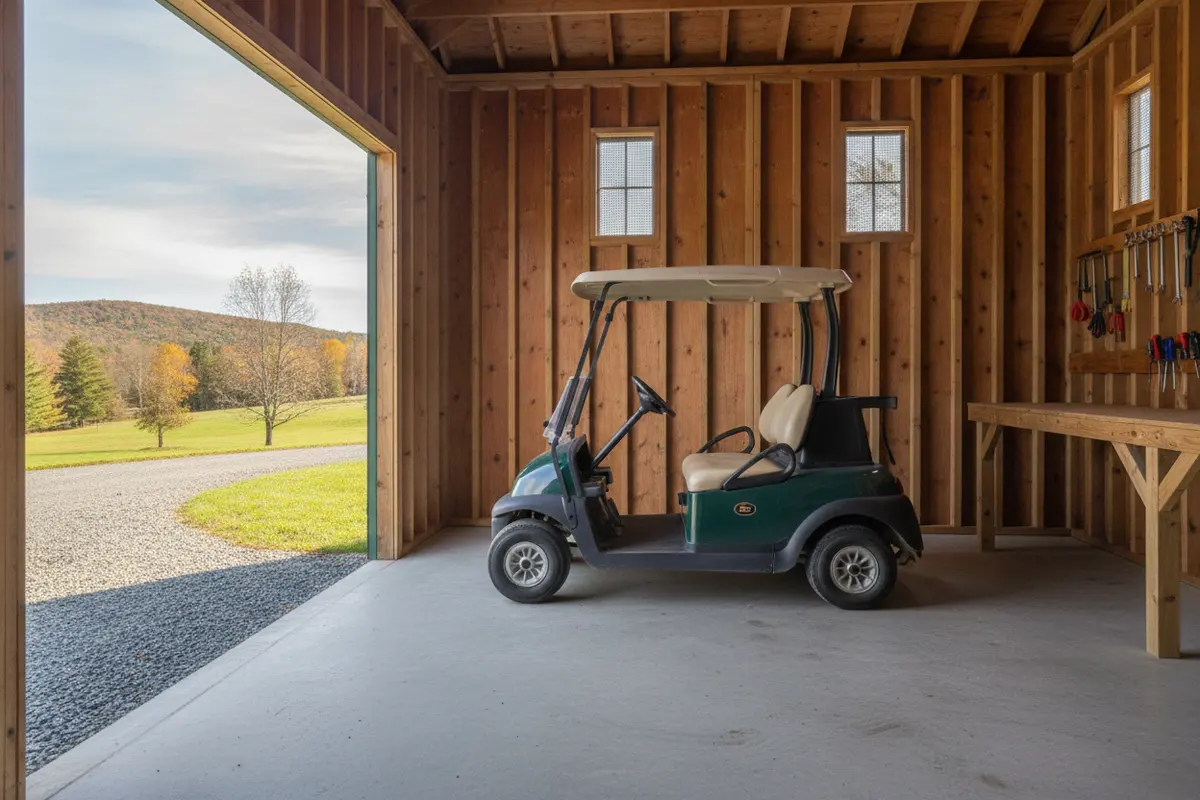
The best arrangement depends on what you need to protect against and how often the cart is used. An enclosed shed offers walls and a roof, but needs thought about moisture, airflow, and safe charging. An open-sided roof gives overhead cover and easy access, with less protection from wind-driven weather and unauthorized entry. A garage or outbuilding can work if it has adequate clearance and its other uses do not block the vehicle.
| Option | Typical advantages | Important checks |
|---|---|---|
| Enclosed shed | Roof and walls can reduce direct weather exposure and limit casual access. | Door fit, drainage, airflow, moisture, lighting, lock, and charging instructions. |
| Open-sided roof shelter | Overhead cover with straightforward entry and exit. | Wind-driven rain or snow, side exposure, security, and runoff direction. |
| Existing garage or outbuilding | May make use of space already on the property. | Actual vehicle clearance, turning room, stored-item hazards, ventilation, and clear exits. |
This comparison is a planning aid, not a construction specification. Confirm foundation, anchoring, electrical work, fire safety, and local building or zoning requirements with qualified local professionals. Requirements can vary by town and by the structure being built. Keep access to the home, driveway, and other routes unobstructed.
Rain, snow, humidity, and seasonal temperature changes all affect a storage plan. A roof and walls reduce direct exposure, but they do not automatically keep the interior dry. Water can enter through a poor roof edge, collect at the threshold, or remain on a wet vehicle. Choose a location with reliable drainage, keep the entry approach usable, and address leaks or condensation rather than trapping damp air in a sealed space.
Think through the worst ordinary access day, not only a sunny afternoon. Could snow removal pile up in front of the door? Will runoff cross the route? Is the ground stable after heavy rain? In coastal locations, wind-driven moisture and salt exposure may call for more frequent cleaning and inspection. A covered parking area is helpful only if the cart can still be reached safely.
Storage also does not replace model-specific care. Battery type and charging procedures vary. Read the vehicle and charger instructions and follow their directions for storage, charge level, operating conditions, and equipment placement. Do not improvise wiring or use damaged cords. Never run a gas-powered vehicle in an enclosed space; move it outdoors before starting or operating it.
Airflow can help reduce trapped moisture, but vents should be planned with weather protection and security in mind. Keep openings clear and observe whether water or debris enters. Check the floor for standing water, especially after a storm or after parking a wet vehicle. If the shed is enclosed, suitable lighting makes it easier to inspect the cart and move around it safely.
Charging arrangements must follow the vehicle and charger maker’s instructions and applicable electrical and fire-safety requirements. Identify the intended charger location before placing shelves or parking stops. Keep cords out of walking and wheel paths, and do not use extension arrangements unless the manufacturer and a qualified professional approve them. Questions about wiring or site conditions belong with a qualified electrician or local authority, not guesswork.
For an enclosed storage area, the U.S. Fire Administration’s guidance on lithium-ion battery safety emphasizes following manufacturer instructions and responding appropriately to battery warning signs. Use the agency’s battery safety guidance as general information, alongside the specific vehicle and charger instructions; it does not replace those instructions or local code requirements.
Fleet storage is an operating decision as well as a building decision. A golf course, resort, school, municipality, property manager, campground, or rental operator may need carts ready for different shifts and tasks. Start with an inventory of vehicle types and their actual dimensions. Count how many need indoor space at the same time, rather than planning around the total fleet if units rotate between use and storage.
Sketch traffic flow from the entrance to each parking position. Avoid requiring one cart to be moved just to reach another that is ready for use. Mark positions by unit or function, and separate vehicles awaiting inspection or service from those ready for dispatch. Leave a clear aisle for turning and walking. If units include utility beds, include room to load or unload without blocking neighboring parking spaces.
When a fleet has different body styles or power systems, do not assume that a single parking template fits every unit. Measure a representative vehicle of each configuration, then confirm any model-specific differences. A few minutes of planning can prevent a daily bottleneck, especially where carts share a narrow doorway or aisle.
c2 Vehicles works with commercial customers on vehicle and fleet needs. See commercial vehicle and fleet solutions when evaluating options for a business, venue, or municipal operation.
A repeatable routine helps catch small problems before a period of storage becomes a larger inconvenience. Tailor it to the specific model and use the owner’s manual as the authority for battery and vehicle procedures.
For maintenance or repairs, c2 Vehicles offers golf cart service and parts. The company has service locations across New England and mobile service capability; available service depends on the vehicle and the issue.
If you are planning the shed before selecting a cart, compare the real specifications of the models you are considering. Passenger capacity alone does not tell you whether a vehicle will fit. Overall height, body width, roof, cargo bed, and accessories can all affect clearance and maneuvering. Confirm the specific vehicle dimensions before finalizing the door, parking position, or overhead storage.
c2 Vehicles is the exclusive Club Car dealer in New England and offers new and pre-owned vehicles as well as small electric vehicles. You can compare new vehicle options, pre-owned carts, and utility vehicles. For golf-course use, review Club Car golf and course vehicles; for neighborhood or personal use, see personal transportation vehicles. Inventory and specifications can change, so verify the details for the specific vehicle before construction.
There is no single size for every cart. Measure the vehicle’s length, width, and height with accessories installed, then allow room for the door, the approach, walking space, and any planned equipment. Check clearances at the entrance as well as inside.
An enclosed shed provides walls and a roof and can limit casual access, but requires attention to airflow, moisture, and safe charging. An open shelter offers overhead cover and simple access with less protection from wind-driven weather and entry. Choose according to the site and the conditions you need to manage.
Only use the charging arrangement allowed by the vehicle and charger instructions and applicable site requirements. Keep equipment in good condition and avoid improvised connections. Ask a qualified professional about electrical work or site-specific safety questions.
No. A shed reduces direct exposure but does not replace manufacturer guidance for storage or battery care. Prepare the vehicle as directed, keep the space dry, and check both during longer periods without use.
A practical golf cart storage shed plan starts with the actual vehicle, a usable route, and a structure suited to the site’s weather, access, and safety needs. Confirm local requirements and follow the maker’s instructions so the setup remains useful through the seasons.