
contact us

Choosing among gas UTV dealers in New England is about more than comparing vehicle names. For a property manager, municipality, resort, school, or industrial operation, the right dealer should help match the vehicle to its daily workload and explain how parts, service, delivery, and fleet support work after the sale.
Request a commercial fleet consultation
A gas utility terrain vehicle can make sense when a workday includes repeated trips, changing loads, or long stretches away from a charging point. But fuel type alone does not determine suitability. A useful dealer conversation starts with the task, route, and operating conditions.
Bring photos or a site map if terrain is hard to describe. That helps a dealer discuss practical fit rather than relying on a model label or broad capability claims. Compare commercial utility vehicles and fleet solutions as part of the research.
It also helps to separate a must-have from a preference. For example, a grounds team may require a specific cargo capacity and a narrow turning radius, while a cab enclosure or extra storage may be desirable but optional. Put required features first, then ask which configurations meet them. This makes it easier to compare proposals fairly and avoids paying attention to features that do not solve the actual work problem.
Compare rated specifications with real requirements. Capacity figures and equipment vary by model and configuration, so request current specifications for the exact vehicle under consideration. Never exceed manufacturer limits.
| Evaluation area | What to establish | Questions for the dealer |
|---|---|---|
| Payload and cargo | People and material carried together, plus cargo securing | What are payload and bed limits for this configuration? Are accessories included in the rating? |
| Terrain and traction | Surface, gradients, turning space, seasonal conditions | Which drivetrain and tire configuration suit these routes? What limitations should we expect? |
| Duty cycle | Hours per day, trip length, idle time, refuelling pattern | How does the vehicle fit our schedule and refuelling access? |
| Operator needs | Number of drivers, visibility, access, controls | Can operators review the controls and seating before deciding? |
| Ownership support | Maintenance plan, parts availability, service access | Where can service be performed, and is mobile support available? |
For commercial buyers considering a purpose-built work vehicle, c2 Vehicles offers Polaris Pro XD commercial UTVs. Confirm specifications, availability, and configuration of any specific unit with the dealer. Evaluate accessories as part of the working setup: a cargo bed, tool storage, or other equipment can affect usable capacity and maneuvering room. Ask for the maximum allowable payload for the exact build, and account for both occupants and cargo. If loads vary, use the heaviest expected normal condition when planning. A vehicle that handles a light inspection trip may not be appropriate for a loaded supply run on the same route.
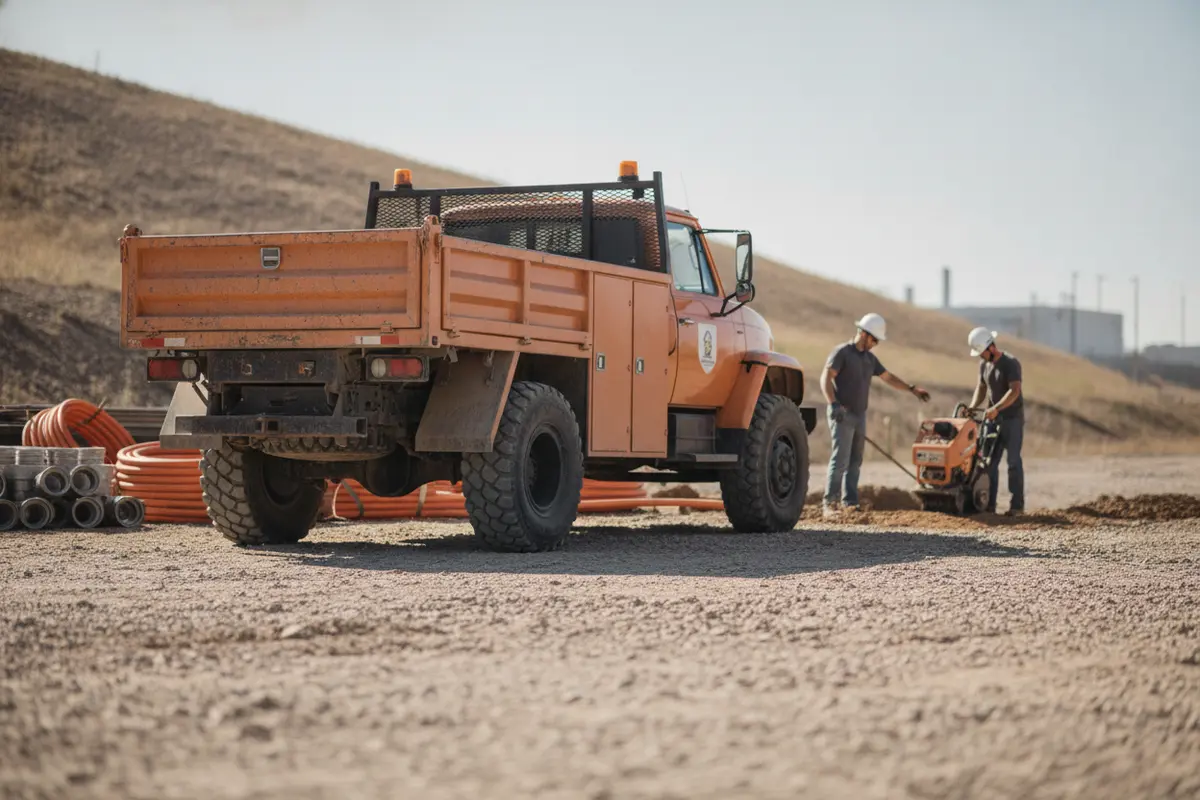
Make a route list rather than describing the site as simply hilly or rough. Note the narrowest gate, sharpest turn, steepest regular grade, and surfaces where traction is a concern. Mark loading and unloading points and places where the vehicle must stop or turn around. These details help the dealer identify questions to resolve and whether a demonstration can safely represent everyday use. If the site has multiple operating zones, list each separately; a good fit for a wide service road may not be a good fit for a narrow wooded path.
Also clarify who will drive. Different operators may have different levels of experience, and the vehicle should be understandable to the people assigned to use it. Ask what orientation is provided, which controls need explanation, and what operating instructions or manuals are supplied. Establish a policy for keys, inspections, reporting problems, and parking so a fleet is not treated as an informal shared vehicle.
Before a demonstration, write down the conditions you want to evaluate. A short loop on a smooth lot may reveal seating and controls, but it will not answer questions about turning through a tight gate or carrying a routine load over gravel. Ask whether the demonstration can be conducted safely in a representative area. If not, use the visit to review specifications and identify what still needs verification rather than treating the demonstration as proof of performance on every route.
A vehicle unavailable during a busy season can disrupt grounds work, guest transport, or site operations. Evaluate support before buying. Ask who handles routine maintenance, what parts are stocked or ordered, and the process when a vehicle needs attention.
Distinguish scheduled service from a repair response. Ask what information the service department needs when a vehicle develops a problem, how appointments are arranged, and whether the vehicle must be transported to a shop. For a remote property, transport requirements can affect how quickly a vehicle returns to work. Keep a basic record of hours, routine inspections, maintenance, and recurring issues; those notes help the dealer diagnose concerns and help managers plan downtime.
c2 Vehicles has seven locations across the six New England states and provides service and parts support. Its regional network and mobile service capabilities may be relevant when evaluating coverage; confirm availability for the exact vehicle and location. Learn about service and parts support and use the location finder to identify a nearby location. A buyer can also ask whether maintenance can be scheduled at a location convenient to the operating site and what information is needed to confirm model-specific service.
Ask how the dealer handles parts that are not immediately available. A useful answer explains how to identify the required component, how ordering is managed, and whether the vehicle should remain out of service until the repair is complete. For a fleet, consider keeping maintenance records by unit rather than relying on one general log. Record the vehicle identifier, date, operating hours, work completed, and any issue reported by the operator. These simple records can make recurring problems easier to describe and help coordinate service windows.
Warranty questions deserve the same specificity. Ask for the written warranty terms that apply to the exact model and clarify what routine maintenance the owner must perform. The Florida Department of Highway Safety and Motor Vehicles advises buyers to read warranties to understand what is covered; its licensed dealer buying guidance supports reviewing warranty terms rather than relying on a general description. That page concerns Florida vehicle buying, not New England UTV rules.
Fleet needs are rarely solved by choosing one vehicle for every task. A grounds crew, resort maintenance team, and municipal department may work on different surfaces and carry different equipment. Share the operating context with a dealer and ask for a fleet discussion before settling on quantities or configurations.
A useful fleet consultation can also identify where vehicle types should differ. One unit may handle frequent passenger movement, while another carries tools and supplies. Avoid assuming every vehicle needs identical equipment. Consider who approves a purchase, who will use each unit, where it will be stored, and whether more than one site needs delivery. For a seasonal operation, explain when vehicles are needed and whether delivery windows or setup steps must be coordinated before a busy period.
Ask the dealer to make assumptions explicit: number of occupants, usual load, route, and operating hours. Then compare proposed configurations against those assumptions. If a task changes, such as adding a trailer or carrying a different payload, check whether the original recommendation still applies. This is especially useful for municipalities and campuses where several departments may share purchasing but have separate day-to-day requirements.
Delivery planning should cover the route from the unloading point to storage, not just the truck arrival. Check gate width, overhead clearance, turning room, surface condition, and whether the delivery vehicle can safely access the site. Decide who will inspect the delivered unit, receive manuals and keys, and note any items that remain to be installed. If a fleet is delivered in stages, coordinate the handoff so operators understand which units are ready and where to report a concern.
For organizations with mixed duties, a combination of vehicles may be a better fit than a single type. c2 Vehicles serves commercial and fleet customers across New England; its commercial team can discuss needs and potential custom solutions. Buyers can browse utility vehicle options and current inventory, then verify live availability directly.
New England operations may span paved service areas, gravel drives, wooded trails, and seasonal weather. Conditions on one property can vary by season, so describe the route in its least forgiving routine condition. A vehicle that works well on a dry, level path may not suit a steep, muddy, or constrained route.
Ask how tires, drivetrain, ground clearance, and load affect performance on the site. These are not interchangeable features, and no single configuration is best for every surface. If winter operation is expected, discuss storage, cold-weather starting and maintenance with the dealer and consult the owner’s manual. Do not assume a vehicle or accessory is designed for every weather condition simply because it is marketed for utility use.
Buyers in Massachusetts, Connecticut, Rhode Island, Vermont, New Hampshire, and Maine should consider where the vehicle will be stored and serviced. If the operation spans several locations, compare service access and delivery across the whole area, not only at the main office. c2 Vehicles is the largest distributor of golf carts and other small-wheeled electric and gas vehicles in New England, with seven locations serving all six states. Review the company and regional locations when planning coverage.
Keep utility use distinct from public-road use. A worksite UTV is not automatically an LSV or a road-approved vehicle. If public-road travel is part of the plan, identify the exact vehicle classification and check applicable state and local rules before purchase or operation. A dealer discussion is useful, but it does not replace confirmation from the relevant authority. Road classifications and equipment requirements can be specific to the vehicle and jurisdiction.
Seasonal planning can also influence the support conversation. A resort or campground may have a narrow period when equipment is heavily used, while a municipality may need vehicles available through changing weather and maintenance schedules. Tell the dealer when the busiest period begins, when routine maintenance can be scheduled, and whether storage space is protected from the elements. These details help frame an ownership plan without assuming that one maintenance or storage approach fits every site.
Use these questions during a showroom visit or fleet discussion. Specific answers should match the model, configuration, and intended use, not a general statement about a product line.
Compare answers in writing if you are evaluating more than one dealer. A simple record of the model, configuration, rated capacity, service location, estimated delivery arrangement, and open questions makes proposals easier to compare. Do not treat a verbal description of a product family as confirmation that a particular vehicle has a specific feature. Ask for the details that apply to the proposed unit and retain the documents that govern operation and maintenance.
For a purchase team, assign one person to collect site requirements and another to confirm budget approval, delivery access, and maintenance responsibility. This reduces the chance that a technical choice is made without a plan for everyday operation. Before signing, review what is included, what is optional, and what follow-up is needed for service setup or operator orientation.
A comparison sheet can make the final review more concrete. Give each dealer the same route description, expected load, schedule, and service location. Record the exact model and configuration quoted, included equipment, delivery assumptions, service process, and unresolved questions. If a response is conditional, write down what must be confirmed, such as a site visit or a check of the unit’s current specifications. That prevents one proposal from appearing more capable simply because it was described in broader terms.
Talk with c2 Vehicles about your UTV requirements
Not automatically. A utility terrain vehicle should not be treated as a street-legal low-speed vehicle. Road-use rules depend on vehicle classification and applicable state and local requirements. Verify the exact vehicle and intended route before operating on public roads.
It depends on duty cycle, worksite, charging or refuelling access, distance between tasks, and operating schedule. Describe those factors to a dealer and compare appropriate vehicles for the actual work rather than choosing by powertrain alone.
Yes. A fleet discussion can map different tasks to suitable configurations, review service and parts needs, and consider delivery logistics. Bring expected quantities, operating locations, terrain details, and typical loads to make the conversation specific.
Bring a list of daily tasks, typical and maximum loads, passenger needs, site photos or a map, approximate operating hours, and details about storage and refuelling. Identify whether public-road use is contemplated so vehicle classification can be checked separately.
Comparing gas UTV dealers in New England with these questions helps organizations choose around real site demands and plan for support throughout ownership. Confirm model specifications, availability, service arrangements, and road-use requirements with the dealer before making a decision.