
contact us

The best electric transportation for college students depends on where they travel, how far they go, and what the campus allows. A compact scooter may suit a short dorm-to-class trip, while a bike, transit pass, or shared vehicle can work better for longer distances, bad weather, or group travel. Start with the trip, not the vehicle: the right choice should make daily travel practical without creating new problems with parking, charging, safety, or access.
College trips are varied. A student may walk between nearby classes, cross a large campus to reach a lab, commute from an apartment, or travel to a grocery store or part-time job. One vehicle rarely solves every trip. Before comparing models, map a typical week: note the places you go, approximate distances, hills, weather exposure, who travels with you, and whether you need to carry a backpack, groceries, or equipment.
Then identify the constraints that matter most. Can you keep a vehicle in your dorm or apartment? Is there a secure place to lock it? Does your building allow indoor battery charging? Are electric vehicles permitted on campus paths? Can you use the option in rain or winter conditions? These practical questions often matter more than top speed or a long list of features.
Budget for the whole arrangement, too. The purchase price is only one part of ownership. Consider charging access, protective equipment, secure storage, repairs, replacement parts, and any transit fare or parking costs that remain. For students who commute, transportation is a meaningful piece of the education budget: a Trellis Strategies research brief reports that transportation costs accounted for nearly 20 percent of the cost of attending college for commuting students in 2020–2021. That figure is specific to the period and group studied, not a prediction for every student today. Read the Trellis Strategies brief.
For a short, mostly flat journey, a small personal device may be enough. Longer commutes, steep routes, carrying loads, and travel with another person can change the equation. Compare the role each option can play before deciding whether to buy, rent, or rely on a campus or community service.
| Option | Often suits | Check before choosing |
|---|---|---|
| Electric scooter | Short solo trips where campus policy permits riding | Storage, charging, route surface, weather, helmet use, and local rules |
| Electric bicycle | Students covering longer routes who can store and secure a bike | Bike parking, battery charging, hills, maintenance, and route safety |
| Public transit plus walking | Commuters and students whose route connects well to buses or rail | Service schedules, stop locations, fares, late trips, and the last stretch |
| Campus shuttle or accessible transport | Trips across campus, including for people with mobility needs | Hours, stops, reservation requirements, and whether the service meets the trip |
| Small electric vehicle or golf cart | Organized campus, event, or facility trips where the vehicle and route are approved | Vehicle classification, passenger capacity, trained operators, local rules, and parking |
A scooter or e-bike can provide personal point-to-point mobility, but each requires a safe route and an appropriate place to store and charge it. Transit can reduce the need to own a vehicle, but its value depends on the timetable and how easily you reach your final destination. A campus shuttle can help connect distant buildings; it may not cover every hour or trip. Small electric vehicles have a different role: colleges, universities, and event operators may use them for managed transportation, accessibility support, or moving people and supplies, subject to campus policy and applicable road rules.
Think in terms of the full route rather than the straight-line distance. A route with steep grades, rough pavement, busy intersections, or limited lighting can make a seemingly short trip difficult. Walk or ride the route at the time you expect to travel, and look for bike lanes, crossings, accessible paths, and places to leave the vehicle. If the trip includes a public street, verify that the specific vehicle is approved for that use and that the route and local laws permit it.
For a student who lives on campus and travels mainly between nearby buildings, walking may remain simplest, with an electric option reserved for longer trips. A commuter with a longer distance may find an e-bike or transit connection more useful. Someone traveling with a friend or carrying bulky items may need a different plan. Avoid assuming that one vehicle can be used everywhere: campus paths, sidewalks, streets, and private roads may have different rules.
New England adds seasonal considerations. Rain, cold, snow, and shorter daylight can affect comfort and whether a personal device is practical. Consider an all-weather backup such as transit, walking, or a campus shuttle. Ask how the vehicle and its battery should be stored and charged, and follow the manufacturer's guidance. Do not leave a battery or vehicle in a location that the school or residence hall prohibits.
Look beyond advertised speed or range. Ask whether the vehicle fits your daily route with a reasonable reserve, whether you can secure it, and whether its weight and dimensions work in your living space. Confirm campus rules before you buy; some institutions restrict riding, parking, or battery charging in particular areas. Also check what safety equipment is required and whether the trip can be made without riding on a crowded pedestrian path.
Ownership is not automatically the best deal. If you will use a device only occasionally, a campus program or transit connection may be more sensible. If the vehicle is central to your commute, dependable charging and secure storage may be worth more than a feature you rarely use. Estimate how many trips you expect to make each week, then compare that routine with the cost and effort of your alternatives. Include days when you will take transit or walk, and ask whether a device can be safely stored during breaks or over the summer. A cheaper purchase may not be the best value if it is difficult to store, maintain, or use on your route.
Students shopping for a small vehicle can browse personal transportation vehicles and current vehicle inventory as part of their comparison.
A student choosing an individual ride and a university planning transportation for a whole campus have different needs. Colleges may consider small electric vehicles for operations, event support, or managed passenger trips. These vehicles can help staff cover a large site or support a planned service, but the campus must determine where they may operate, who may drive them, how passengers will board, and where they can park and charge.
Start by defining the job. Is the need to move facilities staff and tools, connect a remote lot with a building, support a scheduled event, or help guests move around a venue? Specify the route, passenger or cargo needs, hours, and frequency. Then check campus policies, accessible transportation plans, and rules for operation on private property or public roads. Do not assume a golf cart is street legal, or that every model may carry the same number of passengers.
For managed events, plan for guests who may have limited mobility, including family members and grandparents attending graduation. A vehicle should be part of a clear mobility plan, not a substitute for accessible routes or a school's established accommodation process. Consider a designated pickup point, staff or valets who understand the route, a safe boarding area, and a way to communicate availability. Large professionally managed events may have more capacity to coordinate these details than an informal, unmanaged gathering.
Universities evaluating a fleet can compare commercial vehicle and fleet solutions, and organizations planning an event can review golf cart rental options. The right arrangement depends on the job and the site's operating requirements. Discuss the route and use case before choosing a vehicle.
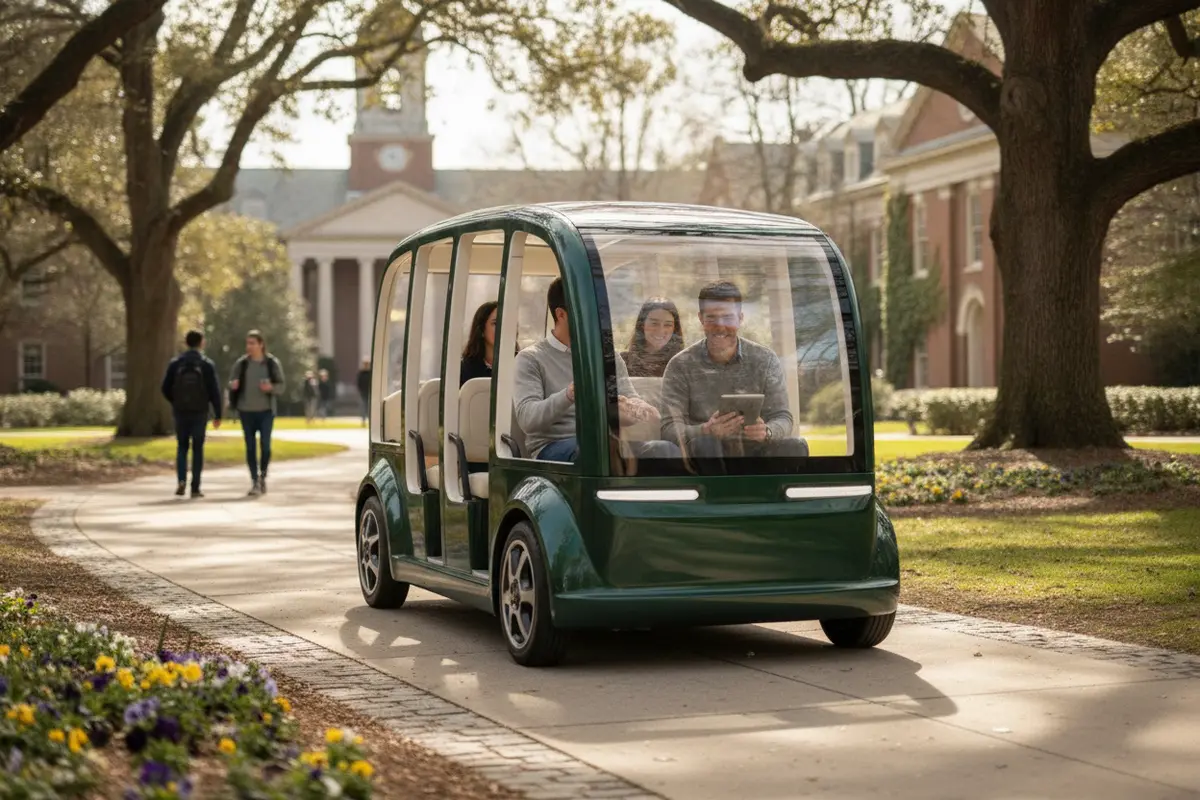
Transportation is part of access to education. A Kresge Foundation study title and summary describe CUNY students struggling with non-tuition costs such as MetroCards and transit passes. That is a specific finding about students in that setting, but it is a reminder to consider how a transport plan affects affordability and participation. Read the Kresge study.
For an individual student, identify a dependable route and a backup for days when weather, a flat tire, a dead battery, or a schedule change disrupts the usual plan. If you have a disability or temporary mobility limitation, contact the school's accessibility or transportation office to ask what arrangements are available. A personally owned scooter or bike may not meet every access need, and rules vary by campus. If transit is part of the plan, check the real schedule for early classes, evening work, and weekend trips, not just the route shown during peak hours. Ask whether a student fare, pass, or campus shuttle is available, and calculate what each option costs over a term. A backup route can matter as much as a vehicle's advertised features when missing a connection means a missed class or shift.
For campus operators, review the whole journey: accessible paths, crossings, stop locations, boarding space, and clear communication about schedules or reservations. Staff should know the approved route and the limits of the vehicle. Keep passenger capacity within the vehicle's rating, use seatbelts or other required restraints where fitted, and follow the manufacturer's operating instructions. Coordinate any public-road use with the relevant local authorities and confirm requirements for the specific vehicle before it enters traffic.
When comparing vehicle options, find a c2 Vehicles location to discuss your use case. A campus or business planning multiple vehicles can also contact the sales team about its requirements.
Students who are considering a purchase may want to compare new and pre-owned options rather than focusing on one category. Browse new vehicles and pre-owned vehicles, then ask about the specific model, intended use, service, and any financing questions. Availability and vehicle details can change, so confirm current information before making a decision.
Find a location to discuss your transportation needs
It can be a convenient option for short trips if the route, campus policy, storage, and charging setup all fit. It is not the right choice for every commute, passenger need, or weather condition. Compare it with walking, transit, an e-bike, and campus transportation before buying.
Campus rules differ. A college may allow certain vehicles for approved operations or routes, while restricting personal use. Confirm the institution's policy and the vehicle's approved use before planning a trip. Public-road operation has separate requirements, and not every golf cart is street legal.
It depends on how often vehicles are needed, the routes and passenger needs, and who will manage operations and maintenance. A campus can define the service first, then compare purchasing, renting, or other transportation arrangements with its budget and staffing needs.
Contact the college's accessibility or transportation office and ask about the available accommodation process and transportation options. Do not rely on a personal vehicle to replace an established accessible service without confirming that the route and arrangement meet your needs.
Talk with the sales team about your transportation needs
There is no single best electric transportation choice for every college student: match the option to the real trip, confirm the rules, and make sure storage, charging, safety, and access work before committing.