
contact us

Salt air can turn the wrong coastal golf cart into a costly seasonal headache. The right choice handles beach-town errands, marina runs, and months of storage without leaving service far behind.
Golf carts near me for coastal New England should match salt-air exposure, local routes, storage, range, seating, and nearby service. The best choice balances corrosion-conscious care, dependable parts access, legal road-use checks, and a dealer that can support the cart after delivery.
Browse coastal golf carts at c2 Vehicles before comparing models, delivery, and service options.
Your search should narrow the field, not stop at whichever dealer appears closest. The next section, Golf carts near me for coastal New England, explains how to compare vehicles, protect them from salt exposure, and plan for local service. The path begins with:
Searching for golf carts near me along the New England coast calls for more than finding the closest showroom. Beach towns, marinas, seasonal neighborhoods, Cape Cod, and the Islands each create distinct needs. A useful local dealer should help match the vehicle, delivery plan, and service support to how and where it will run.
Start with the trips the cart must handle. A family may need four seats for neighborhood rides, while a marina may need a cargo bed. Resorts and property managers may need passenger capacity, utility features, or several vehicles with the same setup. Range, charging access, storage space, and surface conditions also shape the right choice.
Salt air and humidity deserve attention before purchase. Research on aluminum alloys shows that coastal corrosion can reduce material strength under repeated loads. That makes routine cleaning, inspections, and protective care practical steps, not small details. The coastal corrosion research also supports asking a dealer how each vehicle should be maintained near the ocean.
Electric and lithium-powered carts often fit quiet coastal communities and short neighborhood trips. Gas models may suit some work settings or longer days without easy charging. Buyers can compare seating, power, utility options, and available features by browsing the dealer's current inventory before visiting.
A nearby dealer matters after the sale. Delivery can simplify getting a cart to a summer home, island connection, marina, or gated community. Local service also helps when a seasonal vehicle needs spring setup, repair, parts, or winter storage. Ask whether technicians can come to you and which services require a shop visit.
Coastal use can expose fasteners, frames, electrical parts, and finishes to harsh conditions. A service plan should cover cleaning, inspection, battery care, tire checks, and storage preparation. Before buying, ask how soon common parts can be sourced. Also confirm where service will happen if the vehicle cannot be driven.
A golf cart and a low-speed vehicle are not always the same. Do not assume a cart can use public roads because similar vehicles appear around town. Street use depends on the vehicle's equipment and on state or local rules. A dealer should explain which models qualify as LSVs and where buyers must confirm local limits.
Rules can differ across nearby coastal towns, including communities on Cape Cod and the Islands. Before choosing a street-use model, check the rules with the town or other local authority. C2 Vehicles' Cape Cod golf cart guide is a useful starting point for regional inventory, delivery, and LSV guidance.
The best local fit combines the right vehicle with support that lasts beyond delivery. Bring a list of planned routes, passengers, storage options, and service needs when you speak with a dealer. Those details lead to clearer advice for coastal use without relying on broad claims about range or street access.
The right cart depends on how you will use it during a typical coastal stay. Start with your usual passengers, daily cargo, local roads, and storage plan. Then consider battery care and access to nearby service. A simple neighborhood cruiser may fit one home, while another family may need more seats or a cargo bed.
A personal neighborhood cruiser suits short trips within a private community or around a vacation property. It puts comfort and easy handling ahead of cargo room. Buyers comparing personal golf carts can choose features such as seat layouts, weather protection, and electric or gas power.
A four-passenger cart makes sense when family and guests often ride together. A utility model is the better fit for hauling beach gear, landscaping tools, coolers, or supplies. Some rear seats can fold into a cargo deck, but a purpose-built cargo bed is easier for frequent hauling.
| Cart style. | Best use. | Main trade-off. | Seasonal-home check. |
|---|---|---|---|
| Neighborhood cruiser. | Relaxed local trips. | Limited cargo space. | Comfort, cover, and charging access. |
| Four-passenger cart. | Family and guest rides. | Larger parking footprint. | Seat access and storage space. |
| Utility or cargo model. | Gear, tools, and property work. | Less passenger seating. | Bed size and payload needs. |
| Qualified LSV. | Approved public-road trips. | Rules vary by location. | Confirm model and local road rules. |
| Pre-owned cart. | Occasional seasonal use. | Condition varies by vehicle. | Inspect battery, frame, and service history. |
Electric carts offer quiet operation and avoid keeping fuel at a seasonal home. Lithium batteries can reduce routine battery care, while lead-acid batteries need regular checks and proper charging. Gas may suit longer work days or properties without reliable charging. Your actual use should guide the choice.
An LSV can be useful when a trip includes approved public roads. Still, do not assume every cart is street legal. Vehicle rules vary by state, town, road, and model. Review guidance on the best street-legal golf carts, then confirm current local rules before buying.
Salt air and moisture should affect the decision, not just the maintenance plan. Coastal exposure can speed corrosion and weaken metal parts over time. Research on aluminum in coastal conditions shows why regular inspection matters. Choose a cart with a sound frame, clean hardware, and parts that a nearby shop can service.
For a pre-owned cart, inspect the frame, fasteners, wiring, brakes, tires, and battery condition before purchase. Ask how the cart was stored and serviced. The effects of coastal corrosion on metal strength are documented in published materials research. A lower purchase price may not offset repairs during a short summer stay.
Serviceability matters when the home sits empty for part of the year. When searching for golf carts near me, check local parts support, mobile service options, and winter storage plans. A cart that fits local service skills is often more practical than one with appealing features but limited support.
Before buying near the ocean, confirm how the cart will handle salt air, storage, passenger needs, charging, terrain, and service. A coastal golf cart should be easy to clean, simple to maintain, and supported by nearby technicians who understand seasonal use.
When shopping for a coastal golf cart, match the vehicle to its daily route and storage plan before comparing colors or accessories. Salt air, humidity, rough ground, passenger needs, and local road rules can all shape the right choice.
Salt and moisture can reach the frame, fasteners, electrical contacts, and other exposed parts. Research on aluminum in coastal corrosive environments shows why regular inspection matters. Ask what corrosion protection the vehicle has and how often it should be cleaned.
A covered, dry storage space helps limit exposure when the cart is not in use. For a seasonal home, plan for battery care, cleaning, and winter storage before leaving. Also confirm that nearby technicians can inspect the cart and source parts. C2 Vehicles offers service and maintenance across New England.
Map the cart's normal trip from start to finish. A flat private road has different needs than a marina ramp, campground trail, golf course, or hilly community road. Check the surface, slopes, total distance, charging access, and places where the cart must turn or park.
Choose range with a buffer for added passengers, cargo, hills, cold weather, and repeat trips. Then decide whether quiet electric power or a gas model suits the site better. If the cart will haul tools, coolers, beach gear, or supplies, compare payload needs and cargo-bed space.
A test drive on similar ground can reveal ride comfort, braking feel, turning space, and how easily passengers get in. Test the cart with a normal load when possible. Make sure the tires and suspension fit the route rather than its best paved section.
Do not assume a golf cart can use every public or community road. Rules differ by state, town, property, and vehicle type. Ask the local authority or property manager where carts may travel. Also confirm whether the chosen model needs LSV equipment, registration, insurance, or another approval.
Before buying, review warranty terms for coastal use, added accessories, batteries, and service travel. A nearby dealer can also help match the cart to local routes and future repair needs. Coastal shoppers searching for golf carts near me should compare support access as closely as vehicle features.
Bring the dealer a clear use list: route type, rider count, cargo, storage, charging access, and expected season. That information makes it easier to narrow the options without relying on broad street-legal claims.
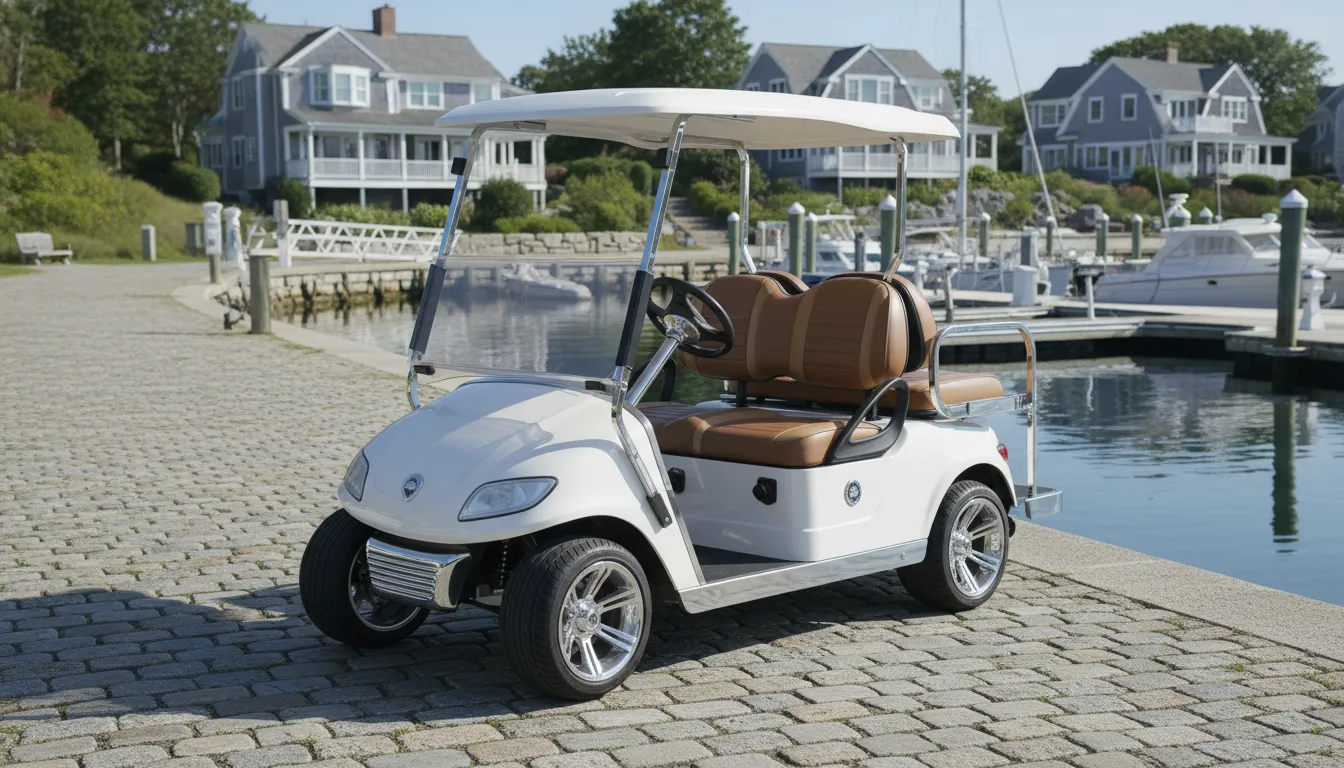
Salt air and coastal humidity demand a steady care routine, even when a cart looks clean after a short ride. Salt can remain around fasteners, brakes, suspension parts, and battery trays. Moisture then gives corrosion more time to spread.
Research on aluminum alloys shows that coastal corrosion research under repeated loads. Regular cleaning and checks help spot trouble before it affects how the cart drives.
Use these steps during the season and before winter storage. Always follow the owner's manual for the cart and its battery type.
Battery care depends on the power system. Lithium and lead-acid batteries have different charging, temperature, and storage needs. Use the maker's instructions rather than one routine for every cart. If the cart will sit for months, plan periodic checks before storage begins.
An outdoor cover can block debris, but it cannot replace a dry shelter. A loose tarp may hold damp air against the cart or rub its finish. Choose a breathable cover that fits well, and make sure the cart is dry before covering it.
Book a full inspection before the summer rush, especially after winter storage or frequent beach-area use. A technician can check brakes, tires, steering, suspension, wiring, batteries, and signs of corrosion. C2 Vehicles offers service and maintenance for carts across New England.
Schedule repairs early enough to order the correct OEM parts and complete needed work before regular use begins. Owners searching for golf carts near me can also find regional support for Cape Cod, the Islands, and the South Shore.
Schedule coastal golf cart service with c2 Vehicles to keep your cart ready for salt air, storage, and seasonal use.
Some coastal New England communities allow properly equipped low-speed vehicles on approved roads, but street legality is never automatic. Rules vary by state, municipality, road speed, registration status, insurance, driver requirements, and the exact vehicle configuration.
Some golf carts can travel on public roads, but street access is never automatic. Rules vary by state, town, road, and vehicle type. A community may also set its own limits. Before buying, confirm current requirements with the town and the agency that registers vehicles in your state.
A standard golf cart and a low-speed vehicle (LSV) are not always treated the same. An LSV or DOT-approved model may have road-ready equipment that a standard cart lacks. Still, that label alone does not grant access to every road. Local speed limits, registration rules, and allowed travel areas can affect where it may operate.
Ask which exact model and setup qualify before placing an order. C2 can help identify suitable LSV and DOT-approved options when a model qualifies. The Onward LSV is one known street-legal neighborhood cruiser to consider where local rules allow it. For more detail, review C2's guide to the best street-legal golf carts.
Start with the roads you expect to use. A coastal town may allow an approved vehicle on one local street but bar it from a faster route. Private associations, marinas, and resorts may also have separate rules. Confirm each requirement rather than relying on a neighbor's experience.
Buyers searching for golf carts near me should bring these answers to the dealer. That makes it easier to compare only models suited to the planned use. It also helps prevent buying a cart that cannot legally follow the intended route.
Street approval is only one part of choosing a vehicle for a beach town. Salt air and wet conditions can also affect exposed metal over time. Research on aluminum in coastal conditions shows that corrosion can reduce material strength. This coastal corrosion research supports the need for routine care.
Ask about cleaning, protective treatments, storage, and service before purchase. Then match those needs with local road rules and the vehicle's approved status. C2 can explain available choices. Buyers should still confirm final legal requirements with the proper state and local offices.
c2 Vehicles supports coastal buyers with seven New England locations, factory-trained technicians, and OEM parts access. The team can also help with delivery, mobile or door-to-door service where available, seasonal maintenance, storage planning, and road-use questions.
After-sale support matters when a golf cart works near salt air, sand, rain, and seasonal traffic. Coastal conditions can speed corrosion and weaken exposed metal over time.
Research on coastal corrosion shows why routine checks and early care matter. c2 Vehicles supports owners across all six New England states through seven regional locations. That network helps personal owners, property managers, resorts, golf courses, and other commercial fleets find local help. Buyers searching for golf carts near me can work with a nearby team before and after purchase.
Factory-trained technicians can inspect vehicles for wear, clean key parts, and address corrosion before it leads to larger repairs. They also use OEM parts when appropriate, which helps keep each vehicle matched with the right components. Owners can schedule service and maintenance for routine care or a specific issue.
Mobile and door-to-door service may also be available, based on the location and work needed. This option can help seasonal homeowners who are away from their property. It also limits disruption for commercial buyers that rely on carts and utility vehicles each day.
Parts access is also important during the busy summer season. A local service network can help reduce delays when a cart needs a replacement part or repair. Before winter, the team can discuss cleaning, battery care, storage, and service needs for the next season.
Needs can change after the first purchase. A homeowner may need more seats. While a marina or resort may need added cargo space. c2 Vehicles can help both personal and commercial buyers review parts, accessories, rentals, trade-ins, and fleet options.
Rentals can cover a short-term need, such as an event, peak season, or temporary fleet gap. Commercial buyers can also discuss service plans and replacement timing with a regional team. This helps keep vehicle support tied to real use, rather than a one-size-fits-all schedule.
Owners ready for another vehicle can view current inventory and compare available choices. Personal buyers can also ask the sales team about models suited to coastal homes and neighborhood travel. For ongoing care, use Schedule Service. For a new need, choose View Inventory or Request Quote.
View current golf cart inventory at c2 Vehicles and request help matching a cart to your coastal community.
Golf cart prices vary by condition, powertrain, seating, road equipment, and accessories, so there is no single reliable average. Compare complete quotes for a new, pre-owned, or certified vehicle, including delivery and needed coastal protection. Confirm warranty terms and expected service costs before buying, rather than choosing only by the advertised price.
The best golf cart brand depends on the intended use, local service access, and available parts. Coastal buyers should prioritize corrosion-resistant construction and a powertrain suited to planned mileage and storage. Club Car Onward lithium models are a practical option for quiet neighborhood cruising and lower routine battery maintenance. Compare warranties, seating, payload, and nearby service before deciding.
Standard golf carts are not automatically street legal in New England. An eligible low-speed vehicle must meet applicable equipment, registration, insurance, and licensing rules. Requirements differ by state and municipality, as explained in this Cape Cod golf cart guide. Before driving on public roads, confirm that the specific vehicle and planned route comply with local rules.
Yes. Salt air and humidity can speed corrosion on exposed metal, electrical connections, and hardware. Rinse away salt residue, keep terminals clean, inspect coatings, and address scratches promptly. Research on aluminum alloys shows that coastal corrosion research. Schedule regular inspections with technicians familiar with coastal vehicle use.
Outdoor winter storage is not ideal because moisture, salt, freezing temperatures, and snow can damage components. Use a dry, ventilated, covered space whenever possible, and follow the manufacturer's battery storage instructions. Clean and inspect the cart before storage, then arrange service before spring use. C2 Vehicles provides seasonal storage support and service across New England.
Waiting until the busy coastal season can limit your choices and leave too little time to prepare your cart for local conditions. Starting now gives you time to compare electric and gas models, seating, storage needs, and options suited to beach towns or marinas. You can also plan delivery and service before your seasonal home, rental property, or community becomes busiest.
Ready to choose a vehicle that fits your routes, storage plan, and expected use? Acting early also leaves more time to ask questions about upkeep, accessories, delivery, and service before you need the vehicle. View current inventory to compare available options, then request a quote for a golf cart that suits your coastal community and timeline.