
contact us

Searching for golf carts for sale can quickly become more complicated than choosing a color. The right cart must fit how you plan to use it, where you will drive it. How many people or supplies it needs to carry, and who will support it after the sale. For New England buyers, hills, seasonal storage, delivery distance, and access to dependable service also deserve a place on the checklist.
View golf carts for sale across c2 Vehicles' New England inventory.
This guide explains how to compare new and pre-owned carts, gas and electric powertrains, passenger and utility configurations, and dealer support. Use it to narrow your options before you explore available golf cart inventory.
The best golf cart is the one matched to its daily job. A two-passenger cart used around a private property has different requirements from a six-passenger vehicle moving guests at a resort or a utility vehicle hauling equipment across a commercial site.
Before comparing models, write down your most common trips and the conditions the cart will face. Consider:
Do not assume every golf cart is street-legal. Low-speed vehicle requirements and permitted roads vary by state and municipality. Confirm the rules where you plan to drive before buying, and choose a vehicle specifically configured for that use when needed.
Both new and pre-owned golf carts can be smart purchases. The better option depends on your budget, preferred features, timeline, and comfort with the vehicle's history.
| Factor | New golf cart | Pre-owned golf cart |
|---|---|---|
| Features | Current configurations, technology, colors, and accessories | Features depend on available inventory |
| Condition | Unused and configured to your needs | Condition and prior use should be inspected carefully |
| Warranty | Manufacturer warranty may apply | Coverage varies; certified programs can add confidence |
| Budget | Usually a higher initial purchase price | Can provide more value for buyers with flexible preferences |
| Availability | Custom orders may require additional time | In-stock units may be available sooner |
Choose new when you want a specific color, seating layout, powertrain, or accessory package and prefer the reassurance of a new vehicle. Buyers planning frequent use may also value current technology and the ability to configure the cart around their exact needs. Browse new golf carts and vehicles to compare current options.
Pre-owned inventory is worth considering when value and faster availability matter more than selecting every detail. Ask how the cart was used, what was inspected or serviced, the age and condition of its batteries. And what warranty is included. c2 Vehicles' Certified Pre-Owned vehicles are up to five years old, serviced in-house, and backed by a three-year bumper-to-bumper warranty. See the current pre-owned vehicle selection for available configurations.
Powertrain choice affects how a golf cart feels, how it is maintained, where it can be stored, and how it fits into your routine. There is no single best choice for every New England buyer. Electric carts fit quiet, charging-ready settings; lithium models reduce routine battery maintenance; and gas carts suit long workdays where charging access is limited.
Electric carts offer quiet operation and no tailpipe exhaust during use, making them appealing for residential properties, golf facilities, resorts, schools, and indoor-adjacent work. They need convenient access to charging and a consistent charging routine. Ask the dealer about battery care, charging equipment, expected use between charges, and recommendations for extended winter storage.
Lithium power appeals to buyers who prioritize low-maintenance batteries, consistent performance, and convenient charging. For example, the Onward 4 Forward LSV pairs lithium power with four-person seating for neighborhood cruising where local rules permit. The right battery capacity still depends on terrain, passenger load, accessories, temperature, and daily usage, so discuss your actual route rather than relying on a general range estimate.
Gas models can be practical for long workdays, remote properties, and operations where charging access is limited. They require fuel, engine maintenance, and appropriate ventilation. Commercial buyers should compare the convenience of refueling with operating environment requirements and their existing service capabilities.
Schedule golf cart service with c2 Vehicles' factory-trained technicians.
If you are deciding between powertrains, ask to test-drive representative models. Acceleration, braking, noise, ride comfort, and hill performance are easier to judge from the driver's seat than from a specification sheet.
Buy for the way the cart will be used most often. More seats add flexibility, but they can also change the vehicle's length, turning needs, storage footprint, and cargo capacity.
For a business or organization, estimate peak passenger and cargo demand before choosing a fleet. Golf courses, schools, municipalities, property managers, campgrounds, resorts, and event venues may benefit from a mix of passenger and utility vehicles rather than one configuration for every task. Club Car Carryall utility vehicles, for example, offer commercial-grade cargo capability with gas and electric drivetrain options.
Accessories should support a real use case. Weather enclosures, windshields, lighting, storage, mirrors, and cargo solutions can make a cart more useful. But adding every available option can increase cost without improving the trips you actually take.
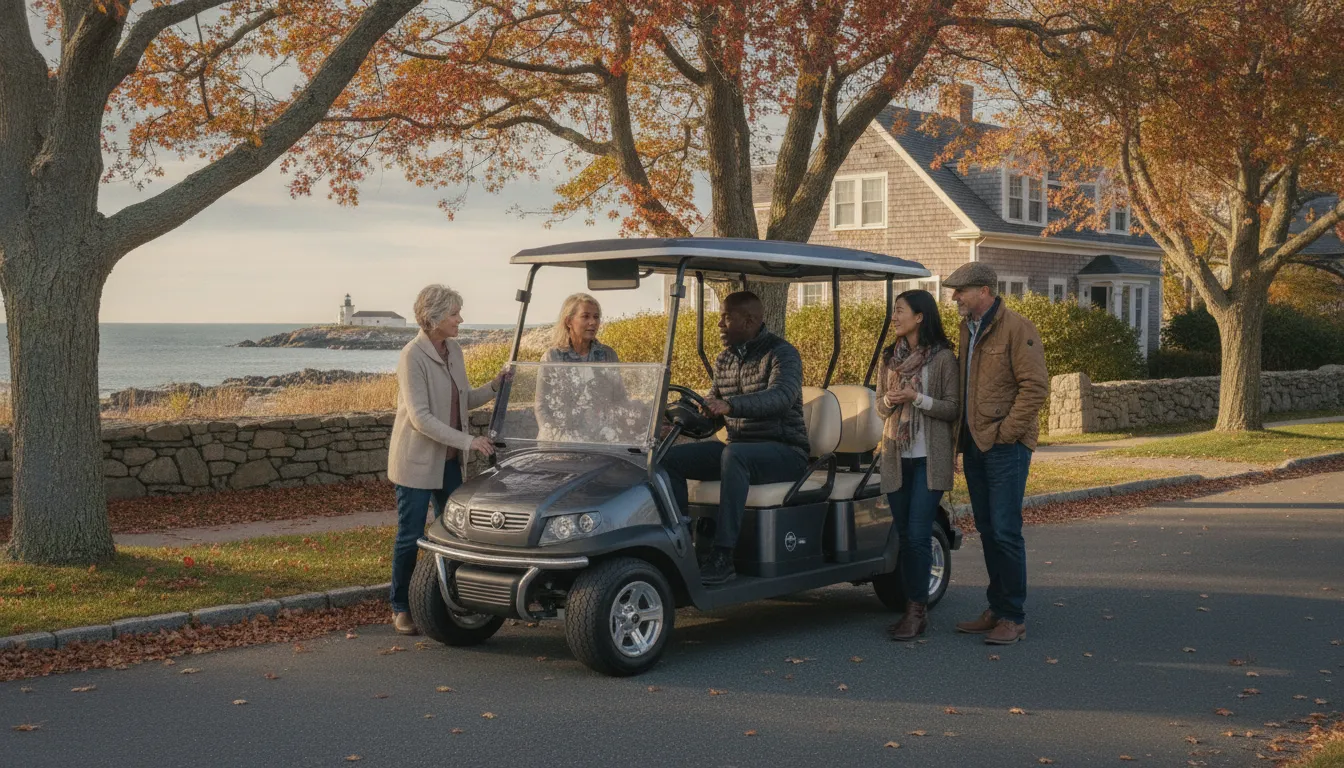
A golf cart is a vehicle that needs inspection, parts, and service over time. Buying only on price can become expensive if the seller cannot diagnose a problem, source the right part, or support warranty work.
Before purchasing, ask the dealer:
c2 Vehicles serves buyers across New England through seven locations in all six New England states. Its support includes factory-trained technicians, OEM parts, mobile and door-to-door service, a 25-point inspection process, regional delivery, and dedicated commercial territory managers. Buyers can find the nearest c2 Vehicles location to discuss inventory and ongoing support.
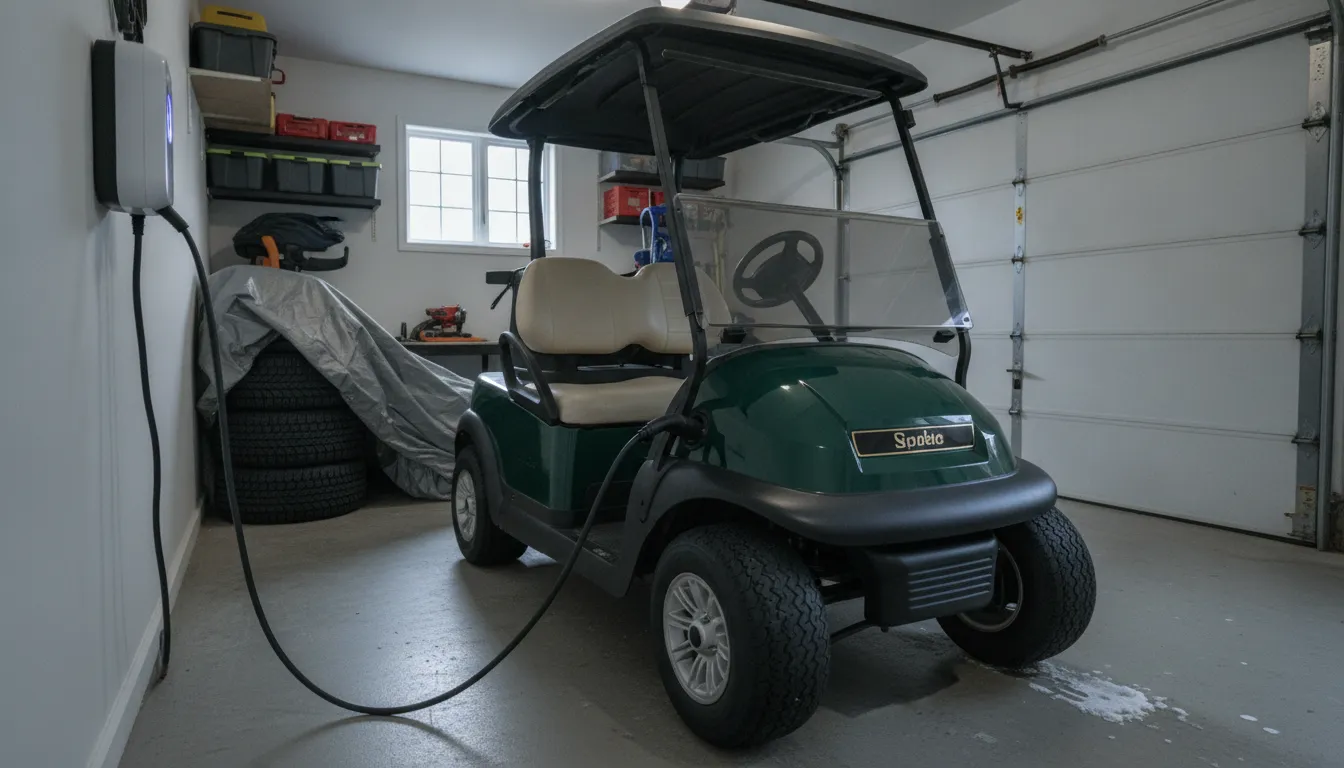
New England weather changes how a golf cart should be stored and maintained. Before winter, clean the vehicle, check tires and brakes, follow the manufacturer's battery or fuel-storage guidance, and choose a dry, protected space. A covered cart is not necessarily protected from moisture, freezing temperatures, or rodents.
Battery care deserves special attention during periods of limited use. Traditional lead-acid batteries and lithium batteries have different charging and storage requirements, so follow the guidance for the installed system instead of using a one-size-fits-all routine. Ask the dealer how often to check the cart and whether the charger should remain connected.
Spring is the right time for a safety inspection before regular use resumes. Look for tire damage, fluid leaks, loose connections, lighting issues, and signs of corrosion. Test steering and braking in a controlled area. Professional service can identify wear that is easy to miss after months in storage.
Commercial fleets should document seasonal procedures for every unit. Assign responsibility for charging, inspection, maintenance scheduling, and return-to-service checks. This creates a more reliable fleet and helps managers plan repairs before peak golf, hospitality, campground, or event seasons.
The advertised price is only one part of golf cart ownership. Build a practical budget that includes delivery, accessories, registration or local compliance costs where applicable, routine service, replacement tires, and future battery or engine maintenance. Exact costs vary by model, configuration, use, and location, so request a complete quote rather than estimating from a base model alone.
Financing can help qualified buyers match a preferred vehicle and configuration to their budget. Trade-in value may also reduce the amount financed or paid at purchase. Review the total cost, term, and included equipment, then compare the support behind each quote. Explore golf cart financing options or discuss a trade-in with a c2 Vehicles specialist.
For commercial buyers, calculate cost around the work each vehicle performs. A fleet vehicle that is properly matched to its route, passenger load, and cargo requirements may deliver better value than the lowest-priced unit. Include service access and downtime in that evaluation, especially when vehicles support daily operations.
Use this checklist to turn a broad search into a focused dealer conversation:
For commercial fleets, add utilization, operator training, maintenance scheduling, replacement planning, and seasonal demand to the discussion. A dedicated fleet consultation can help match each job to the right vehicle instead of forcing one model to cover every need.
A useful quote should make it easy to understand exactly what you are buying. Confirm the model year, powertrain, seating configuration, installed accessories, warranty coverage, delivery plan, and any work that will be completed before handoff. For a pre-owned cart, ask for the inspection findings and service completed in-house. Clarify which future services are included, recommended, or billed separately.
Ask who will be your point of contact after the sale. A dependable dealer should be able to explain how to schedule routine service, request mobile support, order OEM parts, and start a warranty claim. Buyers who live seasonally in New England should also discuss storage timing, pickup and delivery options, and the best time to prepare the vehicle for spring.
Test-drive the exact configuration you are considering whenever possible. A cart with rear-facing seats, a cargo box, larger tires, or an enclosure can feel different from a basic demonstration model. Bring the people who will drive it most often, and check visibility, access, comfort, steering effort, braking, and low-speed maneuvering.
Find a c2 Vehicles location and compare golf carts with a local specialist.
The purchase date is the beginning of ownership, not the end of the buying decision. Build a simple maintenance plan around the manufacturer's schedule and the cart's actual use. Vehicles carrying heavy loads, operating on hills, or working daily may need closer attention than carts used occasionally on private property.
Keep a record of inspections, service visits, tire replacements, battery care, and accessory changes. These records help technicians diagnose issues and give future buyers a clearer picture of the cart's history. Commercial fleet managers can use the same information to identify recurring problems, plan downtime, and decide when replacement makes more sense than another repair.
Parts availability matters too. Accessories and replacement components should match the vehicle and be installed correctly. Working with a regional dealer that stocks OEM parts and supports multiple locations can shorten the time between identifying a problem and returning the cart to service.
c2 Vehicles supports owners with factory-trained technicians, mobile and door-to-door service, a substantial parts inventory, and service at c2 locations where applicable. That support can be especially valuable when your vehicle is used for daily transportation, guest service, property maintenance, or other time-sensitive work.
Check the vehicle's service history, overall condition, brakes, tires, steering, frame, electrical system, and battery age or engine condition. Ask what inspection was completed, what warranty is included, and whether parts and service will be available after purchase.
Electric carts are quiet and convenient when reliable charging is available. Gas carts can suit long workdays or locations where charging is difficult. Your best choice depends on route length, terrain, operating environment, storage, maintenance preferences, and access to fuel or charging.
Rules vary by state, municipality, road, and vehicle classification. A standard golf cart is not automatically street-legal. Check local requirements and discuss a properly equipped low-speed vehicle with a knowledgeable dealer before planning road use.
Choose enough seats for the number of people who ride regularly, then consider occasional guests, cargo space, storage footprint, and maneuverability. Commercial buyers may need a mix of passenger and utility configurations.
c2 Vehicles offers new and pre-owned carts plus service and fleet support throughout New England. Start by exploring current inventory, then contact or visit a nearby location to compare the best-fit options.
A strong buying decision balances the vehicle you want today with the service you will need tomorrow. Start with your use case, compare only the configurations that fit it, and evaluate the dealer as carefully as the cart.
Ready to narrow your search? View c2 Vehicles inventory or find a New England location to speak with a personal or commercial vehicle specialist.