
contact us

New England winters are notoriously harsh on small-wheeled electric and gas vehicles left in unheated sheds. Freezing temperatures can crack battery casings and turn fuel into a gummy mess that clogs your engine. Taking a few proactive steps now protects your investment from the region's most brutal weather.
Schedule your professional golf cart winterization service today to ensure your vehicle is prepped for the cold months ahead with expert care.
By following a clear checklist, you can protect every part of your cart from the cold. Start with a deep clean before moving on to battery care, fuel system prep, and tire maintenance.
Before storing your golf cart for the winter, give it a thorough deep clean. Remove all trash and debris from compartments to deter rodents. Wash the body and frame with mild soap and a soft sponge to remove road salt and mud that cause rust. Inspect tires, bolts, and lights for damage, and lubricate steering and suspension joints. A clean, inspected cart is less likely to develop problems during months of storage.
A deep clean is the first step in successful golf cart winter storage. Removing dirt and salt protects the cart body from rust during the wet New England winter. A clean cart also helps you find hidden leaks or cracks that need a fix before you park it for the cold months.
Start by clearing out all floor mats and storage bins. Remove every piece of trash from the dash and seats. Leftover food or wrappers can attract rodents that may nest in the cart or chew on wires. Vacuum the floor and wipe all surfaces with a mild soap to keep pests away.
Wash the outside of the cart with a soft sponge and car soap. Pay close attention to the frame and wheels where mud and salt build up. Use a low-pressure hose to rinse the frame, as high-pressure water can damage electric parts. Dry the cart well with a soft cloth to stop rust and mold while it sits in storage.
Take a close look at the whole cart. Look for worn tires, loose bolts, or broken lights. This is also the best time to grease the frame and parts to keep them moving well. If you find big issues, getting professional golf cart maintenance now means your cart will be ready when spring returns.
Electric golf cart batteries need specific cold-weather care. Clean battery terminals with baking soda and water to prevent power loss. Set the power switch to TOW mode and disconnect main cables. Lead-acid batteries must be stored at 100 percent charge and checked every four to six weeks. Lithium batteries need a 50 to 70 percent charge and a climate-controlled environment between 32 and 80 degrees Fahrenheit.
Electric golf carts need specific care to protect their power source during cold New England winters. Taking the right steps now prevents costly damage and ensures your cart is ready for spring. Proper battery care is the most vital part of your golf cart winter storage plan.
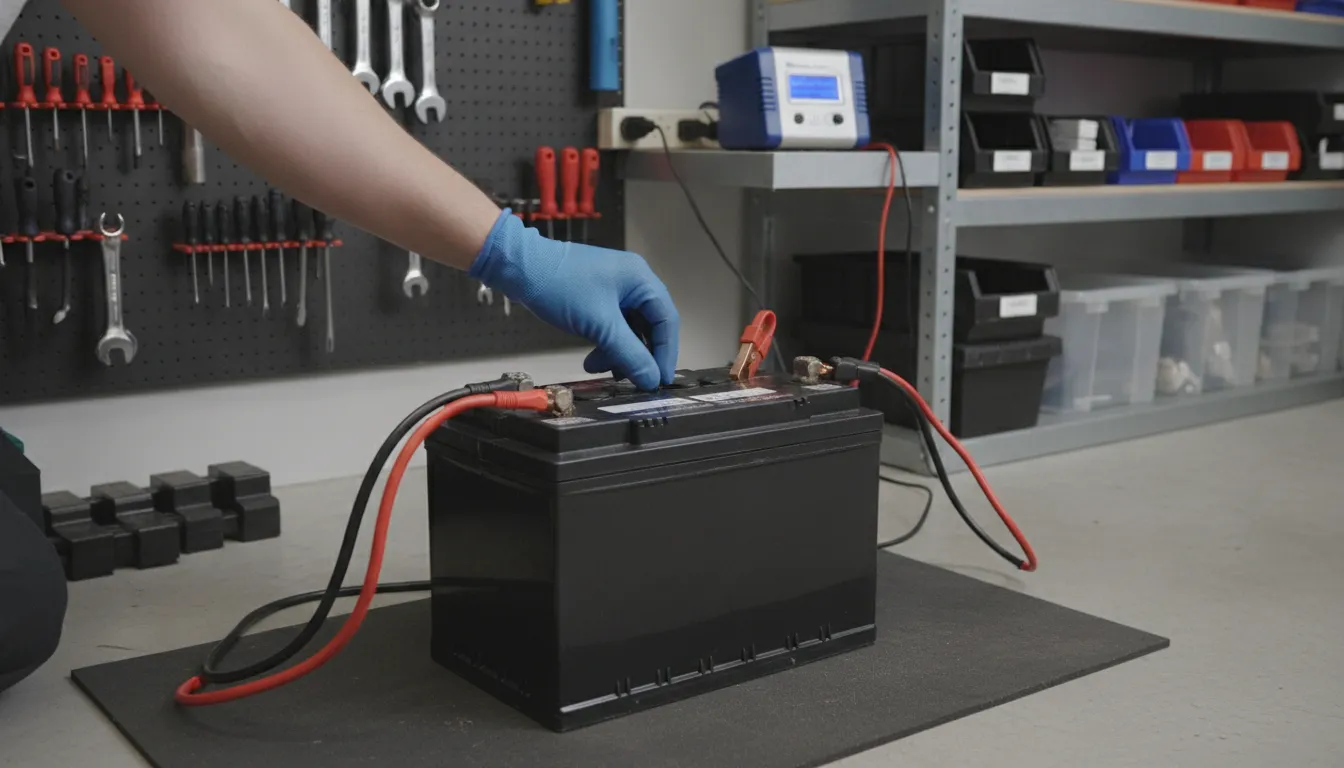
Before you store your cart, clean the battery terminals to prevent power loss. You can remove corrosion by using a mix of baking soda and water to scrub the metal parts. After cleaning, make sure your batteries are properly secured to prevent any movement while the cart sits in storage.
You also need to set your cart to the right electrical state. Flip the power switch under the seat to the TOW position to stop small power drains. For extra safety, disconnect the main battery cables to keep the charge from dropping over time.
| Battery Type | Charge Before Storage | Winter Temp Range | Monthly Maintenance | Risk If Neglected |
|---|---|---|---|---|
| Lead-Acid | 100% full charge | Above 32F | Every 4-6 weeks, recharge if below 50% | Sulfation, frozen cells, permanent damage |
| Lithium | 50-70% partial charge | 32F to 80F (climate-controlled ideal) | None needed | Cold below 32F can permanently reduce capacity |
For lead-acid units, charge them to 100 percent before you park the cart. These batteries naturally lose charge, so you must plug them in every four to six weeks to keep them full. Storing them with a low charge can lead to permanent damage in freezing weather.
Lithium batteries are easier to manage but have strict temperature rules. Store them with a partial charge, usually between 50 and 70 percent, rather than keeping them full. In areas with deep freezes, keep lithium batteries in a space between 32 and 80 degrees Fahrenheit.
Even in storage, check your batteries once a month to ensure they stay healthy. For lead-acid batteries, check the water levels and add distilled water if the plates are exposed. Keeping a strict schedule helps you avoid the need for costly repairs when the golf season returns.
Gas-powered golf carts require fuel system protection before winter storage. Fill the tank with fresh fuel and add a stabilizer, then run the engine for five to ten minutes to circulate treated fuel through the carburetor. Change the oil and filter, check antifreeze levels, disconnect the starter battery, and spray fogging oil into the air intake to prevent rust on cylinder walls.
Preparing your gas-powered golf cart for cold weather keeps the engine in top shape. New England winters can be harsh on fuel systems and engine parts. Taking the right steps now saves you time and money when spring arrives.
For gas golf carts, addressing the fuel system is a crucial step for winter storage. Old gas can break down over time and clog the engine. Start by filling the tank with fresh fuel and adding a high-quality stabilizer.
Once you add the stabilizer, run the engine for about five to ten minutes. This allows the treated fuel to move through the lines and the carburetor. It helps prevent gum and varnish from forming while the cart sits idle.
Change the oil and the oil filter before you put the cart away. Dirty oil contains acids and bits of metal that can harm engine parts. Clean oil provides a protective layer that keeps the motor safe during the off-season.
For water-cooled engines, check the antifreeze levels. Protecting against freezing damage in winter is important for the life of your engine. Test the coolant condition to see if you need to add more antifreeze.
Good tire care is a key step in your golf cart winter storage routine. Cold New England winters can cause the air pressure in your tires to drop. When a cart sits in one spot for months with low pressure, the tires may develop flat spots. To avoid this, check your tire pressure before you park the cart. Fill each tire to the level the maker suggests to keep them round and ready for spring.
For gas carts, the cooling system needs care before the first frost hits. Engine coolant protects your motor from freeze damage during the winter. Test the state of your coolant to see if it still protects against the cold. If the fluid looks dirty, it may be time to flush the system. At c2 Vehicles, our professional golf cart maintenance team can help you test and top off your fluids.
Keeping the right fluid levels is vital for safety. Take a moment to check your brake fluid and top it off if it is low. Look for leaks around the wheels and lines. While you are under the cart, look at the belts and hoses for signs of wear. New England winters can be hard on rubber, so check for small cracks.
A full check before storage is the best way to keep your cart in top shape. Beyond tires and fluids, look for loose bolts or worn parts. Taking these steps now will save you time and money. If you are not sure about any part of this work, a quick visit to a service shop can give you peace of mind.
The best storage location for a golf cart during winter is a dry, indoor space like a heated garage or shed. Climate-controlled rooms are ideal for lithium batteries. If indoor storage is not available, use a breathable all-weather cover and check monthly for moisture. Never set the parking brake; use wheel chocks instead. c2 Vehicles offers climate-controlled storage plans at seven locations across New England.
Finding the right spot for golf cart winter storage is key to protecting your vehicle. A good site keeps your cart away from snow, ice, and road salt. It also helps stop rust on the frame and protects the electric parts. Aim to park the vehicle in a covered, dry location to keep it safe from moisture.
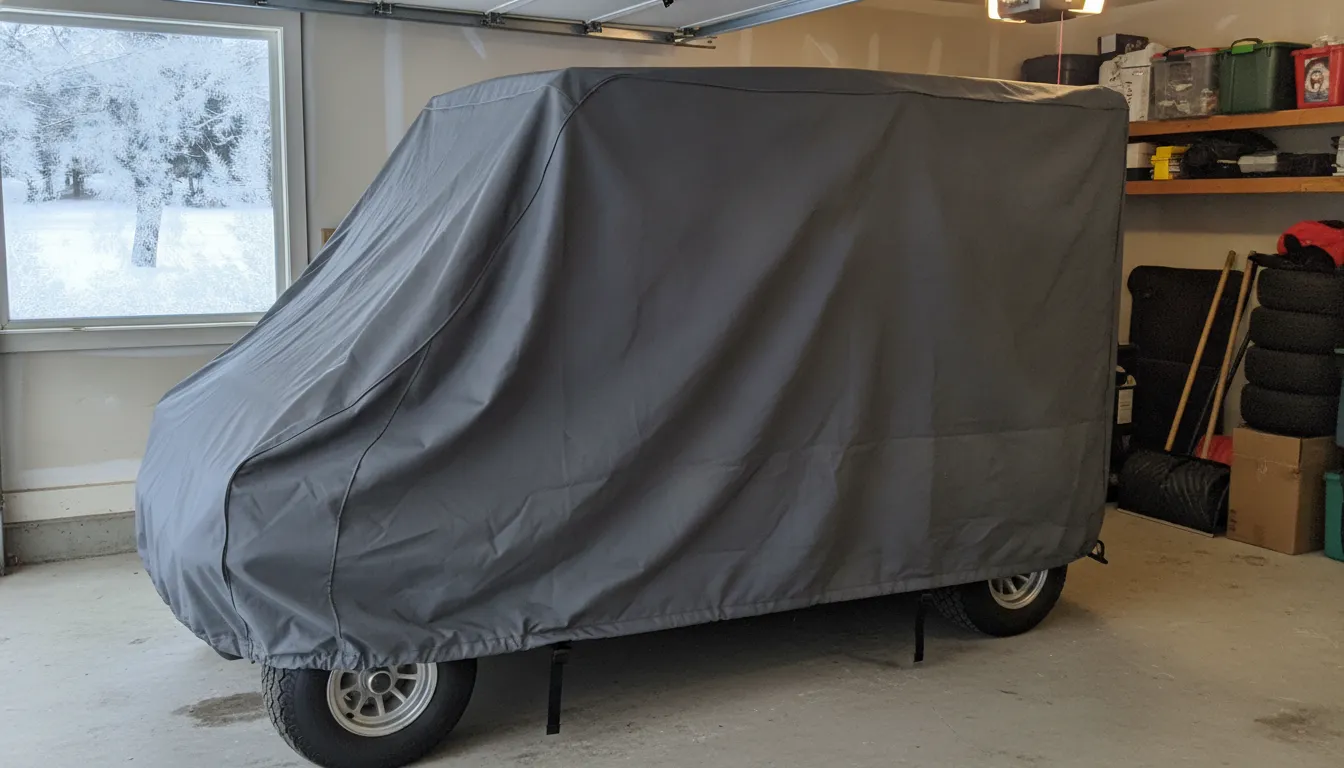
An indoor space is the best choice for winter. A garage or shed provides a shield from the harsh New England wind. If you have a lithium battery, try to use a climate-controlled room. These batteries should stay in a space between 32 and 80 degrees to work well later. If you lack space at home, c2 Vehicles offers climate-controlled storage at our shops.
If you must store your cart outside, you need a high-quality cover. Do not use plastic tarps as they trap moisture against the body. Trapped water can lead to mold or rust. Choose a breathable, all-weather cover that fits your model. Make sure the cover is tied down tight so it does not blow away in a storm. Check the cart once a month to ensure it stays dry underneath.
Never set the parking brake when you store your cart for the winter. In cold weather, the brake cables can seize or freeze in place. This can make it hard to move the cart in the spring. Instead, use wheel chocks on both sides of the tires to keep the cart from rolling. For long-term storage, you can also lift the cart onto jack stands to stop flat spots on the tires.
Preparing your cart for the cold months is more than a simple chore. It is a way to protect a major investment. For over 40 years, c2 Vehicles has helped New England owners with expert care. We run seven locations across all six New England states. Our team knows how harsh local winters can be on small engines and batteries.
Our process starts with a full look at your vehicle. Our factory-trained service technicians use a 25-point checklist. They check every part of the cart to find small issues before they grow. This includes testing the brakes, steering, and all moving parts. They also check fluid levels and tire wear. We keep a $1 million parts inventory to ensure we can fix any problem fast.
Electric carts need specific care for their power cells. Our techs test each battery to ensure it holds a full charge. They clean the terminals and check for any leaks or cracks. Proper care helps stop damage from deep freezes. By catching issues now, you avoid costly repairs when the weather warms up.
Moving a golf cart can be hard for many owners. We offer door-to-door mobile service to make the process easy. Our team can pick up your cart from your home or club. We use special trailers to move vehicles safely across the region. This service is offered at all of our New England locations.
Our mobile techs can also perform on-site care. If you store your cart at home, we can come to you. They will prep the engine or battery system in your garage. This includes adding fuel stabilizer and checking the tires. Having a pro visit your site ensures the work is done right.
The best way to protect a cart is to keep it out of the cold. We offer climate-controlled storage plans that keep your vehicle at a steady temperature. This stops battery drain and prevents plastic parts from getting brittle. Storing a cart in a warm, dry spot also keeps rodents away. Our secure sites provide a clean space where your cart can rest.
Our service standards have earned us the Club Car Black and Gold designation. This is a top-tier honor for service level. It shows we meet the highest standards for technical skill and customer care. Whether you have a single cart or a large fleet, we provide the same level of attention.
Storing your golf cart for the winter is the first step to protect it. But you cannot just park it and forget it. A few simple checks each month will keep your cart in top shape. These tasks help you avoid dead batteries and flat tires when spring arrives in New England.
The cold winter air can drain your battery power quickly. Check the charge on your electric golf cart every four to six weeks. If the level drops below 50 percent, give it a full charge. For lead-acid batteries, always charge them in a spot with plenty of fresh air to stay safe from gas buildup.
Check the water levels in each cell if you have lead-acid batteries. Use only distilled water to fill them. If you see white crust on the terminals, clean it off with a mix of baking soda and water.
Cold temperatures cause tire pressure to drop. Low air can lead to flat spots on your tires. Check the pressure once a month and fill them to the right level. This helps your tires keep their round shape while they sit. Also, look for any cracks or leaks in the rubber.
Small animals like mice look for warm spots in the winter. They may try to live in your cart or chew on the wires. Look for droppings or nests near the motor and seats. Cleaning out trash before storage is the best way to keep pests away. Use scent packs or traps if you find signs of pests.
Check the cart cover too. Make sure air can move under it to prevent mold and rust. If you see water or damp spots, move the cart to a drier place.
Following this monthly plan will protect your golf cart all winter. These quick steps keep the parts in good health. When the warm New England sun returns, your cart will be ready for the course.
Yes, you must keep your batteries charged to prevent freezing or damage. For lead-acid batteries, check the power level every month and charge them as needed. Add distilled water to lead-acid cells to keep them working well. Lithium batteries only need one full charge before you turn them off for the winter. These steps help your cart start right up when spring arrives in New England.
Storing your cart in a dry, indoor spot like a garage is the best way to protect it from harsh New England snow and ice. If you must store it outside, use a high-quality cover that lets air through so water does not build up. A covered, dry spot keeps the body and parts safe from cold and prevents rust.
Yes, flip the power switch under the seat to the TOW setting before you store the cart. This setting shuts down the power system and stops the battery from draining while it sits. If your cart does not have a TOW switch, disconnect the main battery cables instead.
Do not use the parking brake during long storage periods because the cables can stick or seize in place. Instead, leave the brake off and use wheel blocks to keep the vehicle from rolling. This simple step saves you from a costly repair when spring arrives.
For lead-acid batteries, temperatures below freezing (32 degrees Fahrenheit) can cause permanent damage if the battery is not fully charged. Lithium batteries should be stored between 32 and 80 degrees Fahrenheit. A climate-controlled space is the safest option for any battery type during New England winters.
Leaving your golf cart in the cold without the right care will lead to dead batteries and costly engine repairs that you can prevent today. If you wait for the deep freeze to hit, you might lose months of use and spend a lot of money on parts next year. Act now to shield your cart from the harsh salt and wet snow that come with a long winter in New England.
Schedule your professional golf cart winterization service today to book your spot. Talk to a local service expert about our door-to-door pickup and delivery options for your golf cart.