
contact us

Managing a sprawling New England resort requires a vehicle fleet that never quits. When you have guests to move, you cannot rely on weak equipment. You need tools that can handle the salt air and steep hills of the Northeast.
Schedule a commercial fleet consultation with c2 Vehicles today to optimize your resort operations.
Commercial golf carts are rugged, heavy-duty utility vehicles built to handle demanding guest transit, maintenance, and resort operations. Unlike personal models, these commercial golf carts feature high-capacity powertrains, reinforced frames. And robust cargo beds to transport staff and cargo reliably across sprawling New England resorts and campgrounds.
Running a large property in the Northeast brings hard problems that regular tools cannot always solve. You must know how local weather affects your work. Understanding the physical differences between consumer and heavy-duty vehicles is the best place to start, beginning with why specialized builds are essential.
New England resorts and campgrounds face tough tests every day. From the rocky shores of Maine to the hills of Vermont, these sites need gear that never quits. Standard carts often fail when they face heavy work. Staff need tools that handle bags, trash, and site repairs without breaks. Using the right fleet keeps your team on track and your guests happy.
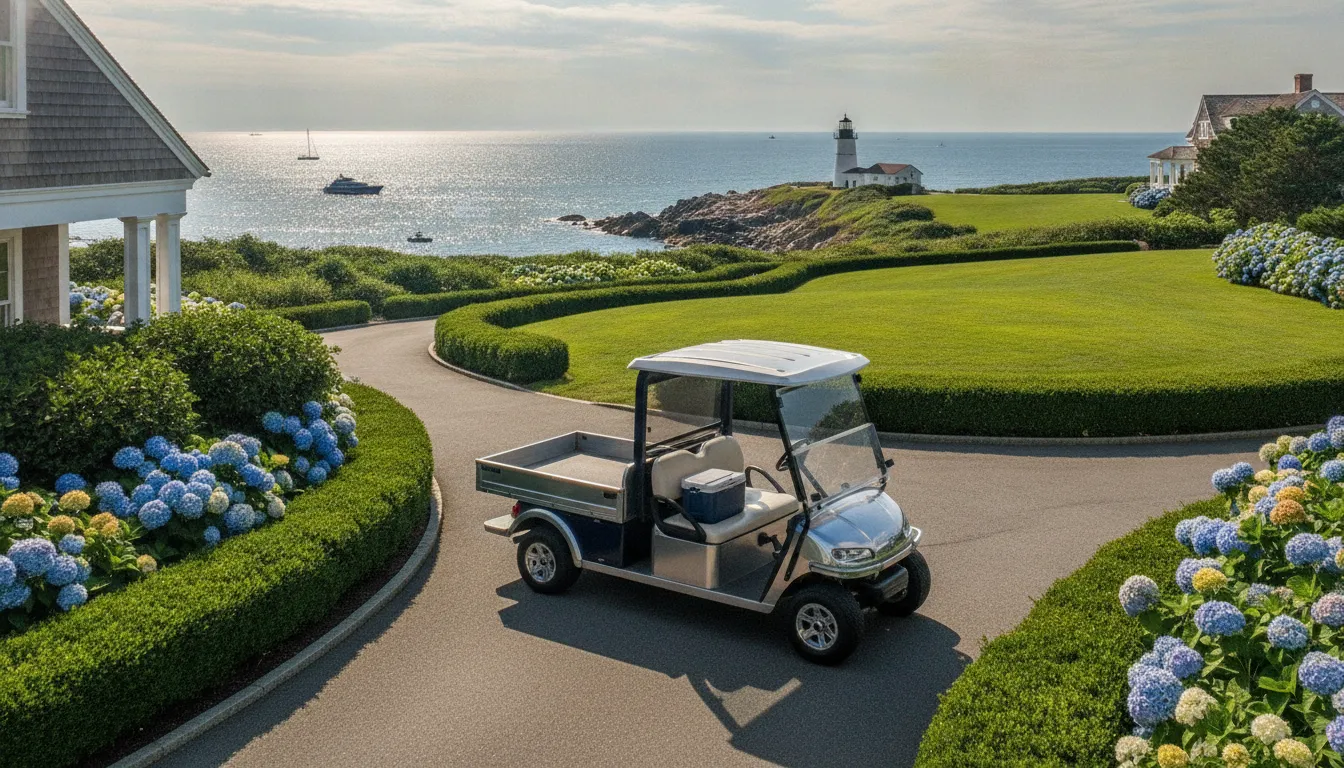
Personal carts work well for a quick game or a slow drive. But a busy resort is not a golf course. Staff use their carts for ten or twelve hours straight. They carry heavy loads and travel over rough ground. This constant use puts a huge strain on the engine and the frame. Most personal carts are not built for this level of stress.
When you use a personal cart for work, parts wear out fast. You might see more flat tires or broken springs. These repairs cost more than the cart is worth over time. New England winters also add to the wear. Salt and wet mud can rust thin metal frames quickly. Pros need a tough build to handle these coastal and mountain spots.
True commercial golf carts are made to handle heavy tasks. These vehicles use strong frames and rugged parts. They can carry more weight than a standard cart. This makes them great for moving mulch or large groups of guests. Most commercial models also have larger cargo beds and better brakes for safety on steep hills.
Safety is a top goal for resort owners. Commercial-grade vehicles often meet strict safety rules. Some models follow the federal safety standards for low-speed vehicles (LSV). These rules ensure the cart has the right lights, mirrors, and belts. Using carts that meet these rules helps protect your staff and your guests. It also shows that your team puts safety first.
Campgrounds in New Hampshire and Connecticut often have dirt paths and steep hills. A standard cart might slip or stall on a wet path. Commercial utility vehicles have more power and better tires for these spots. They can pull trailers of wood or move water tanks across a field. This extra power is a must for large parks with miles of trails.
These tough vehicles help your team manage many daily chores:
Strong gear means less downtime for your crew. When a cart breaks, work stops. A commercial fleet stays on the road longer with fewer shop visits. For New England teams, this means more time for guests and less for repairs. Choosing a vehicle built for the job is the best way to grow your business.
Resorts and campgrounds in New England have many jobs to do. Personal carts cannot handle the heavy work of a busy site. To keep things running well, you need the right commercial golf carts. These fleets help teams move people, tools, and gear all day long.
C2 Vehicles builds custom plans to meet the exact needs of your land. We know the hills of Vermont and the sandy paths of Cape Cod. Our carts are built to handle the mud and salt of New England. We have served this area for over 40 years. Our firm even runs a rental fleet of over 500 units. We work with you to find the best units for your site.
Resort teams need carts for many tasks. Front desk staff use shuttles to move guests and bags. This helps people get to their rooms fast and with ease. Housekeeping crews need units with big beds for towels and soap. These carts help them clean more rooms in less time.
Fix-it teams use tough carts for repairs and yard work. They can carry tools and parts to any spot on the land. You can also get units with cold boxes for food and drinks. Our local team can visit your site to help you plan. We help you find the best golf cart fleet management solutions for each site.
You can choose from gas or electric power to fit your site. Electric carts work well for quiet guest areas. They do not make noise or smell like gas. This keeps the air clean and the mood calm. Many new models use lithium cells. These cells last a long time and need no care.
Gas units offer more range for big parks or steep hills. They can run for a long time without a charge. Both choices give you the power to finish your work each day. Our team can help you pick the right power for your needs.
Safety is a top goal for any fleet. Federal safety rules for low-speed vehicles set the bar for safe use. These rules are in 49 C.F.R. sec. 571.500 and guide how carts are made. This helps keep your guests and staff safe on the road.
Tough beds and extra seats make these carts ready for hard work. Strong builds help your fleet last for many years in New England weather. We use top parts to make sure your carts stay on the job. This keeps your team safe and your site running well.
| Model | Best Use | Cargo Load | Power Choice |
|---|---|---|---|
| Club Car Carryall | Shuttling and light work | Up to 1,500 lbs | Gas or Electric. |
| Polaris Pro XD | Heavy hauling and towing | Up to 2,075 lbs | Gas or Diesel. |
Explore our extensive commercial utility vehicle inventory and customize your fleet today.
Picking the best commercial golf carts for your resort or campground means looking at two top brands. The Club Car Carryall and the Polaris Pro XD both lead the market. Each offers unique strengths for New England's tough weather and hilly spots. Choosing between them depends on your specific work needs, weight limits, and budget.
New England resorts often have steep hills and soft turf. The Club Car Carryall 1500 and 1700 models use the smart IntelliTrak system. This is a 4WD tool that senses the ground and shifts power without the driver needing to flip a switch. It is perfect for grass and trails that get muddy in the spring. C2 Vehicles is the sole Club Car dealer for the region, so we know these systems well.
The Polaris Pro XD is built for even harder work. It has a full-size frame and high ground clearance. This makes it a great choice for rough back-country trails or heavy gravel paths. For safety, many of these vehicles meet federal safety standards for low-speed vehicles. Both brands give you the grip you need to stay moving through all four seasons.
New England's salt air can be hard on metal. Club Car Carryall models use rust-proof aluminum frames. This keeps the vehicle light and helps it last longer near the coast. These commercial-grade utility vehicles can haul big loads of mulch or guest bags. The Carryall series offers many bed sizes to fit your specific fleet tasks.
The Polaris Pro XD uses heavy-duty steel and reinforced tires. It is meant for extreme job sites where you need to move very heavy parts. Its weight limit is often higher than standard carts. If you buy a used unit, the C2 Vehicles CPO program can help. It offers up to a 3-year bumper-to-bumper warranty to keep your fleet on the road. This covers many parts that wear down over time.
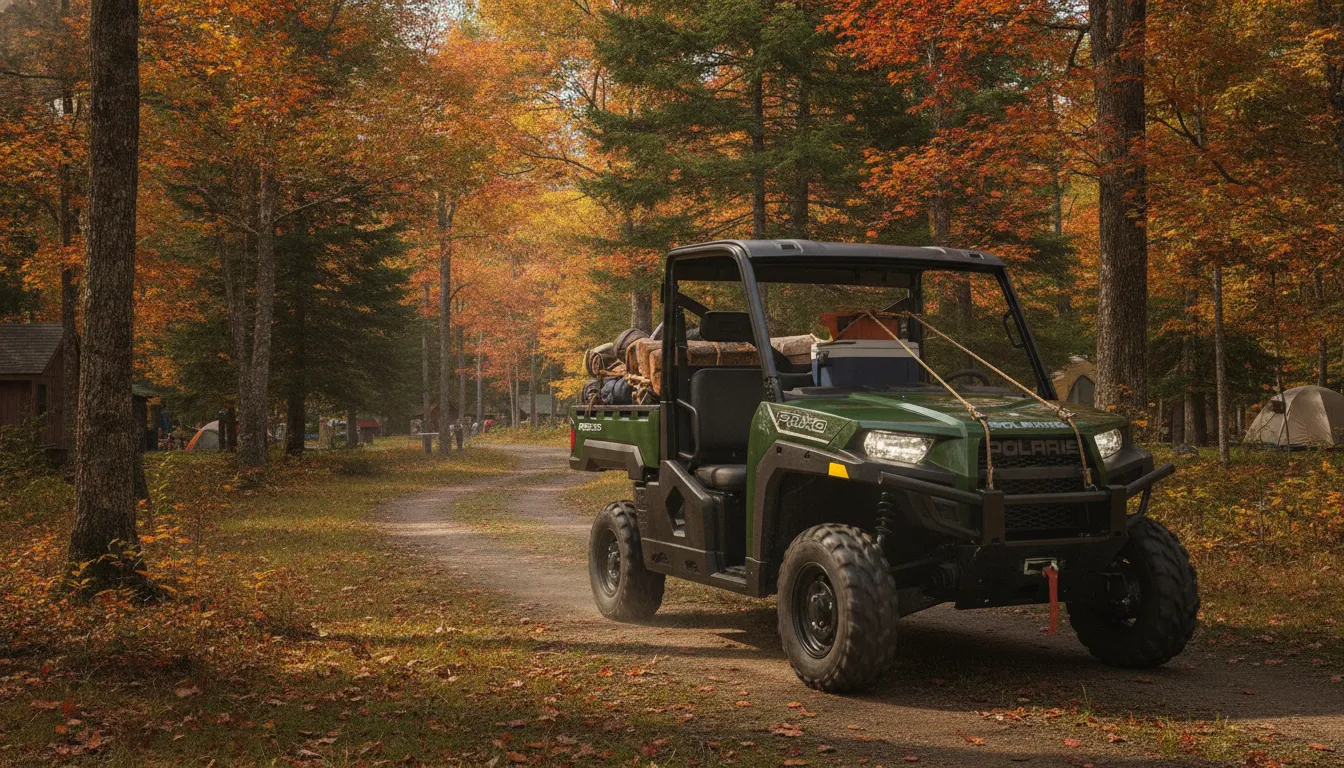
Resorts often need to move guests without making a lot of noise. The Club Car Carryall lithium-ion models are great for this. They use a battery that needs no water or daily care. They are quiet and do not smell like gas. This keeps the resort peaceful for your guests. These lithium units work well and charge fast during short breaks.
The Polaris Pro XD is mostly known for its strong gas and diesel engines. These are best when you have long work days far from a plug. But for most New England resort spots, the quiet power of a Carryall is hard to beat. Our team can help you pick the right power source for your site. We deliver across all six states to make sure your fleet is ready for the busy season.
Running a fleet of commercial golf carts at a resort or campground needs a clear plan. Daily care helps your carts last longer and keeps your guests safe. When you track the health of each cart, you can find small issues before they cost you a lot. A well-kept fleet also keeps your daily work moving with no stops. Guests will notice when your carts look and run like new.
Early care is the best way to keep your fleet running well for years. High-use settings like New England resorts put a lot of stress on carts. Salty air and hilly paths can wear down parts fast. Proper care reduces downtime during the busy summer months. You should set up a weekly and monthly plan to check every unit in your fleet. This helps your golf cart fleet care tools stay smooth all year long. A good plan keeps your costs low and your carts on the road.
Safety is the main goal for any resort owner or staff member. Your team should do quick checks every day before the carts go out to guests. These steps help you follow U.S. safety rules for low-speed carts. Use this list to keep your fleet in top shape and avoid risks on your grounds:
Even with great care, some repairs need an expert hand. C2 Vehicles helps your team with trained experts who know these carts inside and out. We can handle tough fixes that keep your work smooth and your guests happy. You won't have to wait long for repairs because we keep a large stock of items ready at our seven sites.
Our team keeps over $1 million in parts to serve our New England clients fast. This help makes us a top choice for commercial golf carts and other work cars. We are here to help you keep your resort running at its best.
Choosing a fleet size depends on guest needs and property size. Most resorts start with a mix of large passenger shuttles and work carts for daily tasks. According to C2 Vehicles, expert team members help design custom fleet plans. This helps you have enough carts to meet peak demand without spending too much on extra units you do not need.
Street rules for carts change by state and town across New England. While standard golf carts are mostly for use on private land, Low-Speed Vehicles (LSVs) can often go on public roads. These roads must have speed limits of 35 mph or less. These vehicles must also meet federal safety rules like having mirrors and lights to be legal on the road.
Campgrounds often have rough ground and heavy use that wear out small personal carts. Commercial-grade vehicles, like the Club Car Carryall, are built with strong frames and parts to handle heavy loads and uneven paths. These tough models give better long-term value and work well for moving guests and gear across a busy outdoor site. They are made to last through years of hard daily work.
Yes, C2 Vehicles helps commercial clients with skilled techs and mobile service. Their team can do checks and fixes right at your resort or campground to keep your carts moving. With over $1 million in parts in stock, the company makes sure that fleet owners get the parts they need fast. This keeps your business running smooth all through the busy season.
Keeping your resort or campground running well is a big job. If you use old carts that break down, your staff will lose time and your guests will have to wait. Waiting to fix these fleet issues can cost you money and hurt your brand name. If you act now, you can get the best carts before the busy months start.
This will help your team work faster and keep your site looking great. You will also avoid the rush of other owners trying to buy new gear at the last minute. Our team can help you find the right mix of gas and electric tools for your needs. With seven sites across New England, C2 Vehicles is ready to help you grow. Do not let old machines slow down your success this year.
Ready to schedule? Call (401) 395-0808 to schedule a commercial fleet consultation.