
contact us

For a New England event, resort, campground, property, or seasonal operation, a golf cart rental is part of the operating plan, not simply an extra vehicle. The right partner must match passenger and utility needs, coordinate delivery and pickup, and keep support available when demand or weather changes.
Request a long-term rental quote
The best long term golf cart rental company supplies fit-for-purpose vehicles and explains every contract responsibility. It coordinates regional logistics, provides dependable service throughout the rental period, and makes it easy to compare fleet capability, maintenance, delivery, accessibility, and local experience.
That standard applies whether you need guest transportation across a resort, mobility support during a multi-day event, utility vehicles for a campground, or a scalable fleet for the season. This guide focuses on evaluating a long-term rental partner. It does not repeat the full operating plans covered by event, resort, or campground fleet guides. Instead, it gives decision-makers a practical scorecard for comparing providers before they commit.
The right provider should be evaluated as an operating partner, not simply as a source of vehicles. Start with a scorecard that reflects how the carts will be used, how often demand will change, and what happens when a vehicle needs attention.
Ask whether the provider can supply passenger, utility, accessibility, and terrain configurations for the jobs at your site. A resort may need guest transportation, while a property manager may need vehicles for maintenance and supply runs. An event venue may need a larger fleet for a defined season, then fewer vehicles afterward.
Request a written vehicle schedule. It should identify the number and type of units, intended use, powertrain, accessories, and accessibility requirements. If the provider cannot explain why each configuration fits your operation, the proposal may be sized for convenience rather than performance.
Delivery and pickup can affect your schedule as much as the vehicles themselves. Confirm site access, delivery windows, staging, storage, pickup, and extensions when your season or event changes. For a multi-location operation, ask how equipment is assigned and supported across sites.
Maintenance responsibility can affect operating costs and downtime. Before committing, ask who responds to a breakdown, how service requests are submitted. Whether mobile or on-site support is available, and what parts and technician coverage exist in your region. Confirm these points in the agreement rather than relying on a verbal promise.
Finally, compare the contract line by line. Duration, vehicle substitutions, extensions, delivery and pickup, insurance, charging or fuel, damage standards, deposits, and cancellation terms should be easy to understand before the rental begins.
The right fleet starts with the work your guests, staff, and contractors need to do. A passenger shuttle is not a substitute for a vehicle that moves supplies, and a utility cart may not provide the comfort or access required for guest transportation. Look for a rental partner that can combine vehicle types instead of forcing every use case into one standard cart.
| Role | Options | Questions |
|---|---|---|
| Passenger movement | Four-passenger carts, six-passenger vehicles, or larger people movers | How many riders travel together, and are canopies, windshields, or storage needed? |
| Guest access | Wheelchair-compatible vehicle with an aluminum ramp | Can the vehicle accommodate a wheelchair while carrying additional passengers? |
| Property and event work | Carryall 500, 700, or 1500 utility vehicles with a box or flatbed | What load, bed dimensions, lift, or dump functions are required? |
| Rough or variable terrain | Polaris Pro XD full-size or mid-size 4x4 units | Will crews need selectable 4x4, an enclosed cabin, ground clearance, or a hitch? |
| Power and operating environment | Gas or electric configurations selected for the site | Where can vehicles refuel or charge, and how does that fit daily dispatch? |
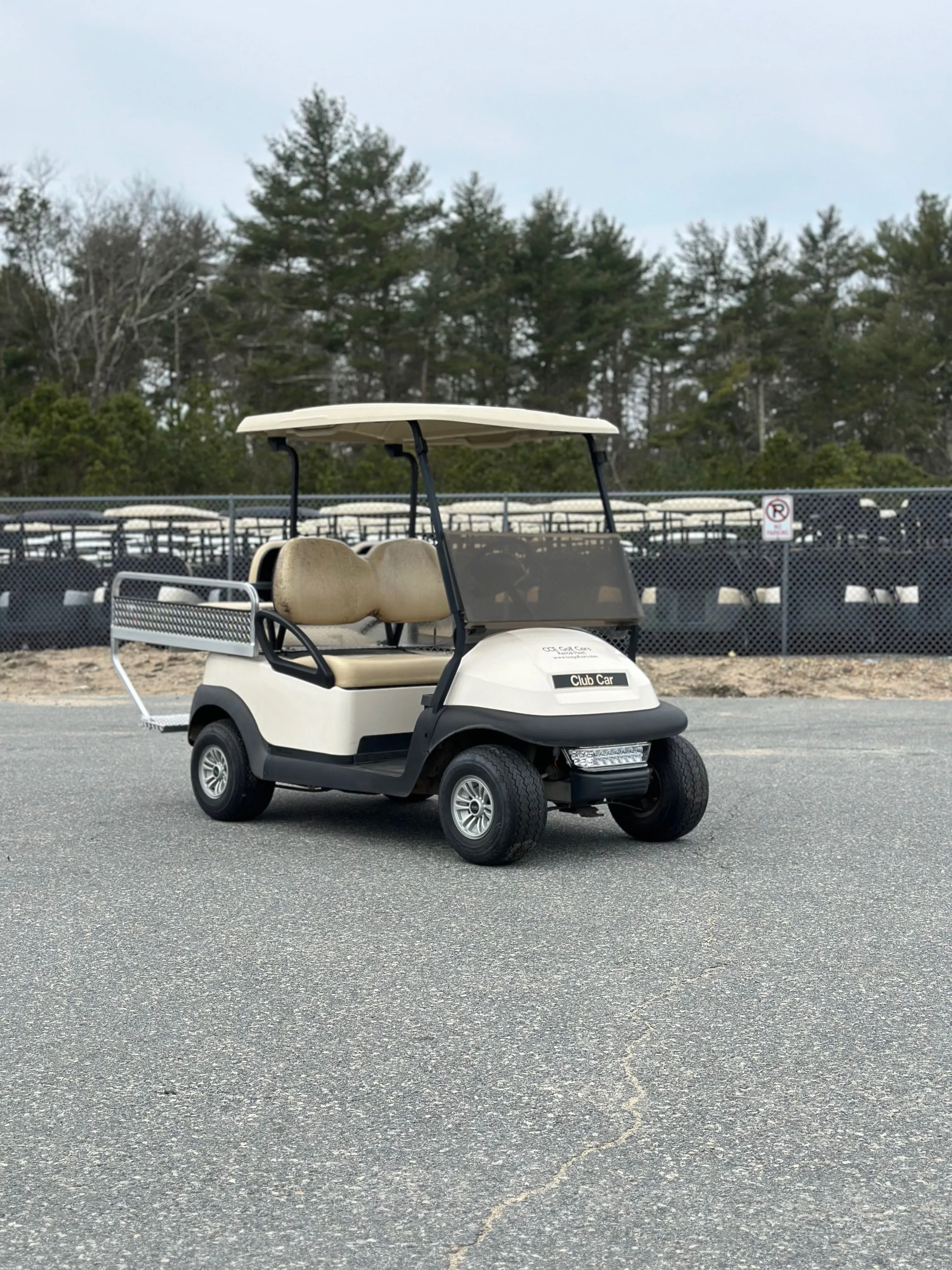
C2 Vehicles lists four-passenger vehicles with an aluminum box option, six-passenger Club Car Villager vehicles, Carryall utility models, an eight-passenger wheelchair-compatible vehicle, and Polaris Pro XD 4x4 units. These configurations provide a starting point for dividing vehicles by role. Confirm current fit and availability for your dates rather than treating every listed unit as interchangeable.
This approach gives a rental company a clear brief and gives the operator a defensible way to adjust the mix as demand changes. It also helps prevent a common planning error: ordering a fleet based on the number of seats while overlooking cargo, terrain, accessibility, or charging requirements.
Long-term rental logistics are more involved than dropping off vehicles and collecting them later. A strong provider should understand the property, schedule delivery, stage the fleet, and respond when the operating plan changes. Ask for a planning conversation that covers entrances, surface conditions, storage areas, charging or fueling arrangements, loading zones, and daily routes.
Confirm the expected delivery window, who will receive the vehicles, and what condition the site must be in. Decide whether the fleet will be placed in one central area or distributed across the property. At pickup, clarify the required notice, who gathers the vehicles, and whether a schedule change affects the agreement.
C2 Vehicles describes delivery support through a partnership with Cape Cod Express and dedicated rental staff. Those resources may simplify regional coordination, but the quote should still identify the delivery and pickup plan for your specific site. Review the rental options, then ask the team to confirm what applies to your dates and locations.
Seasonal demand can change quickly. Ask how far in advance to reserve, whether additional vehicles can be added later, and how an extension works if the season runs longer than expected. Discuss substitutions before they become urgent. If a vehicle is unavailable, can the provider offer a comparable passenger, utility, accessibility, or terrain-appropriate unit? Confirm whether a substitution requires approval, changes the rental terms, or affects delivery timing.
For multi-site operators, document which vehicles go to each property and who coordinates moves between locations. A plan that works for one venue may not work for a second venue with a narrow entrance, uneven surface, or different staffing schedule.
A long-term rental should include more than a vehicle handoff. Before signing, ask how preventive maintenance is scheduled, who reports a problem, and what happens when a vehicle is unavailable. Put the responsibility split in the agreement.
Ask the provider to identify which tasks are included in the rental and which remain with your team. The agreement should address routine inspections, battery charging or fueling, tire checks, cleaning, damage reporting, and repairs caused by normal use versus misuse. Confirm whether scheduled service occurs at your site, at a service location, or during planned pickup.
Request a clear process for reporting a warning light, loss of power, charging issue, tire problem, or collision. Know which contact handles service requests, what information the operator should provide. And how the provider determines whether to dispatch a technician, inspect the vehicle, or arrange a replacement. Do not assume a guaranteed response time or substitute vehicle unless the term is written into the quote.
Inspection records are useful throughout a multi-week or seasonal rental. Ask whether the provider documents vehicle condition at delivery, records completed preventive work, and tracks reported issues through pickup. Your team should keep a simple operating log with inspection dates, damage, charging concerns, and time out of service.
On-site support can matter more than a distant service promise when vehicles operate across a large property or at a busy event. C2 Vehicles supports rental operations with factory-trained technicians, mobile and on-site service, five parts warehouses, and substantial parts inventory. Evaluate whether those resources are available to your site and how service responsibility is divided. Learn more about factory-trained service support before choosing a long-term partner.
A quote is only useful when the terms match how your operation will use the vehicles. Compare the full agreement, not just the advertised rental rate. Long-term rental pricing can vary with duration, vehicle type, quantity, delivery distance, pickup requirements, insurance, damage terms, service coverage, and site conditions. The responsible way to compare providers is to request itemized proposals for the same scope.
Put verbal promises in writing and request a plain-language summary of the complete obligation. The best long term golf cart rental company should make these details understandable before you sign, not after an operational problem occurs.
Request an itemized long-term rental quote
The right rental provider depends on what the vehicles must accomplish across your site, not simply how many seats each cart has. This article's decision boundary is provider evaluation for extended or seasonal use. An event, resort, campground, or property-management operation should use its existing operating plan to define the fleet. Then use the same criteria to compare delivery, service, and contract support.
Concerts, fairs, weddings, and festivals can create several transportation needs at once. Passenger vehicles can move guests or staff, while carts with rear storage boxes or utility beds can carry supplies, tools, and event equipment. Ask about crew size, distances, terrain, loading requirements, event schedule, delivery sequence, and pickup timing.
Resorts and campgrounds typically balance guest mobility with property work. A six-passenger vehicle may suit group transportation, while a utility vehicle can support maintenance teams, housekeeping, landscaping, or supply runs. C2's rental page lists an eight-passenger vehicle compatible with a wheelchair and five additional passengers. Operators should review the ramp, access route, passenger needs, and staff procedures in advance. A wheelchair-compatible vehicle does not eliminate the need to plan accessible routes and safe boarding practices.
Property managers often need vehicles for landscaping, maintenance, security, inspections, and tenant service. Match the cargo bed, payload, terrain capability, and operating hours to those assignments. If the operation needs specialized attachments or a broader commercial fleet, review C2 Vehicles' commercial fleet solutions alongside the rental options. A commercial consultation can help separate a temporary rental need from a longer-term vehicle acquisition or custom-build need.
A long-term rental is a site operation, not simply a vehicle handoff. In New England, a provider's regional footprint can affect delivery timing, seasonal changes. Service response, and the questions that arise when vehicles move between private property and public roads.
Demand can shift with the calendar. A resort, campground, island community, or event venue may need a larger fleet during its busiest months, then fewer vehicles during the off-season. C2 Vehicles maintains a rental fleet of more than 500 vehicles and operates seven retail warehouses across all six New England states. That footprint can be useful when an agreement requires coordination across Massachusetts, Connecticut, Rhode Island, Vermont, New Hampshire, or Maine. Confirm current fleet fit and availability for your dates rather than treating regional coverage as a guarantee.
Snow, salt, rain, uneven terrain, and shoulder-season temperatures can place different demands on a rental fleet. Ask how vehicles are prepared for your site, what inspections occur before delivery, and how weather-related issues are handled. For an extended rental, clarify the response path for a battery, tire, charger, lighting, or mechanical problem.
Do not assume that a rental vehicle can be driven on public roads throughout New England. Golf cart, low-speed vehicle, registration, equipment, and roadway rules can vary by state, municipality, and road. Confirm the intended route with the rental provider and the relevant local authority. Ask whether the specific vehicle has the required LSV or DOT status, and verify speed, crossing, insurance, and operating restrictions before deployment. Regional expertise helps identify the right questions, but it does not replace local approval.
When the scope is clear, use the location finder to identify a c2 Vehicles team member who can discuss the site and operating plan.
Monthly cost depends on rental duration, vehicle type and quantity, delivery and pickup requirements, insurance, and service or damage terms. Request an itemized quote based on your operation rather than comparing a single advertised rate.
Compare fleet options, delivery coordination, maintenance response, contract flexibility, accessibility support, and regional coverage. The right provider should explain responsibilities clearly and match passenger, utility, terrain, accessibility, and power requirements to your site.
Not always. Confirm who handles preventive maintenance, repairs, parts, inspections, and emergency response before signing. A provider with factory-trained technicians and mobile or on-site service can help reduce downtime for seasonal and commercial operations.
Available fleets may include four- and six-passenger vehicles, utility carts with cargo capacity, wheelchair-compatible vehicles, and four-wheel-drive work units. Choose configurations based on guest transportation, event staffing, property maintenance, terrain, and accessibility needs.
Requirements can vary by state, municipality, property, and intended roadway use. Confirm local rules, site permissions, insurance requirements, and whether a specific vehicle has the applicable LSV or DOT approval before allowing public-road operation.
Request a long-term rental quote from c2 Vehicles
Prepare your locations, dates, vehicle missions, passenger counts, cargo needs, accessibility requirements, delivery constraints, and service expectations before contacting a provider. A clear operating brief helps the rental team recommend a practical mix and helps you compare proposals without relying on an advertised rate alone.
c2 Vehicles serves personal and commercial operators across New England with a rental fleet of more than 500 vehicles, regional delivery support, commercial expertise, and service infrastructure. Share the scope of your event, resort, campground, property, or seasonal operation through the rental team, then confirm every term in writing before the vehicles arrive.