
contact us

Buying a golf cart for a New England property requires a choice between two different power sources. The right choice ensures your vehicle handles both summer heat and freezing Northeast winters. Knowing these drivetrains is the first step toward a smart purchase.
Electric vs gas golf carts differ significantly in fuel costs, upkeep, and noise levels. Modern electric models with lithium batteries are the top choice for home use because they are quiet and cost very little to charge. These carts need little work since they lack engines, making them perfect for quiet streets. Gas-powered vehicles remain the best choice for large properties that need a driving range of over one hundred miles. According to Progressive, gas carts provide the power needed for hauling heavy loads on hills without the need for charging. While both options have unique strengths, your property size and noise tolerance will help you pick which drivetrain fits you best.
Each power source has trade-offs that affect your costs and how you use the cart. To find the right fit, you must look at how they perform from noise to battery life. We start by looking at Gas vs Electric Golf Carts: What Are the Key Differences? to see the facts.
Electric golf carts excel in quiet neighborhoods and coastal communities with near-silent operation and zero tailpipe emissions. Gas golf carts deliver superior range for large properties and work sites but produce engine noise comparable to a vacuum cleaner. Your choice depends on how and where you plan to drive.
Choosing between electric and gas golf carts starts with learning how they work. Gas carts use small engines, much like those in lawn tools. Electric models use motors and large battery packs. Both types work well for homes and businesses in New England. But they differ in noise, range, and how they affect the air.
Gas carts usually have 19 to 24 horsepower. This high power helps them keep a steady speed on steep hills or when hauling heavy loads. Electric carts often have 3 to 5 horsepower but offer fast torque. This means they can pick up speed quickly from a stop. As shown in EPA reports, electric motors are very clean and produce no exhaust during use.
Noise is a big factor for those in quiet coastal towns or resorts. Gas carts run at about 65 to 75 decibels, about as loud as a strong vacuum. Electric carts are much quieter at 45 to 55 decibels, comparable to a normal conversation. Since they have no tailpipe, electric carts are the best choice for indoor use or enclosed sheds.
Range depends on the fuel or battery you pick. A gas cart can go 120 miles or more on one tank. Electric carts with standard batteries usually go 40 to 60 miles per charge. New lithium batteries can reach 80 miles. Filling a gas tank takes just a few minutes. Charging an electric cart takes a few hours, though lithium types are faster. You can find both types at our seven New England stores to try them out.
Electric golf carts cost roughly $0.02 per mile to charge, compared to $0.10 to $0.15 per mile for gas. Maintenance is also lower for electric models since they lack engines, belts, and spark plugs. Over five years, the fuel and service savings of an electric cart can offset much of the initial purchase price.
When you buy a golf cart in New England, the price tag is just the start. You must also think about the cost to keep the cart running for years. Electric and gas carts have different costs for fuel and care. While one might cost less to buy, the other could save you money over time.
Most gas and electric carts have similar starting prices. But the cost to run them differs by a large amount. Electric carts are very cheap to charge. They cost about $0.02 per mile to run. Gas carts use more money for fuel, costing about $0.10 to $0.15 per mile. Over a few years, these small costs add up to big savings for electric owners. If you use your cart every day, electric power is often the better deal.
Electric carts have fewer moving parts than gas carts. They do not have engines, belts, or spark plugs that need care. This means you spend less on service each year. Gas carts need oil changes and new filters every year. This service can cost $100 to $300. Electric cart owners usually spend only $50 to $150 on basic care. But gas engines can last a long time if you maintain them well. Even after many years, a gas engine can be rebuilt to keep the cart on the road.
The biggest cost for an electric cart is the battery. Lead-acid batteries last about four to six years. Lithium batteries last much longer, often eight to ten years. While lead-acid units cost less upfront, lithium saves money over time through longer life and zero maintenance. With lead-acid units, you must check the water once a month. Newer lithium carts are even easier because they need no battery care.
The long-term cost of electric carts comes from the battery pack. A good set of batteries lasts about four to six years. Lithium packs can last up to ten years. You can learn more about how to get the most out of your cart on our golf cart service page. The U.S. Department of Energy notes that electric motors are very reliable because they have so few parts.
No matter which cart you buy, expert help is key. c2 Vehicles is a Club Car Black and Gold dealer. This is the highest service rating a dealer can get. We have seven service centers in all six New England states. Our team of trained techs can fix all major brands. We keep more than $1 million in OEM parts in our rooms. This helps us get your cart back on the road fast.
We also offer a mobile service. Our techs can come to your home or shop for most jobs. This saves you the trip to us. For the best results, we suggest a Consumer Service Plan. These plans include a spring start and winter care. A full 21-point check ensures your cart stays safe for the New England seasons.
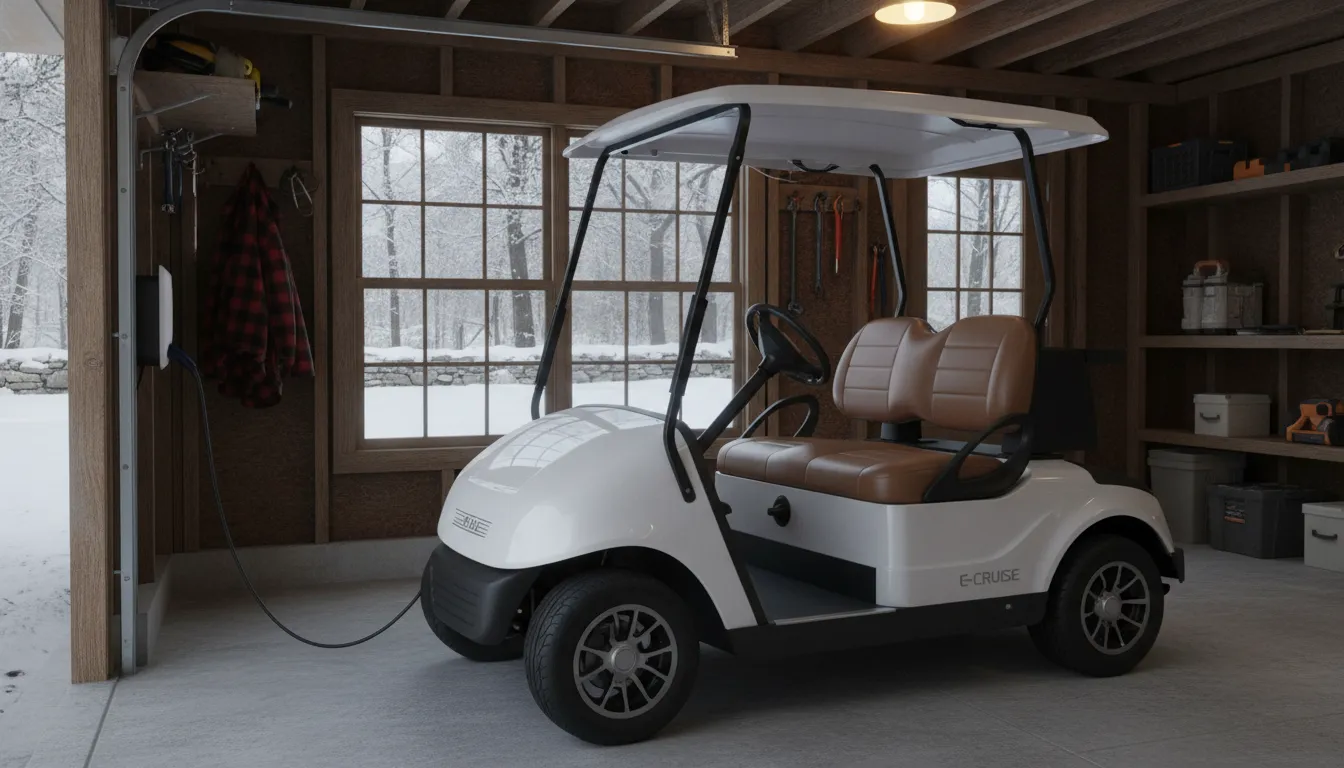
New England winters are hard on any vehicle. Gas carts need a fuel stabilizer to keep the lines from clogging. They also need a strong battery to start when it is cold. Electric carts lose some range when the air is icy. It is best to keep them plugged in and in a dry spot. The CDC warns that poor upkeep can lead to safety risks. Proper storage and regular checks will help your cart last for many years.
Club Car, GEM, Moke America, Garia, MadJax X-Series, Polaris Pro XD, and Tomberlin all offer electric and gas options at c2 Vehicles. Club Car Onward leads for lithium-powered neighborhood cruising. While Polaris Pro XD dominates heavy-duty gas utility work. c2 Vehicles is the exclusive Club Car distributor for all six New England states.
Choosing between a gas or electric golf cart often starts with the brand. Some builders focus on one power source. Others offer a choice for every model. At c2 Vehicles, we carry a full range of carts to fit any New England life. As the only exclusive Club Car distributor for all six states, we keep over 170 vehicles in stock.
Electric carts have changed fast. Brands now move away from heavy lead batteries toward lithium-ion tech. This change gives you more range and faster charging times. Many people in coastal areas like these models. They are quiet and need very little care, making them great for quiet beach towns.
The Club Car Onward is a top pick for lithium power. You can get a high-power version that handles hills with ease. For street-legal needs, GEM offers the E2 and E6 models. According to the National Highway Traffic Safety Administration, these must meet federal safety rules. Other brands like Moke America and MadJax X-Series also offer lithium power and full DOT approval.
Gas golf carts are the top pick for long work days and heavy towing. If you need a vehicle to run all day without a charge, gas is best. These models also hold up well in the cold winters of Maine and Vermont. Gas engines give steady power to haul gear or tools across large sites.
The Polaris Pro XD is a heavy-duty option. It uses gas to power a 4x4 drive system. It has an enclosed cab with heat, which is a big plus for New England winters. For work on a golf course or job site, the Club Car Carryall 300 and 700 models offer tough gas engines. While electric carts are quiet, gas carts offer the range needed for sites without a plug.
Some luxury brands offer the best of both worlds. These builders create high-end cars that use either gas or electric power. They focus on style and comfort. This lets you pick the look you want and choose the engine that fits how you drive each day.
Garia is a leader in this luxury space. They build high-end golf and leisure cars in both gas and electric versions. These carts use top-tier parts and sleek looks. For a classic feel, the Club Car Precedent also offers both gas and electric setups. You can explore luxury gas and electric options to see which brand fits your style best.
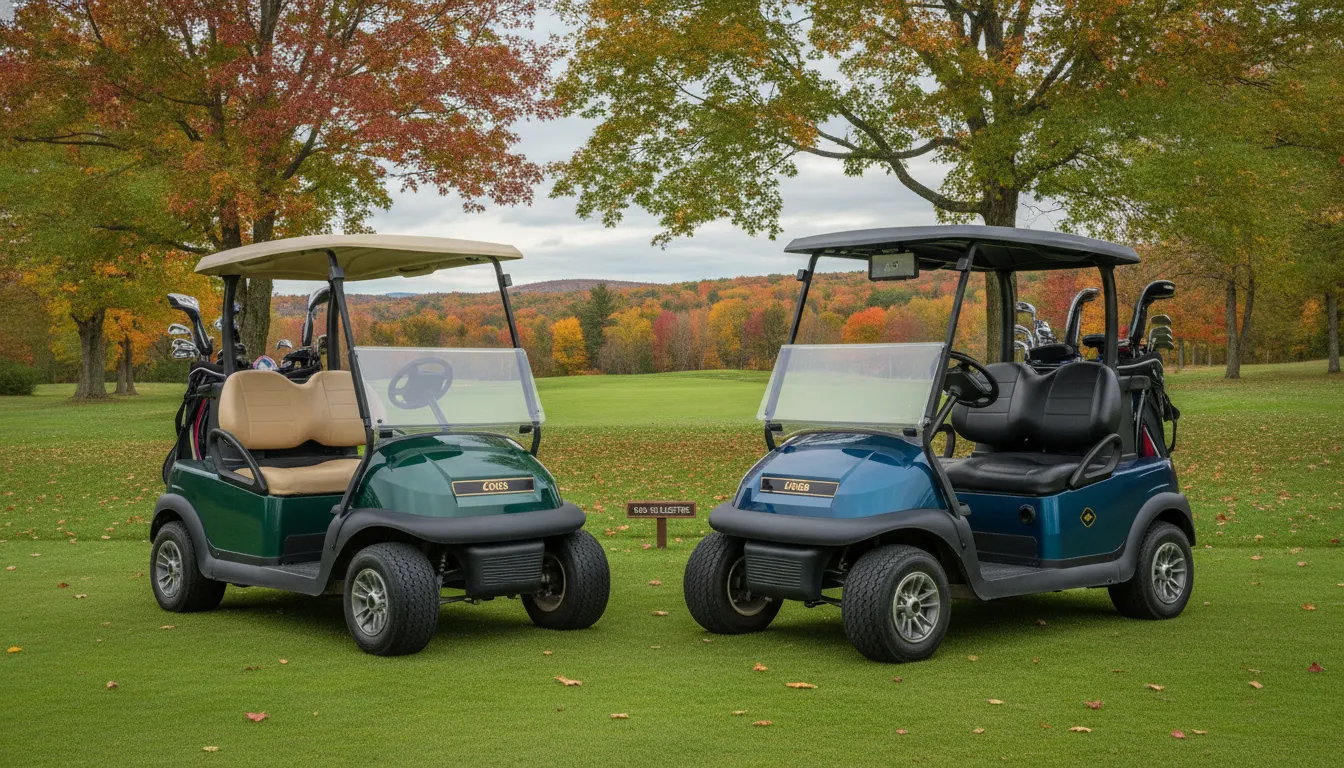
Start by considering your daily driving distance, terrain, noise restrictions, and budget. For short trips on flat suburban streets, an electric lithium cart offers the lowest operating cost. For large properties, steep hills, or all-day use without charging, a gas cart provides unmatched range and towing capacity.
Picking between electric and gas golf carts can feel overwhelming with all the options available as you start looking at your local choices and what they bring for the money you plan to spend. Before you buy, consider each drive type against your specific needs. Here is a quick comparison to help with your final decision.
| Factor | Electric (Lithium) | Gas |
|---|---|---|
| Fuel cost per mile | $0.02 | $0.10-$0.15 |
| Annual maintenance | $50-$150 | $100-$300 |
| Range per charge/tank | 40-80 miles | 120+ miles |
| Noise level | 45-55 dB | 65-75 dB |
| Best for | Neighborhoods, resorts, coastal towns | Farms, work sites, long-distance use |
| Cold weather impact | Range drops ~40% | Needs fuel stabilizer |
| Battery/engine life | 8-10 years (lithium) | 15+ years with rebuilds |
If you are a homeowner in a quiet community like Cape Cod, Martha's Vineyard. Or the New Hampshire lakes region, an electric cart with lithium batteries is likely your best bet. If you manage a large property, golf course, or commercial site where you need to cover long distances without recharging, a gas model will serve you better.
No matter which type you choose, c2 Vehicles has the selection and expertise to help. Apply for financing or browse our full inventory to see what is available today.
Electric carts are cheaper to own over time. They cost about $0.02 per mile to charge compared to $0.10 to $0.15 per mile for gas. They also need less maintenance since they have no engine, belts, or spark plugs. The biggest expense for electric carts is battery replacement, but lithium packs last 8 to 10 years with zero daily maintenance.
Gas engines usually have a longer overall life because they can be rebuilt or replaced when they wear out. However, modern electric carts with lithium batteries are very durable. A lithium battery pack often lasts between eight and ten years before it needs replacement. While gas carts can run for decades with good care, electric models now offer a long life with much less daily work.
Electric carts often perform well on steep hills because they deliver full torque instantly from a standstill. This provides strong pulling power for climbing slopes and towing loads on rough terrain. Most electric models maintain their speed on inclines where some gas engines might struggle. This makes electric carts a great choice for the hills common across New England.
Yes, both types of carts need extra care for the cold. Battery power can drop by up to forty percent in freezing weather. Electric owners must keep their vehicles charged and stored in a dry place. Gas carts need fuel treatment and oil checks to stay ready in the winter. At c2 Vehicles, our team provides winter care at seven locations across New England to help your cart stay safe until spring.
Some electric golf carts qualify as Low-Speed Vehicles (LSVs) and are street legal on roads posted at 35 mph or less. Models like the Club Car Onward 4 Forward LSV and GEM vehicles come with DOT-approved safety features including headlights, taillights, turn signals, seat belts, and mirrors. However, LSV regulations vary by state and municipality across New England, so it is important to check local rules before driving on public roads.
Waiting to choose might mean you miss out on the best parts of the New England season as stock levels start to drop fast now. You do not want to be stuck without a ride when the weather is fine or when you need to move gear across your local land. Starting your search today helps you get the right vehicle at a fair price before the rush of the summer months makes it truly hard.
Ready to talk to a golf cart expert? Browse our full inventory of electric and gas golf carts or visit one of our seven New England showrooms for a test drive today.